Convicted murderer and rapist John McDonagh wants to retest forensic evidence, court hears
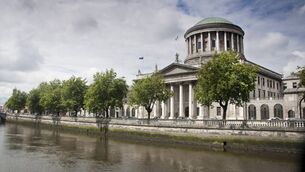
At the Court of Appeal, counsel Michael O’Higgins said that, in 2007, an attempt was made to introduce new evidence, but this was refused by the courts
Convicted murderer and rapist John McDonagh wants to retest forensic evidence, court hears

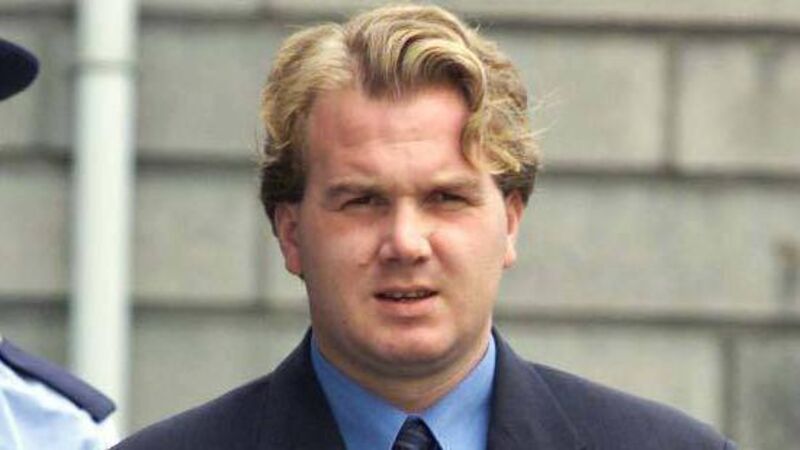
John McDonagh was 27 when he was found guilty in 2001 by a Central Criminal Court jury of the rape and murder of 17-year-old Siobhan Hynes. File Picture: Courtpix

A 51-year-old man who has spent 24 years in prison for the rape and murder of a Connemara schoolgirl has claimed that his conviction was a miscarriage of justice, arguing that he should have the right to retest forensic evidence.

“Some of the samples haven’t been tested at all. Is there anything unreasonable in asking them to be tested now?” said counsel Michael O’Higgins on Monday, launching an appeal by John McDonagh.


McDonagh was 27 when he was found guilty in 2001 by a Central Criminal Court jury of the rape and murder of Siobhan Hynes, aged 17, of Sconse, Lettermore, Connemara at Tismeain Beach in the townland of Keeraunbeg, Galway, in the early hours of December 6, 1998.

McDonagh, with a former address at The Demesne, Keeraunbeg, Carraroe, had pleaded not guilty to the charges, but was found guilty after three days of jury deliberations and sentenced to life in prison.

At the Court of Appeal, Mr O’Higgins said that, in 2007, an attempt was made to introduce new evidence, but this was refused by the courts. He said that a judicial review was then sought, with a judgement delivered in 2015 ruling that experts on behalf of McDonagh were not entitled to High Court orders seeking access to forensic evidence. This ruling, delivered by Mr Justice Paul McDermott, also said that the application for orders seeking the samples should have been made to the Court of Appeal.

Mr O’Higgins said it was his application for two exhibits of evidence in the case to now be retested. He confirmed to the court that there was a dispute of facts and opinions between two expert witnesses concerning this evidence. Counsel said that it was the State’s position that these tests do not need to be done.

Unsafe conviction

Mr O’Higgins said that the issue before the court was whether there was some basis for the tests to be carried out.

“Why are we in this situation where we can’t retest exhibits? Because our client doesn’t control the custody of these exhibits. It rests with the forensic science laboratory,” said Mr O’Higgins.

He said that if an accused person harvests all the necessary forensic details, nobody will stop them from carrying out these tests. He went on to say that it was arbitrary that a person who controls the exhibits vetoes the accused person from having the exhibits tested.

He went on to say that there were “different arms of the State” involved in the prosecution of this case and, if there were an adverse finding against them, they would have to stand over an unsafe conviction. 

He suggested that the State was “blocking us from having access to the evidence".

Siobhan Hynes had celebrated her 17th birthday a week before she was murdered. File Picture: Courtpix

To this, Mr Justice Patrick McCarthy said that Mr O’Higgins was making an oversimplification, with Ms Justice Nuala Butler pointing out that there was a jury verdict in this case.

After considering the matter, Mr Justice McCarthy said that the court may be required to address the conflict of opinion between the expert witnesses — which would require them to give oral evidence before the court.

In opening the appeal, Mr O’Higgins said that the “meat and veg of the case is in the affidavits of the experts”. He told the court that the potential of new testing methods had come to light, adding that no DNA experts were obtained for the trial.

He said that a defence expert, Dr Clare Jarman, disagreed with some of the findings of an expert witness for the State, Dr Dorothy Ramsbottom. Mr O’Higgins said that the defence’s expert asserted that the method for determining usable DNA from fingernails has increased rapidly since the trial.

DNA samples

Counsel told the court that the defence expert pointed out samples taken from the deceased’s fingernails should still be available, as are swabs from the vagina that were not all examined. He said that Dr Jarman had pointed out that the forensic community has continued to improve its methods of testing samples of blood for DNA. 

Mr O’Higgins said that Dr Jarman disagreed with Dr Ramsbottom’s claim that the testing methods used today are no more likely to generate a profile than they were at the time of the trial.

Mr O’Higgins told the court that the defence’s expert had said that any limitations in current testing methods should not prevent carrying out these investigations.

“Some of the samples haven’t been tested at all. Is there anything unreasonable in asking them to be tested now?” asked Mr O’Higgins.

The matter will continue on Tuesday, when Mr O’Higgins is expected to conclude his opening address to the court.

The trial in 2001 heard that Ms Hynes had celebrated her 17th birthday a week before she was murdered. She was raped by McDonagh, who then tried to choke her. After leaving her for dead, he drove his car back to Carraroe village and became involved in a fight.

Ms Hynes disappeared from Carraroe village at around 12.50am. She left a car parked outside a local hotel to go to the toilet in a local chip shop, but she never came back. Earlier, when she tried to go to the toilet in a local pub, a doorman refused her entry because she was under-age.

Crucial fibre evidence linked McDonagh to Ms Hynes. Dr Louise McKenna, of the State Forensic Science Laboratory, found "numerous" fibres on the jumper McDonagh wore that night which matched Ms Hynes's petrol-blue polyester fleece jacket and wine acrylic jumper. She also found fibres on the front and back of his jumper which matched fibres from Ms Hynes's black socks.

Fibres from the fleece and the wine jumper were also found in the front passenger seat of McDonagh's car, and fibres from his red fluffy car-seat cover matched two red fibres found on Ms Hynes's clothes.

Dr McKenna said the fibres lent "very strong support to the proposition that Siobhan Hynes was in contact with John McDonagh's jumper and strong support for her being in his car".

x

More in this section

Lunchtime News

Newsletter

Keep up with stories of the day with our lunchtime news wrap and important breaking news alerts.

Cookie Policy Privacy Policy Brand Safety FAQ Help Contact Us Terms and Conditions

© Examiner Echo Group Limited