Over a third of fixed charge notices for cars registered outside Ireland go unpaid
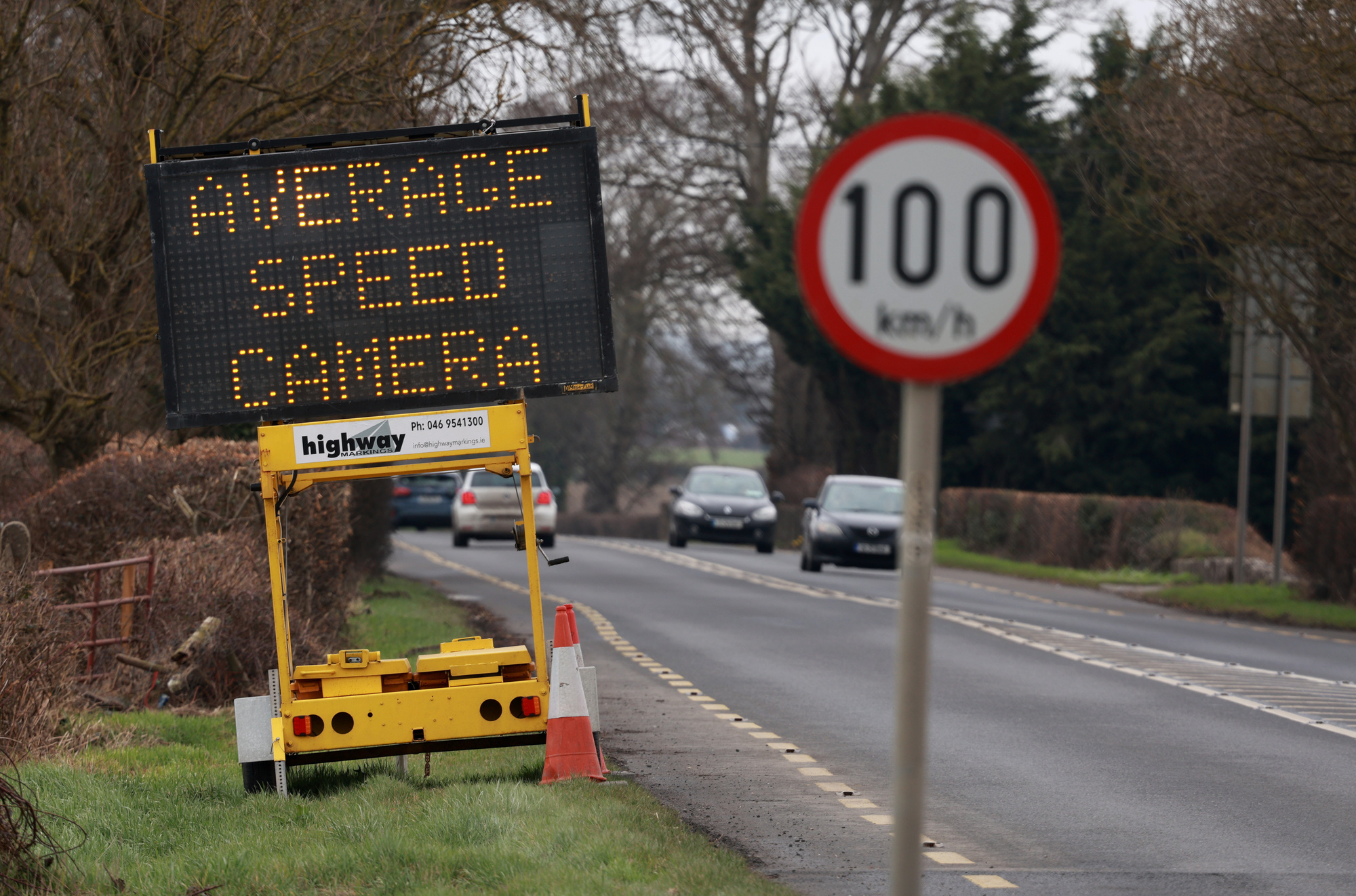
For a speeding offence, the fine is typically €160 together with the imposition of three penalty points, with the fine rising to €240 should the notice not be paid within 28 days. File picture: Colin Keegan, Collins Dublin.
More than a third of fixed charge notices for motoring offences involving cars registered outside the State but committed on Irish roads go unpaid, according to new figures.
Of 5,770 such offences committed on the roads since the start of 2024, some 36% have not been paid back to the enforcing authority An Garda Siochana.
The figures, released by the Department of Justice to Social Democrats TD Aidan Farrelly, show that close to 40% of those offences were committed in the border regions of counties Louth, Monaghan, Cavan and Donegal.
This suggests the possibility that a large proportion of those notices were issued to cars sporting Northern Irish registrations which were either based in the Republic, or had crossed the border at the time the offence occurred.
By contrast, of the 5,770 offences noted, just 876 of them occurred within Dublin’s metropolitan region.
An Garda Siochana was queried as to what recourse it has to chase drivers in non-State-registered vehicles for non-payment of fines, and also as to what countries the offending vehicles had originated from, but had not provided a reply at the time of publication.
Fixed charge notices vary depending on the nature of the offence in question.
For a speeding offence, for example, the fine is typically €160 together with the imposition of three penalty points, with the fine rising to €240 should the notice not be paid within 28 days.
Careless driving meanwhile carries a fine of €120 and two penalty points, while driving while using a mobile phone entails the same fine, but three penalty points rather than two. The vast majority of the offences noted were for speeding, 60%, and mobile phone infractions, 13%.
“We need to have the rules applied fairly and equally,” Mr Farrelly said of the new statistics. “If there is no recourse for An Garda Siochana, then we would interpret that as a loophole and as something the minister for justice should be looking to amend through legislation processed through the Oireachtas,” he said.
“We are all aware of the issues on the road, and the severe impact on communities of lives lost due to speeding and dangerous driving offences. Too many lives have been lost on the roads.
"That is why the rules are there, and we need to ensure that they apply equally and equitably to everyone on the roads.”

CONNECT WITH US TODAY



Be the first to know the latest news and updates