Hospital consultants urge new ministers not to delay reforms around medical cases
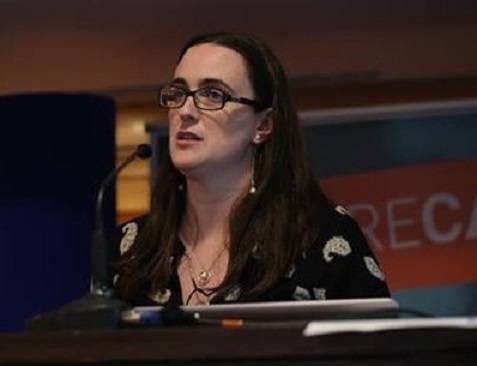
Professor Gabrielle Colleran, president of the Irish Hospital Consultants Association, called for the next government to change protocols on how sides in a medical case communicate with each other. File picture: ihca.ie
Long-running medical cases are coming before the courts because promises by the Government to reform the process still have not happened.
All eyes will be on the country's new ministers in justice and health to see if key changes are finally brought in. Regulations to support new pre-action protocols are being drafted and this is underway, a department of justice spokesman said.
However, last January the department also said the draft regulations were being developed. They also said: “It is intended to publish these in 2024.” The Justice Plan 2023 also pledged they would be introduced that year. They were first recommended in 2012.
The protocols should change how the sides in a case communicate meaning more cases should be settled early. They are also expected to reduce the number of cases going to court.
Professor Gabrielle Colleran, president of the Irish Hospital Consultants Association, called for these to be a priority for the new government.
Their "swift introduction", she said, would help "to curtail the surging costs of litigation and to provide speedier resolution of claims for patients".
Just recently Amanda and Aidan O’Reilly, who live in in Midleton, described “four years of hell” seeking justice for their newborn son Alfie. They described multiple assessments by occupational therapists, arguing with the HSE’s legal team over the wording of an apology for their son’s death and the pressure of court.
They went through mediation in June and in July the HSE admitted liability. Among the questions they raised was why mediation was not offered earlier.
The State Claims Agency acts for the HSE in clinical claims. Some 41% of clinical claims concluded in 2023 where damages were paid involved a mediation process, the latest figures show.
The trend is upwards with 34% the year before, in 2021 it was 37% and in 2020 it was 25%. A spokesman said the agency strongly favours mediation where possible as an alternative to the courts. It offers mediation “at the earliest opportunity in every suitable case”, he added.
“But mediation can only begin when both sides are in possession of all necessary information, to include expert evidence, in respect of an individual case; clinical claims are generally complex and gathering the necessary information can involve significant time period lags,” he said.
Ber Barry-Murray, mediator and former president of the Mediators' Institute of Ireland, said 41% of claims involving mediation could be considered low or high.
“Low because 41% of claims compares to other sectors such as family mediation (where) you’d be up really in the 70% of claims or over,” she said. “It could also be considered high because they are dealing with State money.

"And when you’re dealing with State money very often the reason it goes to court is because it saves questions afterwards as to who made the decision the settlement should be such-an-amount.”
There can be “huge levels of healing” in mediation, she said, but it must take place at the right time. “Parents must be ready, they must be helped to be brought to that place,” she said.
“And also for whoever they want to talk to ‘are they ready to come to that space and what does it mean for them?’”
There are also questions about ballooning bills for the State from clinical cases. Professor Rhona Mahony chaired a group examining this for the Department of Health.
She warned the “current estimated outstanding liability of almost €5bn could rise by multiples over the next two decades if unchecked”.
Dr Suzanne Crowe, president of the Medical Council of Ireland, has argued many times this money would be better poured into healthcare to help create safer environments. This could help prevent errors in the first place, she urged.

CONNECT WITH US TODAY



Be the first to know the latest news and updates