Supreme Court to decide if challenge to mast decision should be heard after filing deadline
Following that ruling last August, An Bord Pleanála was granted leave to appeal the decision to the State’s highest court
Supreme Court to decide if challenge to mast decision should be heard after filing deadline

At the Supreme Court on Thursday, the senior counsel for An Bord Pleanála, Aoife Carroll, argued that the period of time sought by Mr Thomson to take his judicial review was 'far too extensive'.

The State has argued that a challenge to a mobile mast planning decision, delivered by the criminally convicted former deputy chair of An Bord Pleanála, should not be heard as it was not filed in time.

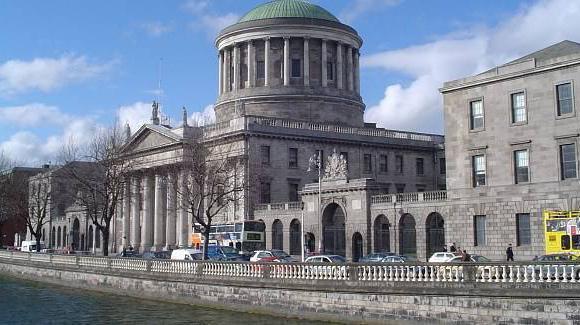
The Supreme Court on Thursday heard arguments as to whether or not Peter Thomson’s objection to the construction of a mobile mast adjacent to his home should be allowed, after the Court of Appeal said there was “a very strong public interest” in allowing the case to proceed.

Following that ruling last August, An Bord Pleanála was granted leave to appeal the decision to the State’s highest court.

Mr Thomson had first taken the case, represented by planning solicitors FP Logue, against An Bord Pleanála and mast-applicants Eircom in November 2022, alleging the decision-making had been affected by “bias”.

His case had alleged the statistical probability that An Bord Pleanála’s former deputy chair Paul Hyde would have been allocated 42 out of 49 mast applications by Eircom in less than two years was zero. Mr Hyde approved the 15m-tall mast against the advice of his own planning inspector, Philippa Joyce, in June 2021.

Conviction

In May 2022, the Irish Examiner first reported Mr Hyde had overruled his own planning inspectors’ recommendations for refusal of mast applications in 86% of cases over a 20-month period up to May 2022 — roughly eight times the average for such an occurrence.

Mr Hyde was convicted of making false or misleading declarations regarding his own assets in 2023.

At the Supreme Court on Thursday, the senior counsel for An Bord Pleanála, Aoife Carroll, argued that the period of time sought by Mr Thomson to take his judicial review was “far too extensive”.

Although evidence of alleged irregularities in the decision-making of Mr Hyde became public knowledge in May 2022, Mr Thomson did not take his action until November — six months later — with his submission to the court stating he had feared “an adverse costs order”.

Ms Carroll said the Court of Appeal had been in “error” in giving greater weight to the public interest than to the commercial certainty required by the eight-week statute of limitations on any objections as required by the planning process.

She did concede, however, that had Mr Thomson brought his objection earlier, “they could absolutely have relied upon” the evidence that Mr Hyde’s decisions were questionable.

Commercial impact

Justice Iseult O’Malley suggested in response that a decision to quash the mast decision would have impacted the commercial interests of the Eircom “in about as minimal a way as possible”.

She asked if a member of the public were to discover incontrovertible evidence of corruption at the board, but chose to “sit at home and brood about that” before taking an objection, could an argument be made that the objection should not be heard.

Senior counsel for Mr Thomson and his wife, James Devlin, in response to a question from Justice Peter Charleton as to whether or not the Thomson’s case would be “unlosable” if not for its late timing, replied that the statistical irregularities in Mr Hyde’s decisions and the fact that such mast cases were apparently not distributed randomly to board members would give “the appearance of bias”.

The judges will now retire to make a decision.

More in this section

Lunchtime News

Newsletter

Keep up with stories of the day with our lunchtime news wrap and important breaking news alerts.

Cookie Policy Privacy Policy Brand Safety FAQ Help Contact Us Terms and Conditions

© Examiner Echo Group Limited