Judge wrong to order public inquiry into murder of GAA official, court told
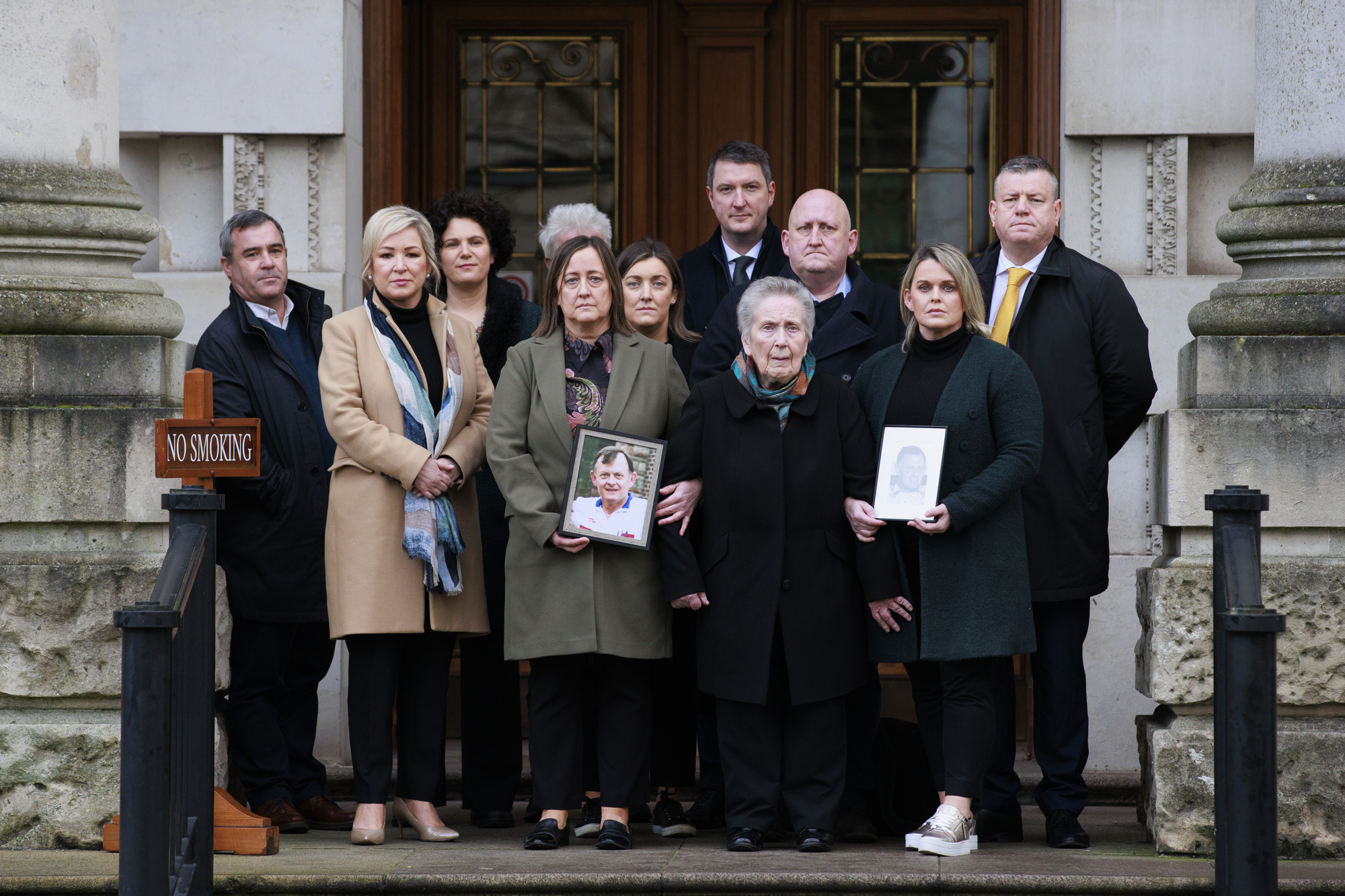
A judge was wrong in law to order the British government to hold a public inquiry into the murder of a senior GAA official during the Troubles, a court has heard.
Belfast High Court judge Justice Humphreys “seized the discretion” held by Britain's Northern Ireland Secretary Hilary Benn and exercised it himself when he ordered an inquiry into Sean Brown’s death, a government barrister claimed.
In a Court of Appeal challenge against the ruling, Tony McGleenan KC characterised the judge’s decision as unprecedented, highlighting that there had never been another instance of a court making an order of mandamus compelling the government to hold a public inquiry.
“There’s not a single example anyone will show you of a court doing that,” he told the Appeal Court judges.
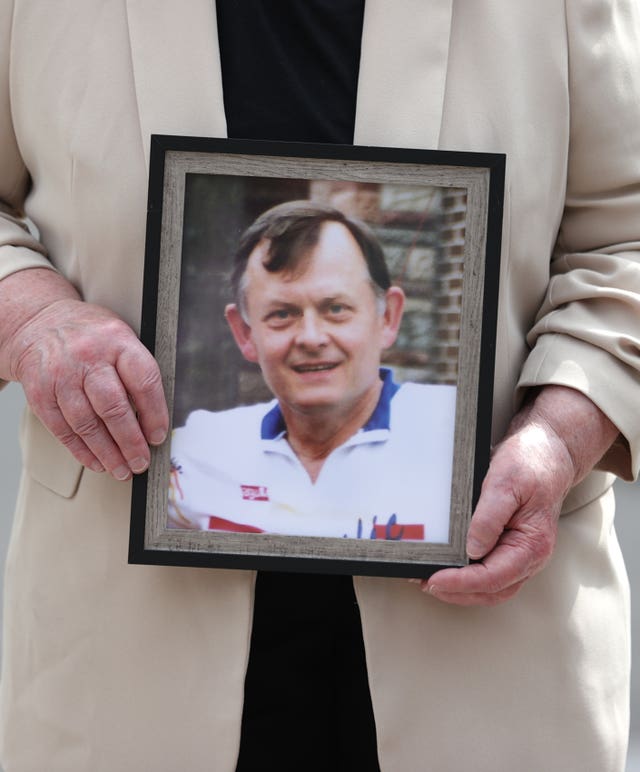
Mr Brown, the 61-year-old chairman of Bellaghy Wolfe Tones GAA club in Co Derry, was ambushed, kidnapped and murdered by loyalist paramilitaries as he locked the gates of the club in May 1997. No-one has ever been convicted of his killing.
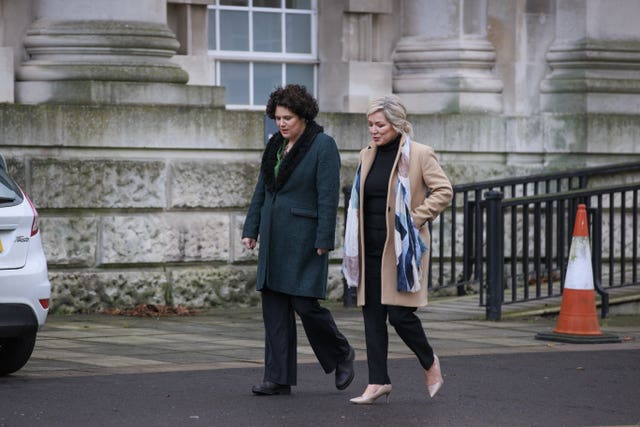
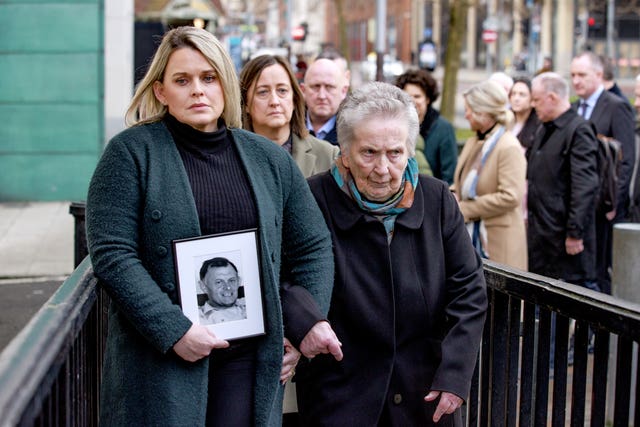
Stormont First Minister and Sinn Féin vice president Michelle O’Neill and SDLP leader Claire Hanna were among supporters who accompanied the Brown family to the Court of Appeal in Belfast on Thursday to hear the government’s appeal against the public inquiry order.
Last year, a coroner halted an inquest into the death, expressing concern that his ability to examine the case had been “compromised” by the extent of confidential state material being excluded from the proceedings on national security grounds.
Preliminary inquest proceedings had already heard that in excess of 25 people had been linked by intelligence to the murder, including several state agents.
It had also been alleged in court that surveillance of a suspect in the murder was temporarily stopped on the evening of the killing, only to resume again the following morning.
Coroner Mr Justice Kinney called on the government to establish a public inquiry into the loyalist murder.
Mr Benn decided against holding an inquiry, arguing that the case could instead be dealt with by a new Troubles investigatory body, the Independent Commission for Reconciliation and Information Recovery (ICRIR).
However, aspects of the legislation that underpins the work of the ICRIR was later found incompatible with human rights laws in a different Court of Appeal challenge separate to the Brown case.
Mr Brown’s widow Bridie challenged Mr Benn’s decision not to order a public inquiry and Justice Humphreys found in her favour in December and ordered the government to establish one.
Northern Ireland’s Lady Chief Justice Siobhan Keegan joined two other Court of Appeal judges – Lord Justice Treacy and Lord Justice Horner – in hearing the case on Thursday.
Representing the government, Mr McGleenan suggested that ordering a public inquiry was premature as he insisted Mr Benn remained committed to making the ICRIR compliant with human rights laws – either by legislative changes or by successfully challenging the separate Court of Appeal judgment at the Supreme Court.
The barrister said Justice Humphreys should have adjourned Mrs Brown’s case until the outcome of the appeal over the ICRIR’s compliance ran its course.
During exchanges in court, Lord Justice Treacy told Mr McGleenan that a judge’s job was to make a ruling based on the state of the law at the time, and not on what the legal position might look like in the future.
He suggested that a public inquiry was the “only show in town” in terms of a human rights compliant investigation when the judgment was handed down, as he predicted that government moves to make the ICRIC compliant could take years.
Mr McGleenan insisted that the ICRIR would be made human rights compliant “by hook or by crook” and it could then deal with the Brown case “faster and cheaper” than a public inquiry.
He said Justice Humphreys was aware of the government’s commitment to make the ICRIR compliant when he ordered the public inquiry.
Noting the family’s long wait for justice, the barrister acknowledged that it was “not a comfortable position” for the government to be mounting the appeal challenge.
But he maintained that Justice Humphreys should not have ordered a public inquiry while the issues of “considerable importance” around the ICRIR’s ability to hold a compliant investigation were still unresolved.
Mr McGleenan said: “We say, regardless of the emotive facts of this case, and one can’t have but sympathy for the Brown family having to come here again to hear these arguments, regardless of that, there’s a very important point of principle that is live before the appellate court, and in those circumstances, we say, it was an error for the judge to address the case in the way that he did and make a mandatory order.”
He said it was Mr Benn’s constitutional right to make the decision as how best to deal with the Brown case.
Mr McGleenan said the Secretary of State made his decision not to hold a public inquiry, after weighing up “live” issues over the status of the ICRIR, and the judge then ruled that Mr Benn was “completely wrong”.
“The judge, by taking that approach, completely sidestepped the qualitative analysis of whether or not a public inquiry was warranted or not,” he said.
“He seized the discretion from the hands of Secretary of State and exercised it himself without having regard to any of those factors.”
Responding to the barrister’s contention, Lady Chief Justice Keegan said she did not understand why the government did not appeal the judge’s decision not to adjourn the case at the time and before he got to the point of delivering his order.
The case continues, with the Brown family’s barrister due to address the court later on Thursday.
CONNECT WITH US TODAY



Be the first to know the latest news and updates