Cox and firm to pay €11.3m over concealment and competition when working for Michael O’Flynn
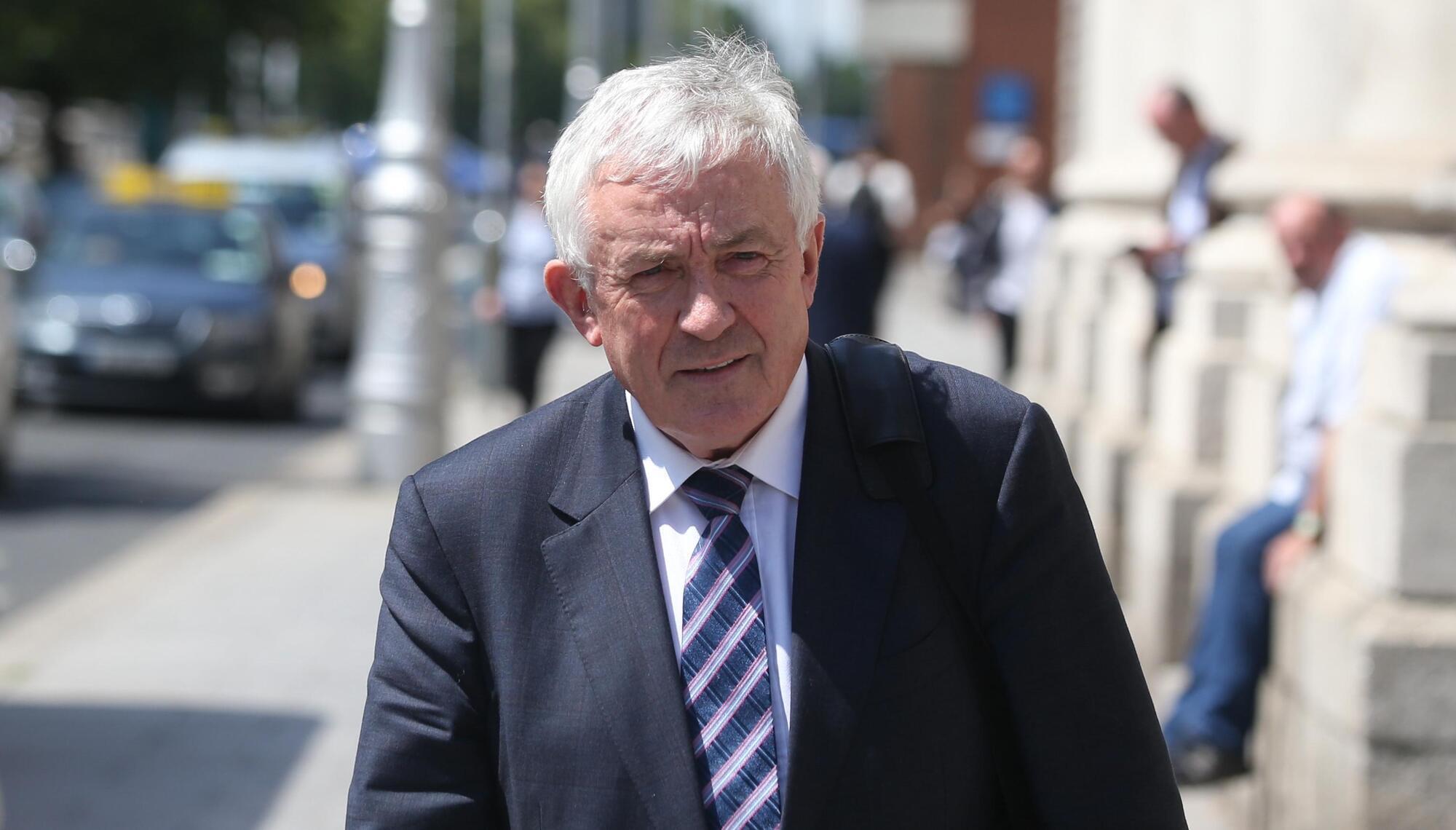
Property developer Michael O'Flynn said: 'I am clearly very pleased with the court’s judgment.' File picture: Collins Courts
A High Court judge has ordered that €11.3m must be paid to companies linked to developer Michael O’Flynn in a long-running dispute with Patrick Cox Jr and his company Rockford Advisors Ltd.
The dispute centred on a student accommodation development in Gardiner St, Dublin, which was completed in 2017 and earned profits after tax of €11.33m.
Mr Cox Jr is the son of former MEP Pat Cox, who provided a consultancy service, along with his son, for the O’Flynn Group between 2007 and 2009.
Mr Justice Michael Quinn found that Patrick Cox Jr and his Rockford Advisors Ltd firm must hold €11.3m in profits from this development on trust for O’Flynn Capital Partners and four other companies.
It was alleged that Mr Cox Jr actively competed with the plaintiffs, and that he allegedly concealed and diverted significant investment opportunities for his own benefit or for the benefit of the other defendants.
It was further alleged that Mr Cox Jr appropriated, or failed to return, and used confidential documentation relating to the business of the O’Flynn Group.
It was claimed that information may have been used to benefit the defendants and defendant companies of which they were ultimate beneficial owners.
The judge said he intends to make an order that Mr Cox Jr and Rockford pay the five plaintiff firms the €11.3m, together with yet to be calculated interest, which will be dealt with when the case returns next month.
Michael O’Flynn said: “I am clearly very pleased with the court’s judgment.”
The case was brought by Victoria Hall Management Ltd (VHML), Palm Tree Ltd, Grey Willow Ltd, Albert Project Management Ltd, O’Flynn Capital Partners, and O’Flynn Construction (Cork). The case was taken against Mr Cox Jr, Rockford, Liam Foley, Foley Project Management Ltd, Eoghan Kearney, Carrowmore Property Ltd, Carrowmore Property Gardiner Ltd, and Carrowmore Property Gloucester Ltd.
VHML and the five other plaintiff property development companies claimed that Patrick Cox Jr, Mr Foley, and Mr Kearney — also former O’Flynn Group employees — had acted in breach of their respective contracts and other duties.
However, the judge found no cause of action had been made out against Mr Kearney and Mr Foley or against the Foley and Carrowmore companies. Mr Justice Quinn said the opportunity for this development came to Mr Cox Jr in 2014, when he was employed in what was described by the plaintiffs as a “senior and trusted position” in the O’Flynn Group.
He was also providing services to non-group companies, including VHML and others.
The defendants denied they owed any contractual or other duties. Mr Cox Jr said he was only employed by the O’Flynn Group, of which not all the plaintiffs were members. He also said his relationship with the plaintiffs was never more than that of a consultant.
Mr Cox Jr said he was employed by another company, Tiger Developments Ltd, to undertake on his own account and that he had the consent of Tiger managing director John Nesbitt.
The judge said the defendants admitted that documents were taken by Mr Cox and circulated among them, but said that — with certain exceptions — the documents were not confidential and were not used or required by them to undertake the Gardiner St development.
The defendants also contended the plaintiffs had sought to mislead the court about the circumstances in which the plaintiff companies were established, the relationship between the plaintiffs and the O’Flynn Group, and other facts.
In his judgment, Mr Justice Quinn found Mr Cox Jr was a fiduciary of the plaintiffs and in breach of his fiduciary duties, he concealed from the plaintiffs the opportunity to develop the Gardiner St scheme, and diverted its profits to himself and his co-defendants.
He also found that in taking documents of the plaintiffs without consent, retaining them for a year after his resignation, and returning them when called on to do so, Mr Cox Jr acted in breach of his fiduciary duties. The plaintiffs did not mislead the court or give false evidence, he said.
CONNECT WITH US TODAY



Be the first to know the latest news and updates