Army captain appeals sexual assault conviction over missing CCTV footage
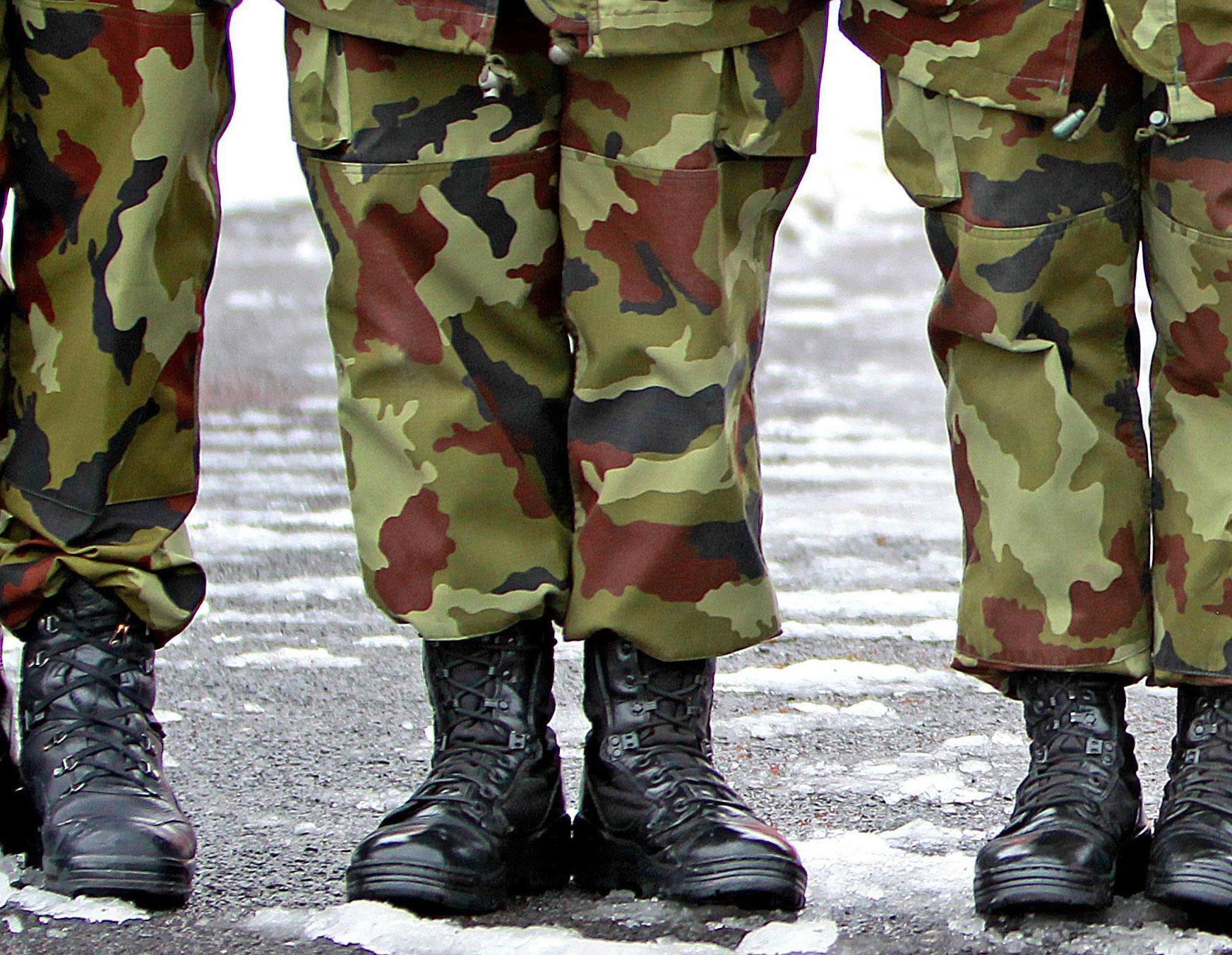
The offences occurred when the captain attended a barbeque hosted by the Covid Joint Task Force during the covid-19 pandemic lockdown
Army captain appeals sexual assault conviction over missing CCTV footage

Captain Ross O’Shea was found guilty by a General Court Martial in October 2022 of sexually assaulting a female non-commissioned officer (NCO) following a social function at a barracks in Leinster on June 25, 2020. File Picture: PA

An army captain has appealed his conviction for sexually assaulting a female soldier at a military barracks four years ago, arguing that missing CCTV footage meant he was “robbed” of a possible line of defence.

The State has argued that CCTV footage could not add anything to the established facts and that the area of contention is “vanishingly tiny”.

Captain Ross O’Shea was found guilty by a General Court Martial in October 2022 of sexually assaulting a female non-commissioned officer (NCO) following a social function at a barracks in Leinster on June 25, 2020.

He was tried in September 2022 before Military Judge Colonel Michael Campion and a court martial board. O’Shea was convicted on October 14, 2022, of sexually assaulting the woman by moving his open palms up and down her back saying “come on, come on” or words to that effect at the Officer’s Mess.

He was also found guilty of one charge of assault against the same officer contrary to Section 2 of the Non-Fatal Offences Against the Person Act 1997. His dismissal was ordered as part of the sentence imposed on these two charges. O’Shea remains, pending appeal, a serving member of the army.

The offences occurred when the appellant attended a barbeque hosted by the Covid Joint Task Force during the covid-19 pandemic lockdown.

Captain O’Shea had been brought to the Officer’s Mess by two female NCOs after he had been found asleep and in a state of inebriation sitting in a chair outside a gymnasium where the barbeque had earlier been held.

Grounds for appeal

At the Court of Appeal on Tuesday, James Dwyer SC for O’Shea told the court that these two charges are the subject of his appeal. Counsel argued that missing CCTV footage which may have captured the incident meant his client was “robbed of the opportunity” of a particular line of defence.

O’Shea was charged and tried before the Court Martial with a total of 18 offences. He pleaded guilty to five charges, including charges of conduct contrary to good order and two charges of assault against the two female NCO officers contrary to Section 2 of the Non-Fatal Offences Against the Person Act 1997. 

He was convicted of two other charges and acquitted of a further seven charges while four more were withdrawn during the trial.

Mr Dwyer told the three-judge Court of Appeal that there was evidence of a camera which potentially recorded what happened but that this footage no longer existed by the time his client came to court.

Counsel said there were discrepancies in some of the prosecution evidence, including whether the complainant and O’Shea went into the officer’s mess together or whether she proceeded ahead and whether the door to the area where the offences occurred was open or closed at the time. 

He said there was also an issue in relation to evidence given by the complainant that another junior officer in the area at the time may have been smoking.

He said the footage was never sought out and preserved and that the lost evidence denied Captain O’Shea a potentially useful line of defence. Mr Dwyer submitted that as a consequence of the issues surrounding the CCTV, the appellant was subjected to an unfair trial.

“We say we have inconsistencies and we’ve lost the opportunity to CCTV which could have resolved them,” he said. “In a finely balanced case we say this is a lost opportunity.” 

Objections to appeal

Remy Farrell SC, for the Director of Military Prosecutions (DMP), said it was accepted as a matter of fact that the appellant had a physical interaction with the complainant where he essentially hugged her.

“What conceivably could CCTV add to that?” he said, adding that the area of contention was “vanishingly tiny”.

He said the issue of whether the complainant went in with Captain O’Shea or whether she proceeded ahead was “an extremely minor detail” and one that does not affect “the events that occurred thereafter”.

He said in relation to smoking, the evidence given by the complainant was simply that as they approached the Mess, she thought that she saw one of the junior officers smoking. “It’s really difficult to see how this is anything other than a wholly irrelevant detail,” he said.

Mr Farrell said it was “wholly unreasonable” to suggest there was a “significant lost opportunity” in respect of the CCTV evidence.

He said Captain O’Shea accepted that he had his arms around the complainant so even if “by some extraordinary circumstance” a CCTV with a zoom lens was trained on the situation, what was relevant was what happened behind her.

He said the thesis upon which all of this had been advanced was that “maybe, just maybe” a camera might have captured what happened. “That’s the height of the argument,” he said.

Ms Justice Isobel Kennedy said the court would reserve judgement in the matter.

x

More in this section

Lunchtime News

Newsletter

Keep up with stories of the day with our lunchtime news wrap and important breaking news alerts.

Cookie Policy Privacy Policy Brand Safety FAQ Help Contact Us Terms and Conditions

© Examiner Echo Group Limited