Expert tells Stardust inquests fire 'most likely' started in one of two places
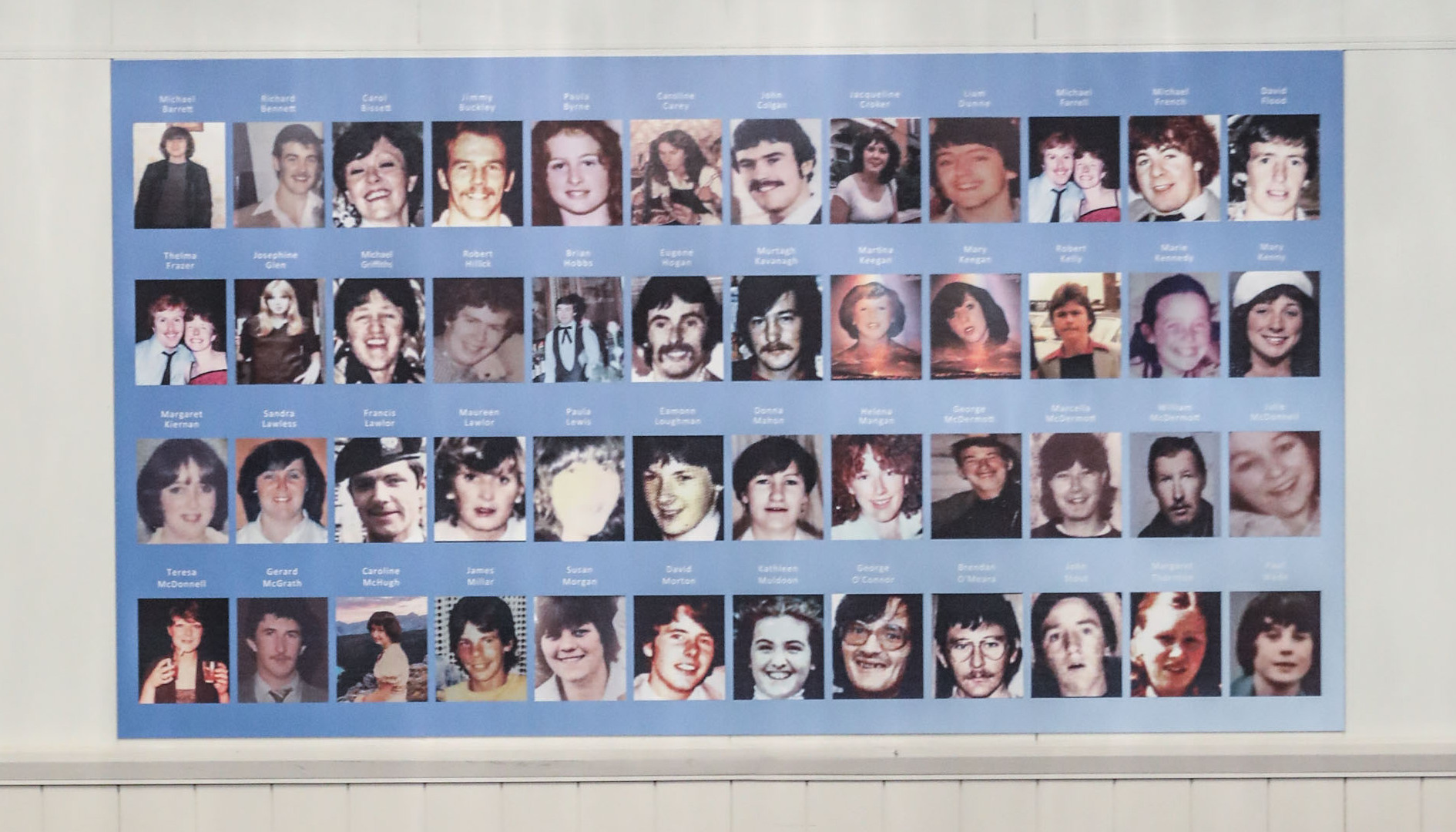
The original finding from the Tribunal, which sat in 1981, that the fire was “probable arson” was long contested by families of victims, and struck from the Dáil record in 2009. File photo: Sasko Lazarov / RollingNews.ie
The “most likely scenario” as to where the fire started in the Stardust nightclub is either in a hot press located at the main bar of the venue, or in the tiered, cordoned-off seating area where the fire was first spotted, fresh inquests have heard.
Fire expert Dr Will Hutchinson told the 13-person jury that if it started in the hot press, the probable explanation for this was an electrical fault. However, if the fire started in the tiered section known as the west alcove, he said that the probable explanation for this was it was started deliberately.
The original finding from the Tribunal, which sat in 1981, that the fire was “probable arson” was long contested by families of victims, and struck from the Dáil record in 2009.
The expert from fire engineering consultancy Jensen Hughes concluded his presentation on Tuesday into his investigation into the fire that killed 48 young people. The fire was first spotted in that alcove area at the conclusion of a disco dancing competition in the popular north Dublin venue in the early hours of February 14, 1981.
He found that it was unlikely that the fire had originated in the roof space of the Stardust, or the lamp and storerooms near the back of the venue. However, Dr Hutchinson was clear that he was “unable to determine with any certainty” the area that fire originated in.
He said that, if such an event were to happen today, the fire scene would be preserved, and everything done in a “stepwise process”.
“But the initial excavation and investigation was carried out in four days,” he said. “Everything was cleared in four days. There’s no way in that time everything can be preserved and recorded.”
He pointed to one expert report from the time which said that some evidence was “not handled with due care”.
“That is unfortunate as once the evidence has been lost, we can’t evaluate it, we can’t make comment on it,” he said.
A video was also shown to the court of British-based firm FRS which was tasked back in the 1980s with doing recreations of where the fire was first spotted to explain its rapid spread. Called “Anatomy of a Fire”, it showed large-scale experiments showing the fire spreading to the walls and then to other seats in an extremely rapid fashion.
Dr Hutchinson said a “critical factor” in the experiments was the use of the same carpet tiles on the walls as had been used in the Stardust. He said that once the fire reached those tiles “the fire would’ve grown and spread rapidly”.
The inquests have already heard that, when converting the building into an entertainment venue in the 1970s, the carpet tiles put on the walls did not have the proper safety certification to have been placed there.
Furthermore, he said that while some eyewitness accounts from people living near the Stardust reported seeing its roof on fire at an earlier time than those in the club saw the fire, he couldn’t say how that could have happened.
“I’m not saying they’re wrong,” he said. “It’s confusing to put times to specific events.”
While he could not be certain beyond hypothesising on the “most likely scenarios”, he clarified it would be up to the jury to make its own conclusions. Dr Hutchinson is set to face questions on his evidence on Wednesday.
CONNECT WITH US TODAY



Be the first to know the latest news and updates