Murder accused takes stand to deny following woman on day Ashling Murphy was killed
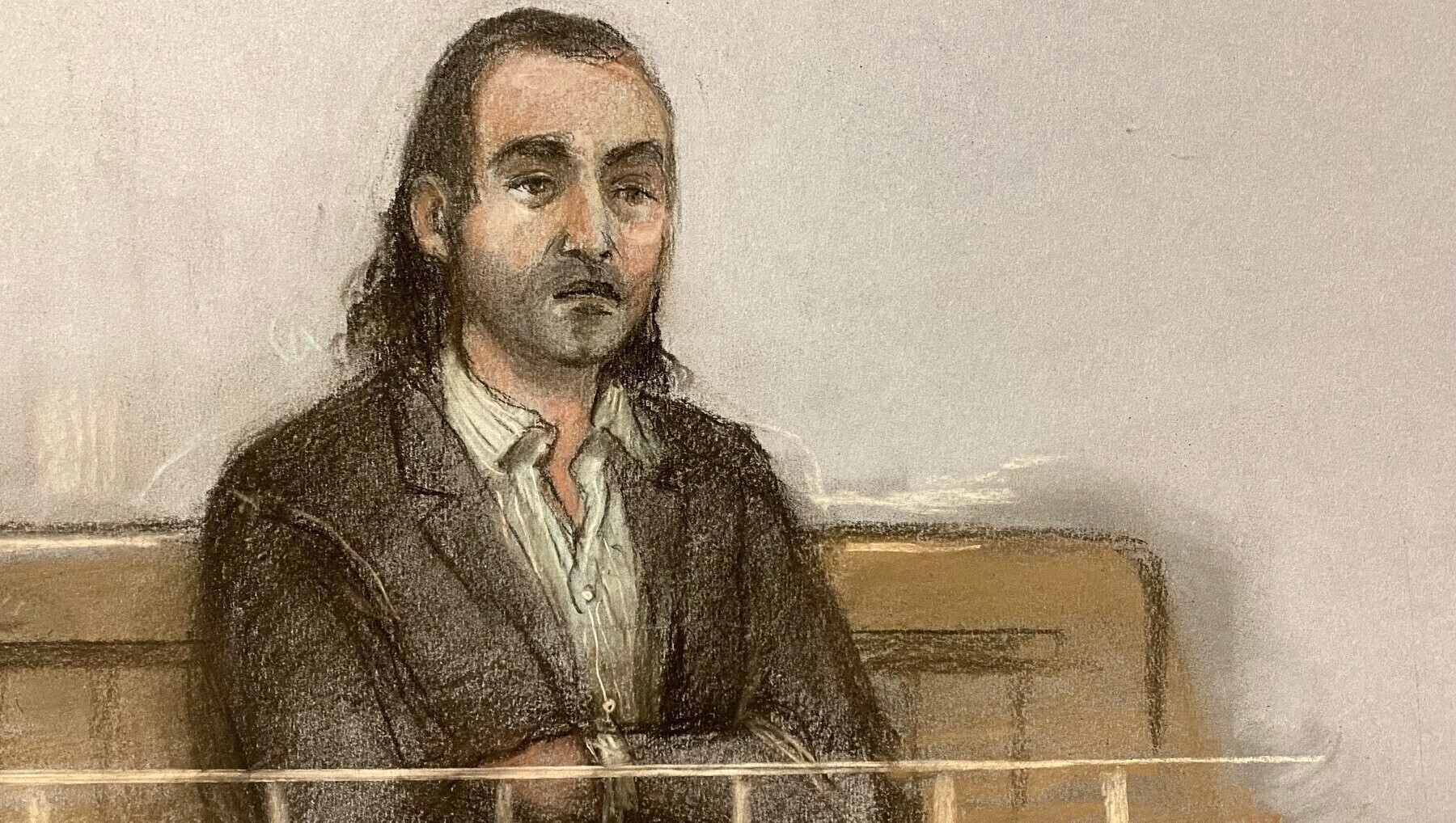
In the opening part of his testimony, which will continue on Friday, Jozef Puska (pictured) said he had "no bad intention whatsoever" when he was cycling behind Annemarie Kelly, a witness who told the trial that she thought Mr Puska was following her along a street in Tullamore prior to Ashling Murphy's murder. Picture: Elizabeth Cook
Jozef Puska has taken the stand to give evidence in his defence against the charge that he murdered 23-year-old school teacher Ashling Murphy.
In the opening part of his testimony, which will continue on Friday, Mr Puska said he had "no bad intention whatsoever" when he was cycling behind Annemarie Kelly, a witness who told the trial that she thought Mr Puska was following her along a street in Tullamore prior to Ms Murphy's murder.
The jury also heard on Thursday that gardaí interviewing Mr Puska in January last year asked him to account for his presence at the location where Ms Murphy was murdered by the Grand Canal in Tullamore and for the fact that his DNA was found under her fingernails. Mr Puska told gardaí at the time that he would not comment.
Jozef Puska (33), with an address at Lynally Grove, Mucklagh, Co. Offaly, has pleaded not guilty to murdering Ms Murphy at Cappincur, Tullamore, Co. Offaly, on January 12, 2022.
Shortly after 3.30pm on Thursday afternoon prosecution counsel Anne-Marie Lawlor SC formally closed the prosecution case. Michael Bowman SC, for the accused, immediately called his client to the stand.
Mr Puska took the bible in his hand and with the aid of a Slovakian interpreter he swore that his evidence to the court would be the truth, the whole truth and nothing but the truth.
He told Mr Bowman that he is from Poprad in Slovakia and moved to Ireland in 2013. In 2022, he was living in Mucklagh, just outside Tullamore with his wife and family. Mr Puska said he understands that the court is interested in what Mr Bowman described as "the tragic murder of Ashling Murphy".
When asked to tell the jury his recollections from that day, he said: "What I would like to start with is that on January 12 I left my house around 11.30 on my push bike. I travelled from Mucklagh to Tullamore."
He said he arrived in Tullamore at about 12.15pm and described his movements around the town out to the Tesco on Church Road and back towards the town. He said he took different routes because he was trying to find his brother, who had gone to the dentist. He went to a car park to try to find his brother's car, he said, adding: "That's why I found myself in some locations twice."
He described the bike he was cycling as a black or dark Falcon Storm push bike with a green needle in front and identified it in a photograph of a bicycle that gardaí found close to where Ms Murphy was stabbed to death.
Mr Bowman asked if the accused could recall that while he was cycling around Tullamore, he met a lady who was walking her dog.

Mr Puska said he first saw the lady on Church Road and cycled by her some time after passing a McDonald's restaurant from where he continued towards the canal car park, which has been named by other witnesses as Daingean Road car park. He recalled seeing a wall and said he ended up in a grass area where he got off his bike and pushed it along towards a bridge.
Mr Bowman said the "lady with the dog" was Annemarie Kelly who told the trial that she "thought that you [Mr Puska] were following her." Mr Puska replied: "Not at all. This was not my intention at all that I would follow her."
Mr Bowman said CCTV shows that he was cycling behind Ms Kelly. Mr Puska said: "It is true that I was behind her but there was no bad intention whatsoever. I was riding the same way as I was riding all around town. I had no intention to follow anybody at all."
Mr Justice Tony Hunt then pointed out that the time had passed 4pm and he sent the jury of nine men and three women home. Mr Puska will continue his evidence on Friday.
Before the prosecution closed its case, Detective Gda Colin O'Leary told prosecution counsel, Kevin White BL, that gardaí interviewed Mr Puska five times over two days at Tullamore Garda Station following Mr Puska's arrest on suspicion of Ms Murphy's murder on January 18 last year. During the second interview, Mr Puska spoke to Detective Gda Padhraic Hanley and Detective Sergeant Maria Cassells.
Gda O'Leary confirmed that Mr Puska said "I don't know" when the detectives asked if he knew where Ashling was murdered, and when they showed him a photo of Ashling and said she had her "whole life ahead of her," he replied "I didn't see her, I don't know her".
One garda pointed out that her funeral was happening that day. "I don't know anything," Mr Puska replied.
A garda told Mr Puska that this was his "chance to tell". "I don't know anything," Mr Puska replied.
A garda told him: "You know where you were that day" and asked if he had ever met Ashling Murphy, who was "brutally murdered" on January 12. Mr Puska responded: "I never saw her. First on this picture."
During Mr Puska's fifth and final interview, detectives used legislation under the Criminal Justice Act 1984 that allows a court or jury to draw inferences if an accused person fails or refuses to account for certain things put to them in interview.

Det. Gda O'Leary explained the legislation to Mr Puska, who indicated that he understood. The detective asked Mr Puska to explain the presence of a bicycle belonging to Mr Puska at the location where Ms Murphy's body was found.
The detective said the bike could be linked to Mr Puska through his DNA which was found on the handlebars and by CCTV which showed Mr Puska cycling the bike around Tullamore prior to Ms Murphy's murder.
Det. Gda O'Leary told Mr Puska that he believed the presence of the bike at that location may be attributed to Mr Puska's participation in the murder. Mr Puska said: "I'm not giving an explanation of this."
Det. Gda O'Leary asked Mr Puska to account for how his DNA was found under Ms Murphy's fingernails, telling him that the presence of the DNA "may be attributable" to Mr Puska's participation in Ms Murphy's murder. He pointed out that Mr Puska had said during earlier interviews that he didn't know Ms Murphy and didn't have any contact with her.
Mr Puska replied: "I will not comment on that."
Det. Gda O'Leary asked Mr Puska to account for scratches that were seen on his face and hands when detectives spoke to him on January 13, one day after Ms Murphy was murdered. Mr Puska said: "I will not comment on that."
Under section 19 of the 1984 Act, Det. Gda O'Leary asked Mr Puska to account for his presence at the location where Ms Murphy was murdered at 3.24pm. The detective said Mr Puska was forensically linked to that location by the DNA under Ms Murphy's fingernails and the presence of his bicycle.

The detective told him that a failure or refusal to account for his presence could be used to support other evidence against him but could not be used on its own to convict him. Det. Gda O'Leary asked if he wanted to comment.
Mr Puska said: "I don't want to comment on that, no."
Under section 19a of the same legislation, Det. Gda O'Leary asked Mr Puska if there was any fact he has not mentioned that he may later rely on in his defence. He said that a jury will be allowed to draw inferences if he fails to mention any fact that he later relies on in his defence. "No, I don't wish to comment," he said.
He said that he understood that an inference could be drawn from his failure to comment.
Det. Gda O'Leary told Mr Puska that gardaí were "offering you an opportunity to explain" and that if he didn't take that opportunity his failure could be used to support other evidence. Mr Puska indicated that he understood and said that he "will not comment on this".
Det. Gda O'Leary said: "This is your opportunity, do you wish to give any account." Mr Puska replied: "I will not comment on that."
Gardaí read the memo of the interview back over to Mr Puska in the presence of his solicitor and translator and Mr Puska indicated he did not wish to make any changes.
During Thursday morning's hearing, Detective Superintendent Pat O'Callaghan confirmed to Mr Puska's defence counsel, Michael Bowman SC, that the garda press office received an email the day before Mr Puska was arrested from someone saying: "I am the person responsible for Ashling's murder. I was in Tullamore that evening and have the black tracksuit. I'm so sorry."
The email was received at 10.44pm and forwarded to the incident room in Tullamore. Det. Supt O'Callaghan said gardaí identified where the email came from and spoke to the person to whom the email account belonged.
The person indicated that he suffered from mental health problems, drinks too much and has little recollection of what he does when drunk. He was shown the email but said he couldn't remember sending it, that he must have been drunk and apologised.
Det. Supt O'Callaghan told Anne-Marie Lawlor SC, for the prosecution, that the man in question has "significant mental health issues" and when asked why he claimed to have murdered Ashling, he said he was "sick", that he was "an idiot". He told detectives: "I'm very sorry, I shouldn't be on the internet after drinking, I didn't murder her, I'm not capable of it, I'm sorry."
Det. Supt O'Callaghan confirmed that gardaí investigated the matter further and were satisfied that the man had "nothing whatsoever to do with" what happened to Ms Murphy.
The trial continues.