Cork woman Nora Sheehan died at hands of murder accused Noel Long, prosecution barrister tells jury
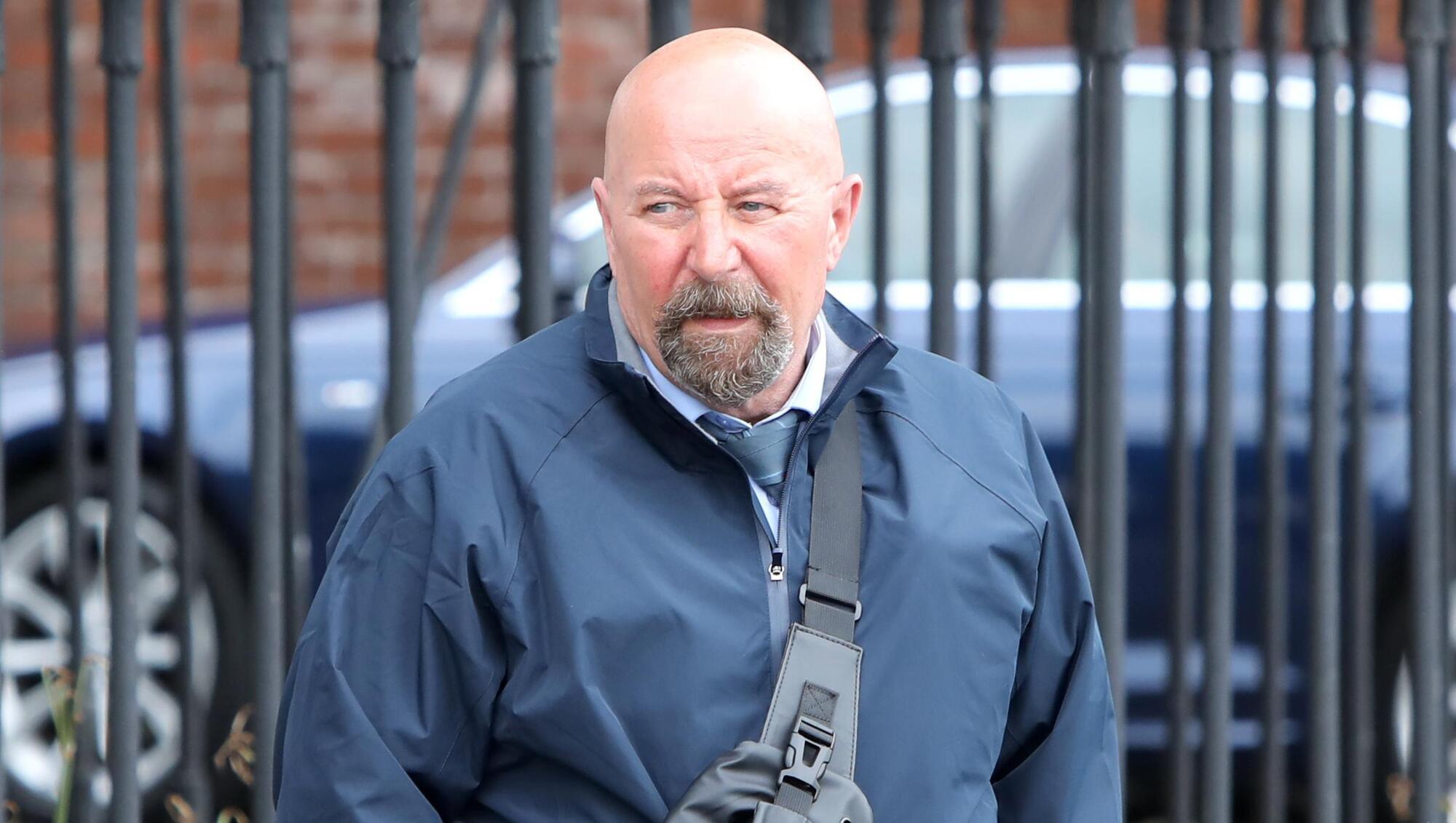
Noel Long, 74, of Maulbawn, Passage West, Co Cork has pleaded not guilty to murdering 54-year-old Nora Sheehan between June 6 and June 12, 1981 at an unknown place within the State
Noel Long has pleaded not guilty to the murder of  Nora Sheehan, whose body was found in June 1981. Picture: Collins Courts

Noel Long has pleaded not guilty to the murder of  Nora Sheehan, whose body was found in June 1981. Picture: Collins Courts

The evidence in a cold case murder trial all points to the "inescapable conclusion" that Cork woman Nora Sheehan met her death 42 years ago at the hands of murder accused Noel Long, a prosecution barrister has told the jury.

Brendan Grehan, prosecuting, on Tuesday submitted in his closing speech that there is no statute of limitations on the offence of murder and if there is a case to put an individual on trial then they are never "beyond the reach of the long arm of the law".

Noel Long, 74, of Maulbawn, Passage West, Co Cork has pleaded not guilty to murdering 54-year-old Nora Sheehan between June 6 and June 12, 1981 at an unknown place within the State. Her body was found by forestry workers at The Viewing Point, Shippool Woods in Cork six days after she went missing.

Closing the prosecution case, Mr Grehan said the murder of Mrs Sheehan 42 years ago was a case of great antiquity. He said the accused was 32 years of age in 1981 and is now 74, and that the jury might think there is an element of unfairness about putting someone on trial at this stage for something that happened a long time ago.

Counsel told the court the case is built on scientific evidence; evidence that was collected by specialist garda investigators at the time and handed over to scientists in Forensic Science Ireland (FSI) to be examined and analysed. He said a lot of cases hinge on people's memories and there is the frailty of memory but in this case the jury was relying on science.

Essentially, he said, the prosecution's case was built on two main planks; firstly the forensic evidence obtained by scientists. The second plank was DNA profiling, he said, something that can exonerate as much as inculpate.

Mr Grehan said evidence was missing in the case and exhibits were lost or no longer available. However, he said the State's contention is that all the evidence the jury need to convict Mr Long is available to them and that they should concentrate on this, rather than the unavailable matters.

Lost then found 

Regarding Mrs Sheehan, he said just over 42 years ago she was a seemingly healthy housewife who was last seen alone waving down cars a short distance from her home on the south side of Cork at about 4am. He said the victim was last seen in circumstances where she had suffered a dog bite to her left arm and had gone to the South Infirmary Hospital clearly agitated and upset from the nasty injury.

Going through the evidence in the trial, Mr Grehan said the jury had heard from witnesses who saw her wanting to talk to others in the hospital that evening. "Her son James said she would talk to everybody, just one of her peculiarities," he said.

Other witnesses had seen her near her home at Vicars Road and how she was tapping or knocking at car windows and shouting at the vehicles. "She was known around the area where she would shout 'open the boots and let out the bodies' and she seemed to have an obsession about the local hospital. It was eccentric behaviour," he said.

Counsel said as the night went on Mrs Sheehan was still out waving at the traffic and one witness had described her trying "to flag down" cars not very far from her own home at 4am. "She had a peculiar habit of engaging with traffic and was a familiar sight to people who might drive through the area or live there," he said.

He said that was the last seen of Mrs Sheehan until her battered and bruised body was discovered a long way from her home at Shippool Woods between 2 and 3pm on June 12. 

He said Garda John B O'Sullivan found the victim stripped naked with her still fastened dress pulled up around her head. The dress was pulled up so that it just came under the lip of her mouth and had been pulled up with such force that it left a strap bruise mark on the side of her neck, which suggested that a degree of force and violence was involved as opposed to just opening it. 

He said the tights were partially on her left leg and the bandage applied to her arm was still visible.

Counsel noted that the victim's body had been left bereft of any dignity and was being reclaimed by nature. He said the pathologist's report had described extensive bruising to her face, nose, mouth, head and elsewhere on her body. "She had received a beating, there is no other logical inference. Apart from being found with her private parts exposed, she had bruising inside her vagina and a swab revealed the presence of sperm there," he said.

Not surprisingly, he said, former state pathologist Marie Cassidy had offered a view in her evidence that because she was unclothed and there was an injury to her vagina, it was possible she was sexually assaulted in those circumstances.

Nora Sheehan's body was found by forestry workers at The Viewing Point, Shippool Woods in Cork six days after she went missing in June 1981.

Mr Grehan told the jurors they were being asked to infer that after Mrs Sheehan was last seen alive, she came to be in a car, was badly assaulted including sexually assaulted and was ultimately killed in the course of a vicious assault or to cover up her murderer's misdeeds.

The lawyer acknowledged it was not possible to say what precisely caused the victim's death and all that could be said is that she died in a group of circumstances as described by pathologist Dr Robert Dermot Coakley in his report.

He said it was the State's case that the assailant responsible for these injuries was also responsible for causing her death and that the intent was there to cause serious injury in the circumstances of how she had met her death.

Furthermore, Mr Grehan said the murderer had to be a man because of the semen left inside the victim's body, that the man had to have some kind of transport to get the body to Shippool Woods, which was most likely a car given her propensity to wave down cars. "Not just a man with a car and transport but someone who had to have the opportunity on the night she disappeared, not someone in Derry or Donegal," he said.

Counsel went on to tell the jury that the field of suspects was greatly narrowed down before the evidence was addressed in the case. He said the jury had heard unchallenged evidence from witness Donal Boyle that not only had Mr Long lived to the west of where Mrs Sheehan lived, the accused had also called to Mr Boyle's home at Togher in his Opel Kadett on the evening of June 6, 1981. He said the location of where Mrs Sheehan was last seen was only about a kilometre away from where Mr Long was placed that night in Togher, which meant the accused "belongs in the suspect pool" for this matter.

Whilst the prosecution may not have the deceased's coat, dress, tights or shoe found at the scene, he said everything of conceivable use was collected from them. He said that scientist Dr Timothy Creedon had created a slide to preserve the semen taken from Mrs Sheehan's vagina.

'Powerful evidence' 

The barrister noted the very powerful evidence from retired forensic scientist Dr Maureen Smith who examined items from Mr Long's car. 

The jury has heard that fibres recovered from the mother-of-three's clothing and nail scrapings matched those taken from a carpet inside the interior of the accused's car. Evidence was also given that paint fragments removed from the deceased's clothing matched paint taken from the same motorcar in both colour and composition. Mr Grehan stressed that the fact all these things matched could only suggest one thing; that the clothes Mrs Sheehan was found in - particularly the dress, coat and tights - meant "she was in that car".

He said forensic scientist Amanda Lennon had offered "very strong support" for the proposition that Mrs Sheehan had been in Mr Long's car rather than she was not. "Before you even get to the DNA evidence in the case, Nora Sheehan is in Mr Long's car," he emphasised.

Mr Grehan reminded the jury that the partial DNA profile generated from the semen preserved 42 years ago had matched that found on a beanie hat taken from Mr Long. He called this a matter of very great significance in the case especially when this was put with Mr Long being in the area that night and the comparison between the victim's clothing and the accused's car. He said that DNA profiling is a good and proven science.

UK forensic scientist Dr Jonathan Paul Whitaker has testified that the probability of the recovered DNA profile originating from someone unrelated "to the man in the beanie hat" would be one in 23,000.

Dr Dorothy Ramsbottom said based on a database of the Irish population, it was at least 20,000 times more likely that the recovered DNA was a match to that found on the beanie hat rather than an unrelated person. Mr Grehan said: 

The most important thing is it matched because short of identical twins where an egg splits after fertilisation there isn't a known example of people having the same DNA provided they are unrelated.

He added: "Here we are not looking at the entire population, we are looking at a much smaller segment, looking at someone in Cork, close to where Mrs Sheehan was last seen on the night, who happens to drive a car which happens to be connected in all the ways which it is with the clothing of Mrs Sheehan. What are the odds really that it could have been someone else who shared what Mr Long shared and with the Opel Kadett having been in the area".

Counsel went on to say it cannot be a coincidence that all these matters coincided together and asked the jury how much coincidence could they stomach. He said that Mrs Sheehan met her death by the hands of a person who left semen trace inside her and whose car was intimately connected by trace evidence to her clothing.

In summary, Mr Grehan said that all the evidence points in one direction and the inescapable conclusion is that she was murdered and that her murderer was Mr Long.

Defence closing speech

In his closing speech, Michael Delaney, defending, said a decision of law can be reviewed on appeal but a jury verdict is a decision that lasts forever.

Addressing the jury, he said there is an assumption that what they are dealing with in this case is a murder. He said Mr Grehan and gardaí had on numerous occasions used the term the "murder of Nora Sheehan" as if it was an already established fact.

"Mr Grehan doesn't decide this case and the gardaí who gave evidence don't decide it," he said.

Mr Delaney told the jury that one of the most significant issues they will have to decide is whether "what happened here was a murder at all".

Counsel said the delay in this case, a lapse of time of 42 years, was an extraordinary period of time and unprecedented in the history of the State. He said his client's car was examined in 1981, that DNA profiling was developed from 1989 onwards and that it wasn't until 2008 that somebody thought about retrieving the microscopic slide and sending it to the UK to be analysed, leading to a result in December 2008. "And yet another 13 years after that gardaí knock on Noel Long's door," said the barrister.

Counsel said that many witnesses had no real recollection of events at the trial without resorting to their statements. He reminded the jury about a retired garda who took the stand and couldn't answer any questions put to him by counsel without peeking at his statement. "The situation was almost comical but there is nothing comical about a 74-year-old man being on trial for murder," he added.

Mr Delaney said that delay was one thing but the failure to preserve exhibits in the case was "truly shocking". "With the exception of the slide archive, everything else was lost," he said.

He said the loss of the remainder of the vaginal swab recovered from the body of Mrs Sheehan stopped the defence from independently verifying the result of the DNA and that there was nothing left over for the defence to examine. 

"There is an element of the prosecution saying 'we have got what we want, just your tough luck if there's nothing to verify what we say is correct".

He said the case was wholly dependent on forensic science and there was nothing else to connect Mr Long to the deceased.

Counsel said no eye witnesses were called to describe the movements of Mr Long on the night in question other than to hear from Donal Boyle who said the accused called to his home on the evening and not the night of June 6.

You heard no evidence of Mr Long's car being driven between Cork and Inishannon, moreover you heard nothing by way of possible background or a connection between Mr Long and Mrs Sheehan. Evidence of that type might have filled in the blanks connected in the case.

Regarding the DNA evidence in the case, Mr Delaney said the jury were being asked to place an enormous degree of trust in science and to put on their white coats to enter the world of microscopes and infrared lights. He asked them to be sceptical of the scientific evidence in the case and to carefully scrutinise the DNA evidence. "Ask yourself if you are sure the result obtained by Dr Whitaker in 2008 is correct".

Referring to low copy number (LCN), which is a DNA profiling technique, Mr Delaney said this particular method had a limited life cycle for a number of years and became obsolete in 2012. He said its use in the UK lab which developed the technique was very limited and only three labs outside the UK had adopted the method. "Dr Whitaker didn't agree with that proposition but you can form your own view," he said.

Mr Delaney said that the prosecution had overstated the significance of the match generated from the partial DNA profile and the profile found on the accused's beanie hat. He also said there was no evidence to suggest the paint flakes or fibres found in the car were unusual or distinctive.

He said the State can't precisely say how Mrs Sheehan met her death. "I say they can't say it at all, the only pathology evidence you heard is from Dr Marie Cassidy, you are not dealing here with some hired gun who had been brought in to assist the defence with the case. Her evidence was particularly important in the context of you having to decide if anything more than an unlawful killing, whether there was an intent to kill or cause serious injury".

He said former state pathologist Dr Cassidy, who was called by the defence, said Mrs Sheehan's cause of death was unascertained and she had put forward possibilities, one of which was asphyxia. "Just a possibility, very far from beyond a reasonable doubt,' he said.

Mr Delaney argued that Dr Cassidy said it could not be excluded that the mother-of-three had suffered a heart attack due to cardiac arrhythmia during an assault. He asked the jury to think back to the witnesses who encountered the deceased in the hospital and said she was a very nervous person, who seemed to be more upset than one might have expected from a dog bite. 

If she was subjected to physical and sexual assault, would that not have been a frightening ordeal, so why treat this possibility as speculation, it has been put forward by a pathologist.

Mr Delaney asked the jury would there not have been a motive for someone to conceal Mrs Sheehan's body in a similar way if she had died from a heart attack in the course of a physical and sexual assault. "The prosecution is clear from the circumstances she met her death by foul play so why plump for one theory over another?"

He said Dr Cassidy said the force used on the deceased was no more than moderate and sufficient to cause bruising but not fractures. "Does a person striking physical blows with no weapon intend to cause serious injury; we suggest not".

Counsel said the prosecution had failed to prove the intent required for murder and in those circumstances the most a jury could consider is a verdict of manslaughter.

Mr Delaney said there were significant gaps in the prosecution case, that the evidence received fell well short from the accused being guilty of murder and that it was not for the jury to plug the gaps in the State's case. 

He said the case was based on circumstantial evidence but it was limited. "It can be powerful because of its cumulative effect; this is not [powerful] and that is the reason I ask you to find the accused not guilty".

The trial continues tomorrow before Mr Justice Paul McDermott and the jury of seven men and four women, when the judge will begin his charge.

More in this section

Lunchtime News

Newsletter

Get a lunch briefing straight to your inbox at noon daily. Also be the first to know with our occasional Breaking News emails.

Cookie Policy Privacy Policy Brand Safety FAQ Help Contact Us Terms and Conditions

© Examiner Echo Group Limited