'It beggars belief' — Widower pleads for new law after six-year battle over wife's healthcare
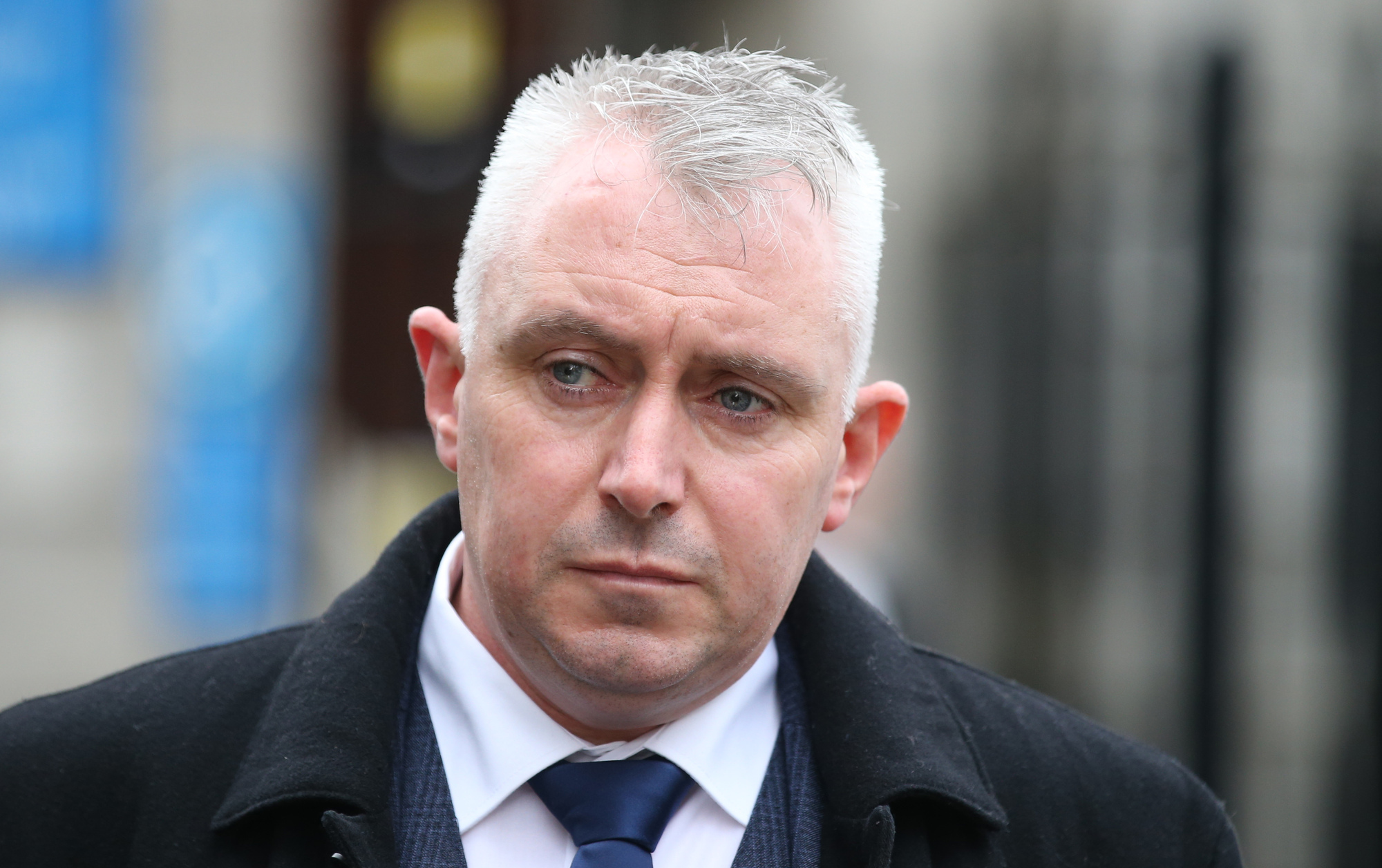
Fergal Murphy (pictured) said the HSE admitted liability early in the case of his wife who sustained a brain injury, but 44- year old Amanda died not knowing if her children’s future was secure in the legal action against the HSE because of an anomaly in the law. File picture: Collins Courts
“It beggars belief that we were dragged through such a lengthy legal battle,” a grieving widower has said outside the High Court as his six-year fight about his wife’s hospital care has come to an end over a year after her death.
Fergal Murphy said the HSE admitted liability early in the case of his wife who sustained a brain injury, but 44-year-old Amanda died not knowing if her children’s future was secure in the legal action against the HSE because of an anomaly in the law.
And he pleaded with the Government to bring in legislation to help other families.
"It is a great source of relief to come to the end of the process and Amanda can now be at peace knowing her children’s future has been secured," he said as the High Court on Thursday approved the €1.2million settlement of a separate action he had to bring on behalf of his family including their children Arianna (11) and Cormac (10) after his wife’s death.
School principal Amanda Davey Murphy died in May last year, just six months after her distraught husband had pleaded with the State to “have a heart” and allow her action for damages over her hospital care and an action to decide the future care needs of her children to run side by side.
She settled her own action but her family had to wait until her death to bring a separate action in relation to the loss of the mother and wife. Amanda, the High Court heard, suffered a significant brain injury and was on a ventilator and at times a coma since 2020, and died on May 21, 2022.

The point of law involved relates to a section of the Civil Liability Act 1961 which means only one action can be heard arising from an alleged wrongful act and the children and dependents can only bring their action after the person’s death.
“It beggar's belief that we were dragged through such process particularly when there was such an early admission of liability in this tragic case. It’s now a day for us to hopefully draw a line in the sand and get on with our lives,” Mr Murphy said.
Outside the Four Courts in a statement read on Mr Murphy’s behalf by his solicitor David O’Malley, he said because the two actions could not run together Amanda had been faced with “Sophies’ Choice“ in relation to the legal actions, “herself or her children”.
“Inexplicably over a year after Amanda's death nothing has changed. How many more terminally ill women need to be treated the same way before our legislature intervene?
“For Amanda's memory, we once again ask the Government to do the right thing. Too many women have died already not knowing how their loved ones would get on. A simple bill would rectify the anomaly.”
Amanda Davey Murphy (44) a school principal from Ballina, Co. Mayo, had sued the HSE in relation to her care at Mayo University Hospital, Castlebar and Sligo University Hospital in 2016.
It was claimed there was a failure to identify for a protracted period that Mrs Davey Murphy had sustained damage to her brain and the brain injury, it was claimed, was allowed to remain undiagnosed and untreated. She had gone to the Mayo hospital on January 9, 2016, after she had a fall at home.
A wound on her scalp was stapled and she was advised the fall was due to low blood pressure and she was sent home. It was claimed no CT scan or other investigation took place.
Two days later she was admitted to the Sligo hospital after she was sent by her GP and she had a CT scan and other investigations. No cause was found and medication was prescribed to keep her blood pressure elevated.
On January 16, Mrs Murphy had a second fall which appeared to be as a result of a seizure and she was taken by ambulance to Sligo General Hospital.
She was kept for observation overnight and the fall was again attributed to low blood pressure. On January 19, Mrs Murphy was found unresponsive with the symptoms of a prolonged seizure. On examination she had slurred speech and left-sided weakness.
It was submitted by the Murphy side, had the injury been identified and repaired at the time of the admissions to the hospitals, she may on the balance of probabilities have made an uncomplicated recovery.