Scientist tells court he preserved key forensic evidence from body of Nora Sheehan in 1981
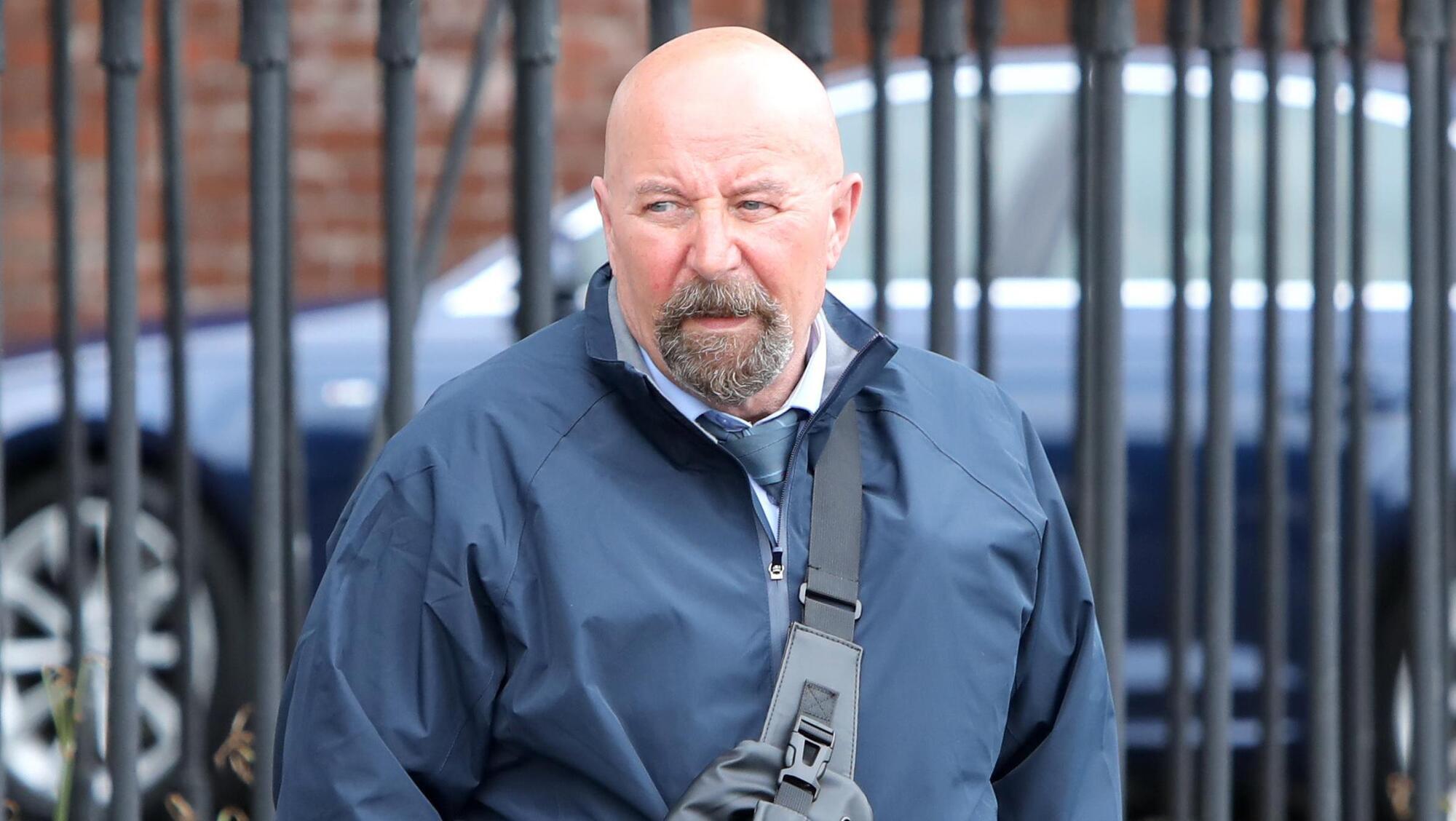
Noel Long, 74, with an address at Maulbawn, Passage West, Co Cork, has pleaded not guilty to murdering 54-year-old Nora Sheehan between June 6 and June 12, 1981, at an unknown place within the State. File picture: Collins Courts
The scientist who preserved key forensic evidence taken from the body of Cork woman Nora Sheehan 42 years ago happened to be on holiday at the time just kilometres from where her body was found, the Central Criminal Court has heard.
Noel Long, 74, with an address at Maulbawn, Passage West, Co Cork, has pleaded not guilty to murdering 54-year-old Nora Sheehan between June 6 and June 12, 1981, at an unknown place within the State. Her body was found by forestry workers at The Viewing Point, Shippool Woods in Cork six days after she went missing.
Dr Timothy Creedon on Tuesday told prosecution counsel Brendan Grehan SC that he worked as a forensic scientist in the biological section of Forensic Science Ireland from 1977 until 1991.
Dr Creedon said he was on holiday in Inishannon, Co Cork, in June 1981 when the body of Mrs Sheehan was discovered by gardaí. The witness attended at the scene in an observational capacity and agreed with counsel it was happenstance he was there at the time.
Dr Creedon said he had an involvement in the case on June 14, 1981, when he met a detective garda in Forensic Science Ireland and received exhibits. Among the exhibits he received were a vaginal swab, a mouth swab and an anal swab taken from the late Mrs Sheehan.
Dr Creedon examined the swabs and found semen on the vaginal swab belonging to Mrs Sheehan but not on the oral and anal swabs.
Dr Creedon said he put material from the vaginal swab onto a centre piece of glass before he stained it and sealed it. He said this was sometimes called a microscopic slide as it can be used under a microscope.
Having created a slide from the vaginal swab he then examined it under the microscope. The slide was retained in the laboratory before being archived by a senior technician. He agreed the slide went into a large archiving cabinet in the forensic science laboratory where other slides are kept.
In his opening address, Mr Grehan told the jury that Dr Creedon's action in preserving the slide turned out to be of great significance because in 2008, a serious crime review team in An Garda Síochána was set up and tasked with reviewing old unsolved cases — particularly murders — often termed "cold cases".
He said Mrs Sheehan's murder case came under its purview and as part of the review, the original investigation concerning the glass slide taken from the body of Mrs Sheehan was looked at again "with an eye to modern scientific developments" and in particular the science of DNA.
Under cross-examination today, Dr Creedon agreed with Michael Delaney SC, defending, that the swab is a cotton bud and in creating the slide he would have removed part of the bud. He also agreed any remaining biological material would be stored in a refrigerator and are amongst the exhibits that are returned to gardaí.
Mr Delaney put it to the witness that this material was one of the exhibits that had since been lost in the case. The witness said he could not comment about that.
Dr Creedon told Mr Delaney his sole work was to examine swabs and to record if there had been semen on the vaginal swab belonging to Mrs Sheehan.
The jury has already heard the pathologist who carried out the autopsy on Ms Sheehan found bruising in the anterior wall of her vagina and it showed the presence of spermatozoa. Dr Robert Dermot Coakley conducted the post mortem on Mrs Sheehan on June 13, 1981, but died weeks after carrying out the examination in August 1981.
Before the jury was sent home on Tuesday evening, a note was handed up to the judge. Addressing the jury a short time later, Mr Justice Paul McDermott said as a result of information having been conveyed to him, it was appropriate that their fellow juror would no longer serve and that he would discharge him. He said they would continue to hear the evidence in the case as a jury of 11.
The trial continues on Wednesday in front of Mr Justice McDermott and a jury of seven men and four women.

CONNECT WITH US TODAY



Be the first to know the latest news and updates