'I didn’t think it was serious at all' — Stardust DJ recalls reaction to first sign of fatal fire
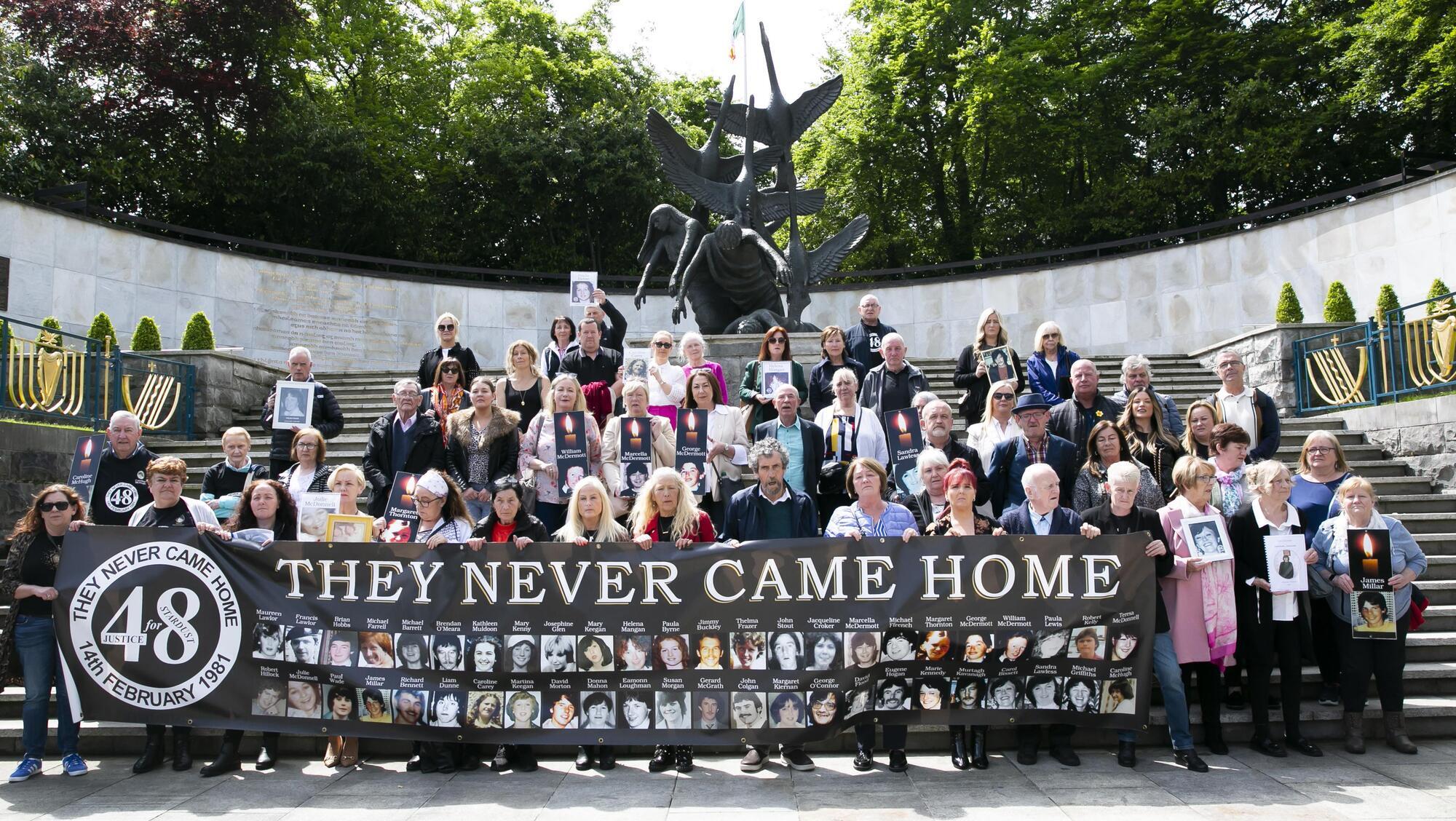
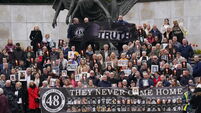
Family and friends of the victims of the Stardust fire at the Garden of remembrance last month. File photo: Gareth Chaney/Collins
“We went back to the Stardust. We didn’t believe anybody was dead. We’d seen people walk into a load of ambulances, they were walking in themselves. Colm came to me and said the garda told him there was a body behind the door. We both said at the same time ‘Jesus’.
“When we got back to Colm O’Brien’s house, after we came back the second time looking for Michael Barrett, we heard the news on the radio. And that described how many people had died.”
Danny Hughes had DJ-ed the disco dancing competition in the Stardust. The last song he played was Born To Be Alive, a late 1970s disco hit by Patrick Hernandez.
He saw the fire that would lead to the deaths of 48 people in the west alcove of the venue after he had handed the reins for the last few tunes to his colleague Colm.
Echoing what some other witnesses have said, he didn’t think the fire was that dangerous when he saw it first towards the back of the alcove. Seeing staff heading over with fire extinguishers, he thought it was something they would be able to put out.
“I didn’t think it was serious at all,” Mr Hughes said. He went out through the adjacent pub and around to the front of the Stardust with a mind to tell his colleague to play maybe three more records before calling it a night.
He said:
Mr Hughes saw his colleague at the exit door that bands and DJs used to bring in their gear. His whole body was black. “His appearance shocked me. He was vomiting as he walked.”
Mr Hughes’ testimony came on the last day of the fourth week of witness evidence at the fresh inquests for those who died in the Stardust tragedy at Dublin District Coroner’s Court. The questioning of witnesses has often been lengthy and forensic.
It has heard of the policy of draping locks over exit doors to give the appearance that they were, in fact, locked. It has heard of incidents prior to the night of the fire where people could recall seeing smoke in the venue. It has heard multiple staff members say they never had any training on what to do in the event of a fire.
It has heard from numerous people seeing the fire in the west alcove—an area blocked off and behind a curtain or shutter on the night. It has heard of the lights going out and the panic that ensued. And it has heard harrowing details of what people witnessed as the fire rapidly spread.
It will have made for difficult listening at parts, particularly for families of the victims. Witnesses, themselves, have become emotional at times describing what they had seen. The delivery of witness evidence has taken three different forms.
There have been people giving evidence in court. Most of them so far have been men and women who worked in the Stardust—waitresses, barmen, and doormen; many of them in their teens at the time. Being asked to recall every last detail they can about what they saw and heard on that night 42 years ago.
The floor plan of the Stardust will likely be imprinted on anyone who has tuned in regularly, as witnesses are frequently shown the plan and asked to identify where they were at various junctures. They will know where the exits are, where the alcoves were, where the bars were.
And there has been evidence given via video link, by witnesses unable to attend in person. This led to the stark scenes last week where a barrister representing families of victims alleged that a witness had a “disagreement” with someone else in the room with him when the court had risen but his microphone was not muted.
“The person who overheard it heard a person say that the doors were locked. And you said: ‘It’s nothing to do with me so I’m not saying that’,” Des Fahy KC put to Phelim Kinahan, a floor manager at the Stardust back in 1981. “I don’t remember saying it,” Mr Kinahan replied.
And then there has been evidence, essentially from the past. Witness statements and evidence given by people now deceased or unable to appear in court.
This has included statements given by the now-deceased Patrick Butterly, the patriarch of the business empire which included the Stardust nightclub and adjoining pub Silver Swan and restaurant The Lantern Rooms. His son Eamon was the manager of the Stardust, responsible for the day-to-day running of the premises.
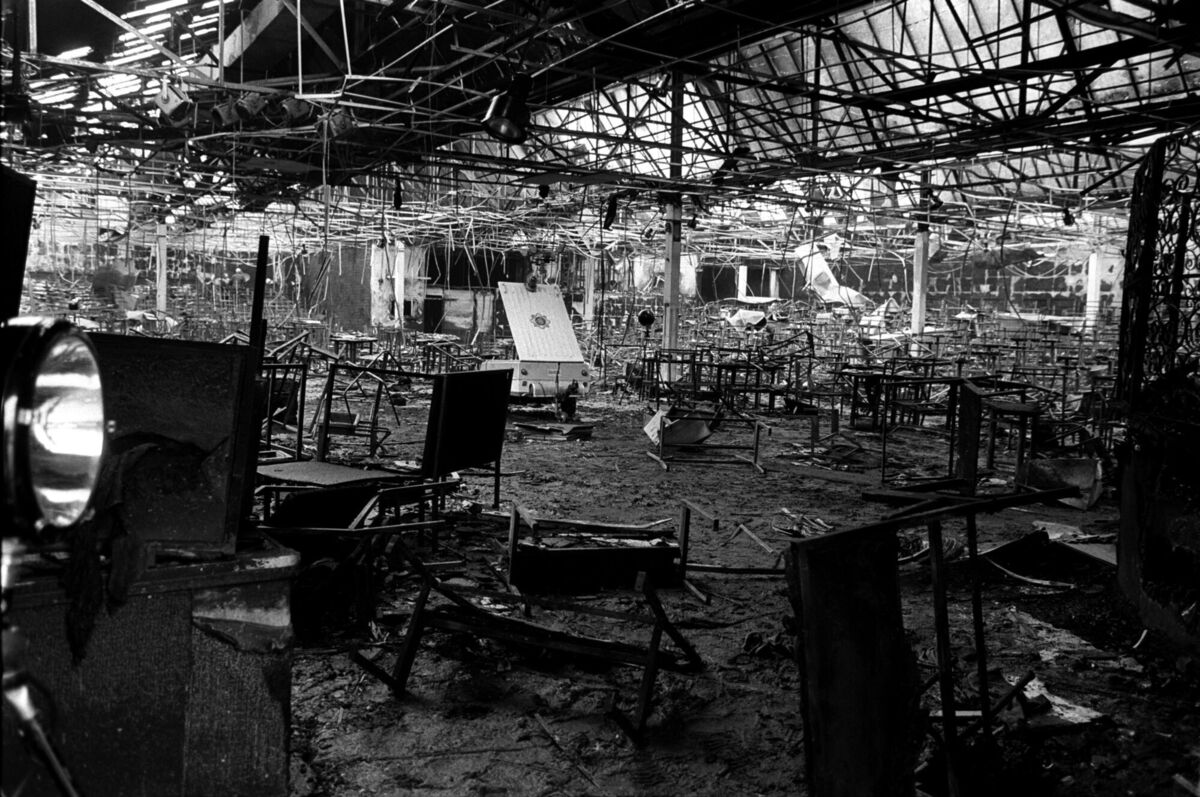
Patrick Butterly told the 1981 Tribunal that he thought the building was “fireproof”, and that he believed the building had been deliberately burned.
The court heard this week that that was also Eamon Butterly’s initial reaction when he saw the flames in the west alcove. In his initial statement to gardaí just a few days after the fire, Mr Hughes said he heard Mr Butterly say “they have set us on fucking fire”.
It should be noted that the original Tribunal’s conclusion that the fire was “probable arson” was struck from the Dáil record in 2009, and these fresh inquests are examining the circumstances of the deaths of those 48 people including how the fire started and progressed.
Many staff members managed to escape on the night through the Lantern Rooms or the Silver Swan, having a more intimate knowledge of the layout of the venue than the patrons. Some of them have described how they tried to get the attention of patrons to help lead them out but in the panic, they weren’t able to.
Part-time barman Colm O’Toole was at the main bar, having returned from pouring the contents of a fire extinguisher onto the blaze “which had no effect”.
“I tried to tell the patrons there was an exit through the dispense bar,” he said in his original statement. “Nobody seemed to hear me. The smoke was getting dense at this stage.”
Maeve Naughton, a waitress at the Stardust, recalled shouting "fire" while people were still dancing and headed back to the kitchen as the lights went out.
“I called some of the crowd in the hall to come through the kitchen, they wouldn’t take any notice,” she said.
Mr O'Toole went on to say that "no plan kicked in", and people were acting as "individuals" trying to fight the fire and alert people to what was happening. "There were a few people trying to do their best," he said.
One of the witness statements read to court was from Patrick J Murphy, a doorman on the night. At one of the exit doors, he saw a young girl run towards the door and fall just inside. He said:
He said that people were shouting through the windows of the toilets, and Mr Murphy said he helped others get the grating off the windows and helped two people out of the windows.
The inquests will sit for a few more weeks before breaking for the summer. When it returns in the autumn, it’s expected to last many more months.
The court has already heard distressing testimony from many of the workers there on the night. With many of the patrons there on the night yet to give evidence, further harrowing, but essential, testimony is yet to come.

CONNECT WITH US TODAY



Be the first to know the latest news and updates