Russian man claiming state security service falsely accused him of crime wins challenge

Judge ruled the International Protection Appeals Tribunal erred in law, in concluding the man was excluded from international protection by reason of his supposedly having committed a serious non-political crime.
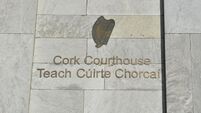
The High Court has set aside a refusal to grant international protection status to a Russian man on grounds he had committed a serious non-political crime before coming to Ireland.
The man, a Muslim from the Caucasus region, claimed he was falsely accused of crime by Russian Federation's federal security service, the FSB, which he said made false accusations of terrorism against him because of his failure to cooperate with them.
The International Protection Appeals Tribunal (Ipat), in dealing with his application for protection here, decided he had a well-founded fear of persecution on the grounds of religion, imputed political opinion, and membership of a particular social group comprising those suspected of membership of an Islamic terrorist organisation called 'Imarat Caucasus'.
The Ipat said such people were at risk of torture, imprisonment, and murder by the authorities in Russia.
However, the Ipat then went on to find there were serious reasons to consider the man had committed a “serious non-political crime” prior to his arrival in the State. The Ipat purported to find, in the alternative, he had incited or otherwise participated in such a crime.
He brought a High Court challenge over the decision against the Ipat and the Minister for Justice and Equality, who opposed the challenge.
In a recently published judgment, Mr Justice Garrett Simons ruled the Ipat erred in law, in concluding the man was excluded from international protection by reason of his supposedly having committed a serious non-political crime.
In particular, he said, the Ipat failed entirely to carry out the individualised assessment mandated in such cases.
It also failed to identify adequately the nature of the crime or crimes which it is considered the man had committed.
It was simply not possible, he said, for a competent authority to carry out the requisite case-by-case assessment without first identifying the nature of the crime.
Without such identification, there can be no meaningful analysis of whether the crime is “serious” or “non-political”, nor of whether the person bears individual responsibility for same, he said.
The judge also said the Ipat failed to adequately address the question of whether it was appropriate to rely on documents emanating from the authorities of the Russian Federation.
The man had contended the authorities had fabricated a criminal case against him.
"Country of Origin Information" confirms there is a well-founded concern the Russian authorities fabricate criminal charges against political opponents, the judge said.
The Ipat itself had been satisfied the man had a well-founded fear of persecution on grounds including that persons suspected of terrorism in the Russian Federation are at risk of torture, imprisonment and murder by the authorities, he said.
Notwithstanding this conclusion, the Ipat appeared to have been unwilling to contemplate there was a risk the same authorities might take the lesser step of fabricating charges or falsifying evidence.
This "contradictory approach" was irrational, he said.
The Ipat failed to consider whether the pursuit of criminal proceedings by the Russian authorities might itself be an instance of discriminatory persecution, he said.
The judge set aside the Ipat decision and sent the case back to have it reconsidered by a differently constituted division of the Ipat.
CONNECT WITH US TODAY



Be the first to know the latest news and updates