High Court judge refuses to recuse herself from Ammi Burke unfair dismissal case
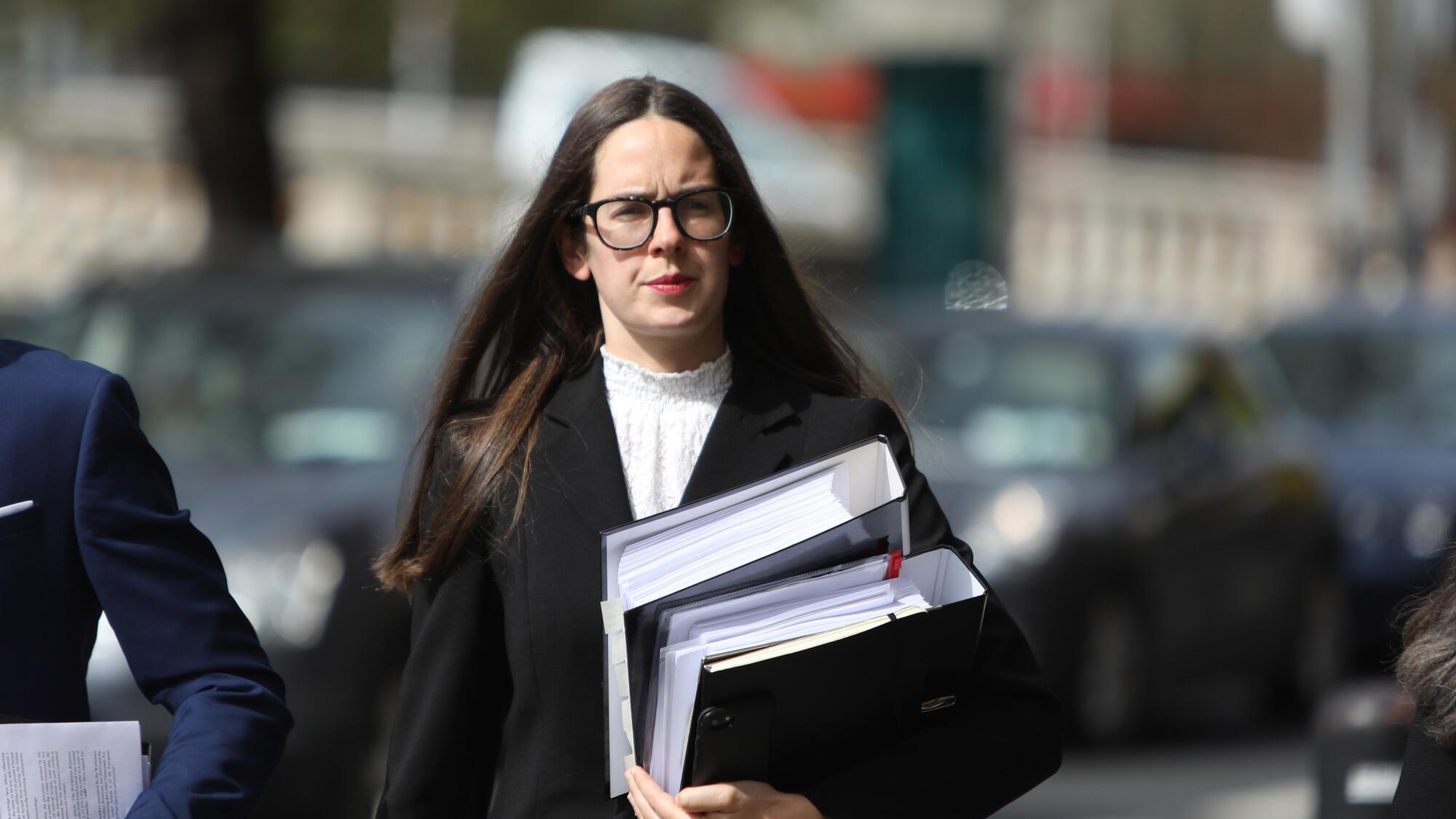
Ammi Burke had advanced four grounds in support of her claim of bias on the part of the judge. Photo: Collins Courts
Solicitor Ammi Burke has said the High Court should leave “no stone unturned” in hearing her challenge to the rejection of her claim she was unfairly dismissed from law firm Arthur Cos.
Ms Burke made the comments as her substantial case over the Workplace Relations Commission’s (WRC’s) decision proceeded before Ms Justice Marguerite Bolger after that judge refused to recuse herself from hearing it.
Ms Burke had alleged there was a reasonable apprehension of objective bias on the part of Ms Justice Bolger and applied for her to step aside.
The judge said the legal test for objective bias is “well established”, requiring a reasonable observer informed of the relevant facts to reasonably apprehend there is a risk the judge will not be fair and impartial.
She did not believe a reasonable observer informed of the facts would conclude she cannot hear this case objectively and impartially and rejected all four grounds Ms Burke had advanced.
Ms Burke alleged Ms Justice Bolger had a “particularly close relationship” with Arthur Cox’s senior counsel, Peter Ward, in the “tight-knit community” of employment law specialists. They were founding members of the Employment Bar Association and appeared on professional panels together over the years, she alleged.
She further claimed Ms Justice Bolger authored a 2015 article that expressed a view on whether unfair dismissal hearings should be adversarial or inquisitorial in nature. Ms Burke contends in her action that the procedure must be inquisitorial, and the judge’s statement eight years ago “effectively decides" this "core issue” to the contrary, she alleged.
Arthur Cox’s solicitor, Donal Spring of Daniel Spring & Co, was directed on Tuesday to file a sworn statement setting out his contention that Ms Justice Bolger, then a senior counsel, was never contacted about potentially mediating Ms Burke’s claim against the law firm.
Ms Burke had produced a letter she received from the solicitor in 2020 that contained the then-barrister’s name among two other senior counsels proposed as possible mediators. The judge said Mr Spring confirmed no such conversation took place.
Also “extremely concerning” to Ms Burke was that Ms Justice Bolger would not retract a statement, made in July 2022 at an earlier stage of this case, to the effect that Ms Burke’s claim was not a public interest case.
Such a bystander would be deemed to be aware and understand the distinction between a barrister’s comments in an academic journal and the judicial function to make a decision based on law and precedent, she said in her 16-page judgment.
This viewer would also understand the nature and practice of mediation, the likelihood of a judge having engaged in legal commentary in publications during their time as a practitioner, and the nature of a barrister’s professional relationships with their colleagues within a specialised bar association, she added.
The WRC and Arthur Cox, a notice party in the proceedings, opposed the recusal application, arguing there was no basis for the judge to step aside.
After the judge concluded giving her judgment, Ms Burke immediately objected to being "forced" to proceed with her case before Ms Justice Bolger.
The judge left the courtroom for several minutes so the parties could consider her ruling. Ms Burke opened her case upon the judge’s return.

CONNECT WITH US TODAY



Be the first to know the latest news and updates