Here's how to spot if your €2 coin is counterfeit
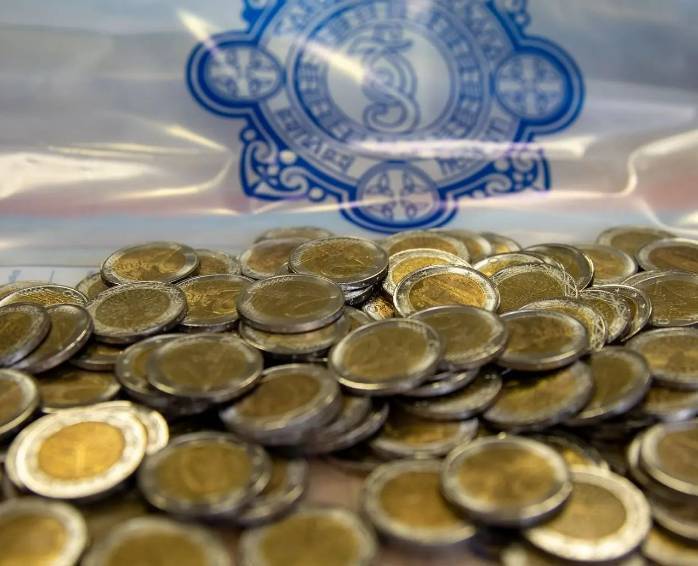
During the searches, €2 coins amounting to €2,920 were seized, examined and confirmed to be fake. File photo of genuine coins. Picture: Garda Info
Gardaí have issued a warning about fake €2 coins which have been circulating and have given advice on how to spot them.
It comes following the State's first large seizure of counterfeit coins on Wednesday.
An investigation was launched into the counterfeit money with a number of searches conducted in the Raheny area of Dublin at the end of July.
During the searches, €2 coins amounting to €2,920 were seized, examined and confirmed to be fake.
One person has been charged in relation to the counterfeit coins and they were brought before the courts at the end of July.
Assests to the value of €73,986.62 have been frozen in bank accounts.
Gardaí have said there are a number of ways to check if you suspect a coin may be counterfeit.
A visual inspection will note that when compared to a genuine coin, the image detail is of poor quality, the colouring is off and they are different sizes in thickness and diameter. They are also different weights and there are errors in lettering such as a missing letter, incorrect spelling or the wrong font is used.
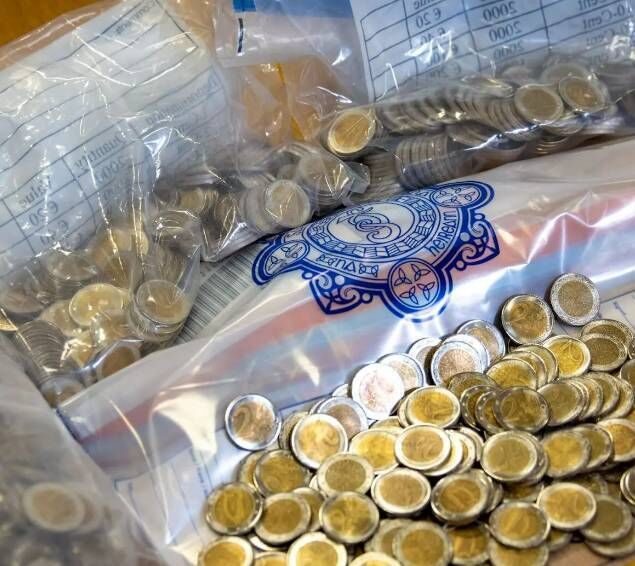
If you do not have a genuine coin to hand to compare you can try to bend the suspect coin as some counterfeit coins bend.
Alternatively, you can conduct a magnet test. Real €2 and €1 coins are slightly magnetic - you should be able to lift the coin with a magnet but should be able to shake the coin from the magnet easily.
Generally, fake €2 and €1 are either very magnetic, not magnetic at all or just the outer ring is magnetic.
Genuine 50c coins are non-magnetic.
If you believe you have any counterfeit money - coin or note - you are obliged to give it to your local financial institution, the gardaí, the Central Bank's National Analysis Centre or Coin National Analysis Centre.
CONNECT WITH US TODAY



Be the first to know the latest news and updates