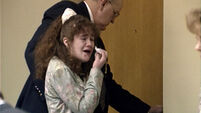
New jury to re-assess garda's claim over fellow garda assault
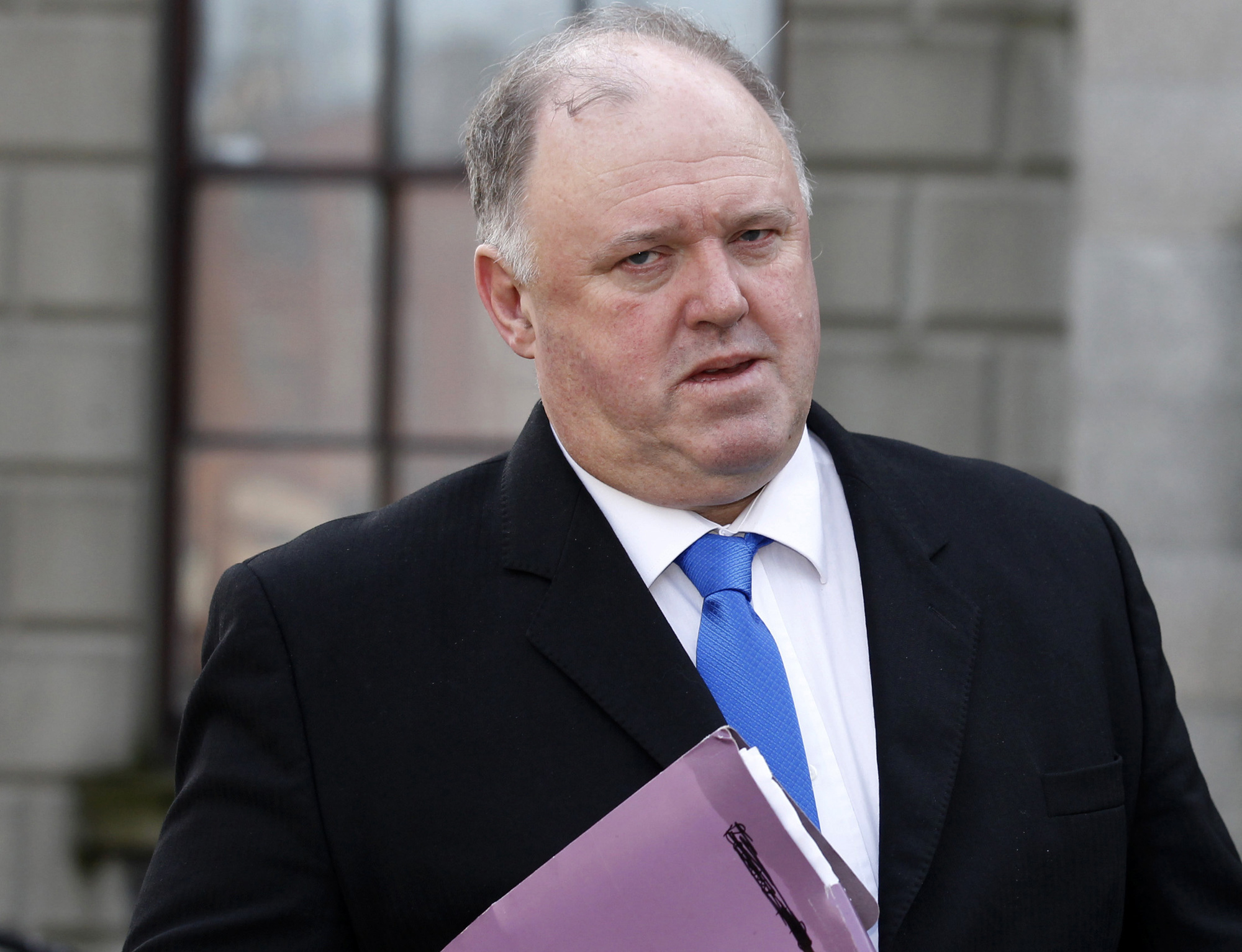
The Court of Appeal has decided to set aside a 2016 High Court jury award of €95,000 in favour of Garda Oliver Cully (pictured during the 2016 hearing) arising out of his claim that he was "rugby tackled to the ground when off duty, handcuffed and arrested" by other gardaí after querying a taxi fare. Picture: Courtpix
The Court of Appeal has directed that a new jury be empanelled to reassess the amount of damages that should be awarded to a garda who successfully sued the State over being assaulted by other gardaí when off duty.
The court decided to set aside a 2016 a High Court jury award of €95,000 in favour of Garda Oliver Cully arising out of his claim that he was "rugby tackled to the ground when off duty, handcuffed and arrested" by other gardaí after querying a taxi fare.

The jury unanimously found that he was falsely imprisoned and assaulted by members of the gardaí in the incident after Garda Cully left a nightclub in the early hours of the morning of April 24, 2004.
Garda Cully appealed certain findings made by the presiding Judge, Mr Justice Colm MacEochaidh during the trial at the court of appeal.
He argued that the trial judge, had erred on several grounds including by striking out Garda Cully's claim for malicious prosecution.
Arising out of the incident Garda Cully was charged, but later acquitted before the district court of certain criminal offences. He was also the subject of an internal Garda investigation, which was discontinued after several months.
Both these probes, he claimed, amounted to his malicious prosecution by the State.
The trial judge had also erred by refusing to allow certain other evidence Garda Cully claimed was relevant to his claim, to be put before the jury, he claimed.
He further argued that the judge erred by only awarding him 65% of his legal costs for a case that ran for 14 days.
Garda Cully sought an order from the court of appeal directing that his case go before a High Court, where a new jury would be asked to determine if he had been the subject of a malicious prosecution.
The appeal was opposed, and the State sought orders to have the original award made to Garda Cully reduced, on the grounds that it was "excessive."
In a cross appeal the State argued that Mr Justice MacEochaidh erred by allowing Garda Cully's claim that he was subjected to the intentional infliction of emotional suffering to go to the jury.
This it was claimed, led to double counting in the award by the jury as the basis of this aspect of Garda Cully's claim comprised of the same facts from the alleged assault.
In its judgement the three-judge court court of appeal comprised of Mr Justice Seamus Noonan, Ms Justice Mary Faherty and Mr Justice Donald Binchy agreed that the trial judge had erred on certain issues.
Giving the court of appeal's decision Mr Justice Binchy said that the trial judge fell into error in withdrawing the issue of malicious prosecution from the jury.
Given that Garda Cully had succeeded with his claims of assault and false imprisonment, it followed that he had to succeed in a claim of malicious prosecution, notwithstanding the absence of any evidence of a conspiracy involving any more than those involved in the assault of the appellant, the court of appeal held.
It agreed with the State respondents that the trial judge also fell into error in ruling that the claim of intentional infliction of emotional suffering should go to the jury, in circumstances when Garda Cully sought damages for assault and false imprisonment.
An award of damages in respect of any of those wrongs is intended to compensate for all the adverse consequences arising therefrom, including physical and psychological injury, such as the distress and hurt caused to a plaintiff, the court of appeal held.
By allowing this claim to go the jury, the trial judge created a risk of the appellant receiving more than one award of compensation for the same wrong, it held.
Arising out of its findings the court of appeal directed that the case should go back before a newly empanelled civil jury to assess and measure the appropriate number of damages that the appellant should receive in respect of malicious prosecution.
The new jury is also to assess and measure the appropriate amount of damages Garda Cully should receive in respect of the false imprisonment and assault committed upon him.
It should further assess what damages the appellant should receive in respect of aggravated damages and consider if he should receive an award of exemplary damages.
The court of appeal also ruled that the State must discharge all the legal costs of the appellant incurred in the High Court, less the costs of one day of the hearing which shall be paid by the appellant to the respondents.
The court made no order in relation to the costs of the appeal after holding that both sides had been partially successful.
In 2016 Garda Cully had successfully sued the State claiming he was assaulted and falsely imprisoned as a result of the incident over the taxi fare. He also claimed he was subjected to emotional suffering. The State defendants denied all the claims.
The incident arose after he had queried a charge of €35 for a taxi to Lucan after he had left a Dublin nightclub near Camden Street.
He said he told the driver he would pay what was on the meter.
Garda Cully said the driver told him to get out of the taxi, but then drove on and stopped after 100m and called over two uniformed gardaí.
Garda Cully said he told one of the gardaí that he just wanted to get home and the driver was trying to overcharge.
He said the garda said “get the fuck out of the car”.
He said other gardaí had arrived.
He said while walking away with the intention of getting another taxi, his legs were "taken from under me in a rugby tackle and his "face hit the ground first".
He said he was handcuffed until a garda van came to take him to a station.
Garda Cully said he was not drunk and did not say anything abusive to the gardaí.