Garda station reopens in area 'suffering more than most' from gangland crime
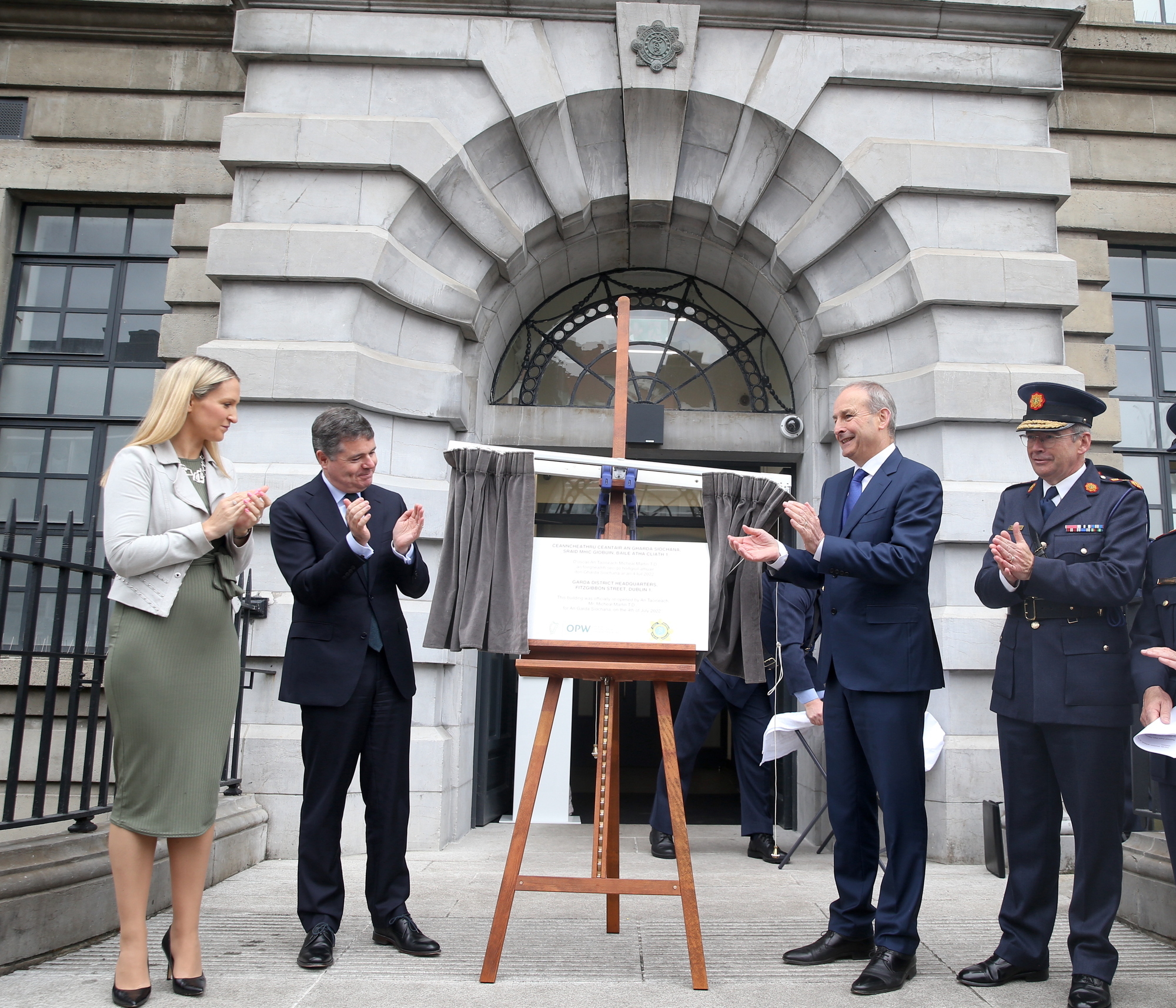
(Left to right) The Minister for Justice, Helen McEntee, Minister for Finance, Paschal Donohoe, Taoiseach Micheál Martin Minister and Garda Commissioner Drew Harris at the official reopening Fitzgibbon Street Garda Station today. Picture: Stephen Collins /Collins Photos
The people of Dublin’s north east inner city have “suffered more than most” from the “ravages” of gangland, Garda Commissioner Drew Harris has said at the reopening of a garda station in the area.
The police chief said the new Fitzgibbon Street Garda Station now provided a range of special services to victims of crime, including children and vulnerable people, as well an adjoining section where community groups could hold meetings.
The station, adjacent to Croke Park, was closed in 2011 but has reopened as part of the North East Inner City (NEIC) Project, as recommended in the Mulvey Report, which was published in 2017.
The Mulvey group was set up against the backdrop of the Kinahan cartel murder campaign in the north east inner city and community demands for action on policing and local development.
“We all recognise illegal drugs, those who supply them and the crime associated with them, have really destroyed the lives of so many of the communities they come from," the commissioner said at the ceremony.
“And the local community here have suffered more than most on the ravages of organised crime gangs. On a local level, on a national level, we are having an impact on targeting and disrupting organised crime groups, an area where we've seen considerable success.”
The ceremony, held outside the station, was attended by Taoiseach Micheál Martin, Justice Minister Helen McEntee, Finance Minister and local TD Paschal Donohoe as well as Sinn Féin leader and local TD Mary Lou McDonald, other local TDs and councillors as well as local activists.
Commissioner Harris said the new station had a Crime Victim Support Suite, which he said was the “very first of its kind” in the country, where various rooms and services are available to treat victims “in a compassionate and dignified way”.
He said this included a medical room for assessments, a first aid rest room, a child protection office and facilities to engage with other agencies.
The commissioner said the station now also provides a welfare room for staff, a place they can “focus on their mental health and well being”, where members can “share the dark, stressful or mentally draining” aspects of their job.
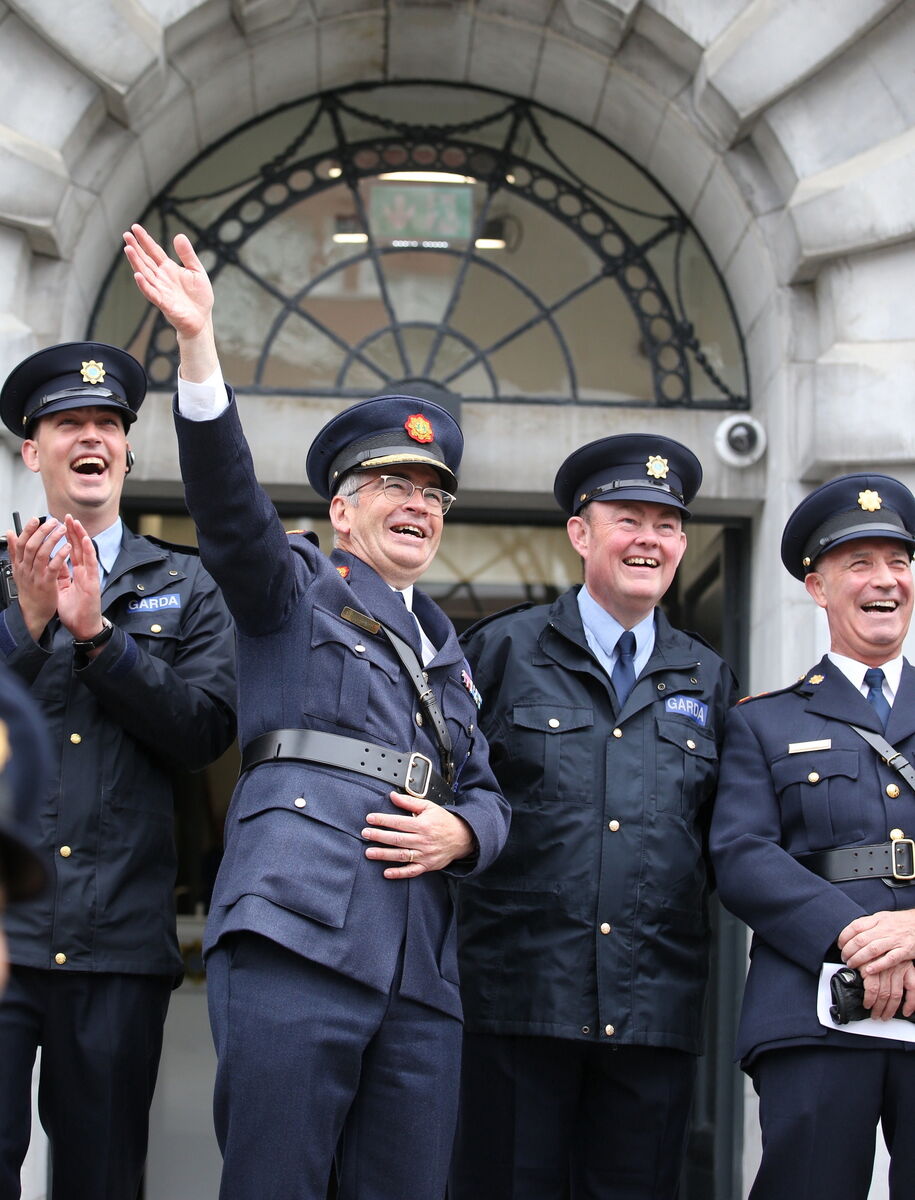
Local superintendent, Martin Mooney, said that while construction started in 2018, it was delayed by the pandemic, with the renovated station reopening in October 2021.
He said he had 90 gardaí in the station, including the Divisional Protective Services Unit, which investigates sexual and domestic crimes, crimes against children, prostitution and human trafficking. He said victims can enter through the back of the station.
The Taoiseach also noted that there were no suspects or cells in the prison, further making it more comfortable for victims and children to be in. He said he was “genuinely excited” by the potential the community section offers and “as a model” for elsewhere in the country.
He said the north inner city was one of three areas in the country piloting Community Safety Partnerships, which will inform the roll-out of the partnerships across the country, saying he believed they represent “the future of community policing”.
Ms McEntee said the local partnership had already done a lot of work on illegal dumping and tackling anti-social behaviour.
In addition to recruiting more gardaí, she said was keen on rolling out body-worn cameras for gardaí, which she said will help them investigate crime and keep them safe.


CONNECT WITH US TODAY



Be the first to know the latest news and updates