Limerick woman who injured back when bus braked suddenly is awarded €126,000
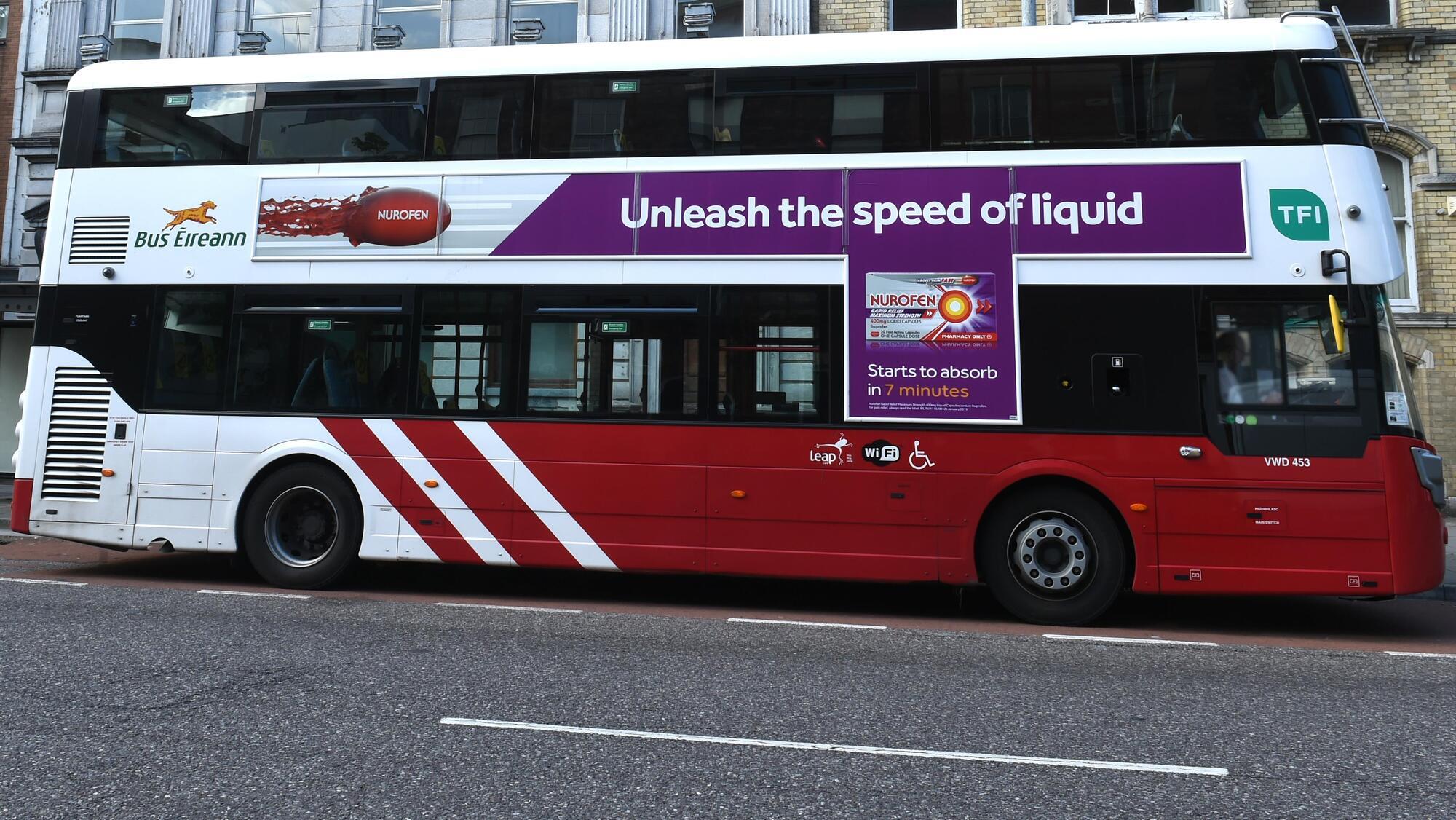
The judge would not criticise the bus driver for failing to halt at the stop line where, it was accepted, visibility was obstructed. File photo: Larry Cummins
A woman who was injured when a bus in which she was travelling came to a sudden slow to avoid a collision has been awarded €126,000 by the High Court.
Ms Justice Emily Egan found the Bus Eireann driver was not driving with reasonable care at the time of the incident in Limerick city and the need to suddenly halt the vehicle arose out of a “wholly avoidable” emergency of the defendant’s own making.
Bus Eireann acted in breach of its duty, the judge ruled, and there was no contributory negligence on the part of the plaintiff, Jennifer Quaid, who was seated at the time of the incident on March 19, 2014.
Ms Justice Egan set out the circumstances of the incident, which occurred as the bus proceeded from a more minor street onto Roxboro Road in Limerick City. Dashcam footage showed the bus passed a stop sign and corresponding line, slowing to a crawl of 2km/hr at the edge of Roxboro Road.
Further CCTV shows the driver looked in both directions, and the vehicle gained speed to about 11km/hr as it neared the centre line of the road to turn right. It appears, she said, the driver did not initially notice a car approaching in the far lane. As the bus crossed the centre line, its driver applied the brakes and the car veered left to avoid it.
The judge said footage suggests the reactions of passengers on board the bus “are very subtle”.
Ms Quaid appeared to lift the lower part of her left arm towards the top of the seat in front, noted the judge. The camera angle makes it difficult to see if her torso moves forward or back at the time of the braking incident, although it if does this would have been only to a small extent, said Ms Justice Egan.
Ms Quaid (38), with an address at O'Malley Park, in Limerick City, sued Bus Eireann over the incident, alleging she experienced a persisting back injury due to being severely jolted when its driver braked suddenly to avoid the collision, said the judge.
Bus Eireann denied negligence, although it accepted heavier-than-normal braking was applied to prevent an accident, the judge noted. It maintained Ms Quaid could not have sustained an injury as a result of the event.
Ms Quaid, a mother-of-two, had previously been diagnosed with Crohn's disease and had twice before seen her doctor complaining of back trouble. The judge accepted that Ms Quaid’s pre-existing degenerative condition rendered her more vulnerable to injury.
Medical experts for both sides agreed, however violent or non-violent, the jolting she experienced was likely the triggering event for Ms Quaid’s subsequent back difficulties.
She had attended her GP within 48 hours of the incident and a few months later was referred to an orthopaedic consultant who found she had spinal disc protrusion and disc bulges. Despite various treatments, the pain persisted, and a March 2021 examination found she continued to suffer from chronic lower back pain, secondary pain and a radiating ache down her left leg.
The court was satisfied Ms Quaid did not attempt to exaggerate her level of disability.
The judge would not criticise the bus driver for failing to halt at the stop line where, it was accepted, visibility was obstructed. It may well be acceptable, she said, for a driver to stop instead at the mouth of the junction for better visibility or, in a cumbersome bus, to stop at the road’s centre-line to let traffic approaching from the left pass.
However, it “cannot be acceptable” for the bus to cross the white line into the path of an oncoming vehicle which ought to have been clearly visible to the driver, she went on.
Ms Justice Egan awarded Ms Quaid general damages of €125,000 together with agreed special damages of €1,550.

CONNECT WITH US TODAY



Be the first to know the latest news and updates