CCTV footage of slain Cork chef could be crucial evidence, court hears
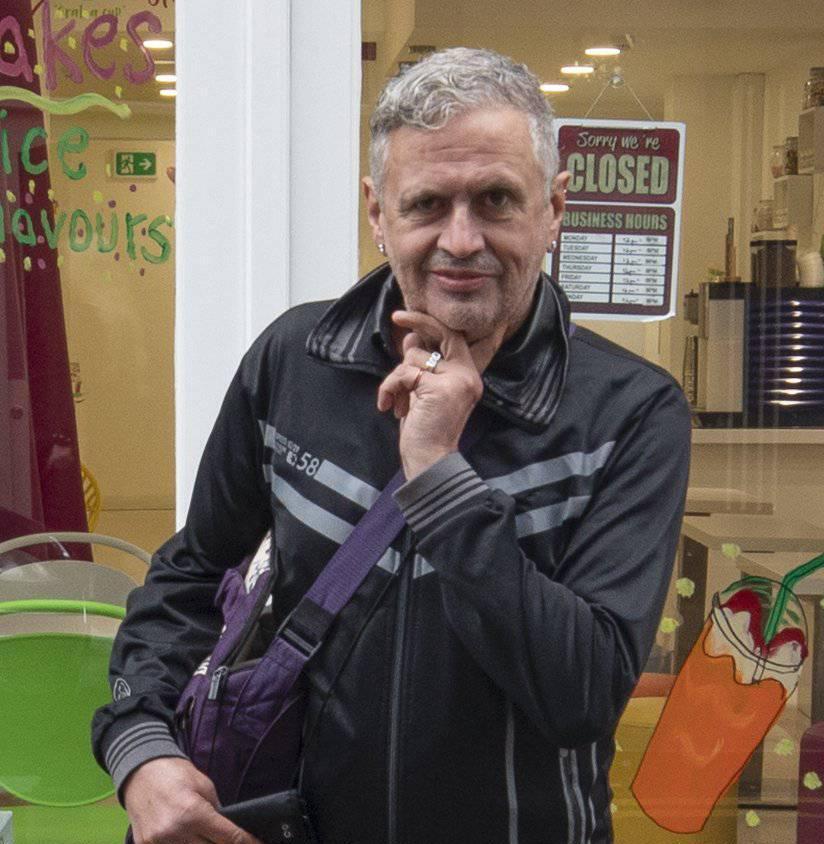
Timmy Hourihane
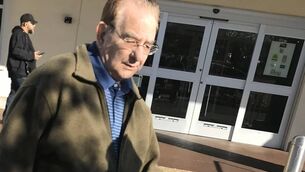
CCTV footage showing slain chef Timmy Hourihane and the man accused of his murder returning to a camp in Cork city could prove crucial evidence, the Central Criminal Court has heard.
Siobhán Lankford, prosecuting, said that CCTV clips showed Mr Hourihane arriving back to the homeless camp off Mardyke Walk less than 60 seconds after one of his alleged killers, James Brady.
The jury is to consider later this week whether Mr Brady, (aged 28) of Shannon Lawn, Mayfield, should be acquitted, or convicted of murder or manslaughter.
Mr Brady was filmed on CCTV arriving at the camp off Mardyke Walk on October 13, 2019 shortly after 12am, with another man who cannot be named for legal reasons but who has also been charged with murder, and a woman who has been a central witness in the case.
Seconds later, another witness who happened to be walking past and was also filmed on CCTV, said that she saw a young man, who the State contends was Mr Brady, pointing and shouting aggressively at an older man as he arrived back to the camp who the State contends was Mr Hourihane due to CCTV evidence.
But Mr Brady had said that he returned to the camp earlier, drinking with residents before Mr Hourihane came to his tent, Mr Brady offered him a drink and they spoke amicably for some minutes before another man suddenly hit Mr Hourihane.
Ms Lankford said that Mr Brady’s “big story” about being back at the camp for some time before the killing clashed with what the CCTV proved.
“The CCTV is crystal clear. It can be relied on. Those timings are very important,” she said.
Ms Lankford pointed out a number of inconsistencies and contradictions in Mr Brady’s evidence. But she reminded the jury that many people lie for all sorts of reasons and that does not make them guilty of murder.
In her closing statement to the court, Ms Lankford said: “It is for you, as the jury, to decide what is proven or not in the case.
“The State must prove its case beyond reasonable doubt. That’s a very high standard.”
She said that if the jury, after they have analysed all available evidence, is left with a reasonable doubt that Mr Brady murdered Mr Hourihane then they must acquit him.
If they have no reasonable doubt, then they must convict.
But the jury could decide instead on a manslaughter conviction if the evidence indicated that Mr Brady had some involvement in the attack but he did not intend to cause death or serious harm.
She said that there was evidence to suggest that Mr Brady had kicked Mr Hourihane with witnesses Kathleen O’Brien and Paula O’Shea both stating that they saw both men kicking Mr Hourihane as he lay on the ground. Forensic evidence also showed contact blood stains on Mr Brady’s right shoe - on the tongue and around the laces - and on the arms of his jacket.
“He [Mr Brady] maintained he did not touch Mr Hourihane - he said he never laid a hand on him. If you believe him, then acquit," Ms Lankford said.
"But if you’re satisfied he participated in a joint attack, you must convict at least of manslaughter. Your job is certainly not easy."
”
She said that “powerful evidence” given by Kathleen O’Brien was “very condemnatory.” Ms O’Brien described the two men taking turns to stamp on Mr Hourihane’s head.
She said she heard Mr Hourihane “gurgling” on his own blood as he was kicked to death.
Forensic evidence, which found blood stains on Ms O’Brien’s leggings which had soaked through to her underwear backed up her own account that she had tried to shield Mr Hourihane from the blows, putting her body over him.
State pathologist Margot Bolster’s “upsetting” evidence showed that the deceased’s head was “subjected to a ferocious assault,” Ms Lankford said.
He had missing and broken teeth, a broken jaw and a broken nose. He had blood in his airways which would have caused gurgling and blood and a tooth were found in his stomach. His body, face and head were bruised and lacerated.
She said that it was very clear that the assault killed him. He died from blood inhalation with a traumatic cardiac arrest complicated by brain swelling and a lack of blood supply to the brain.
Ms Lankford is due to finish her closing statement on Wednesday and the defence will then present their closing statements to the court.


CONNECT WITH US TODAY



Be the first to know the latest news and updates