Cork manslaughter trial: Prosecution claims injured man was 'a dead man walking'
However, the defence told the jury that the prosecution "is asking you to speculate".
Cork manslaughter trial: Prosecution claims injured man was 'a dead man walking'

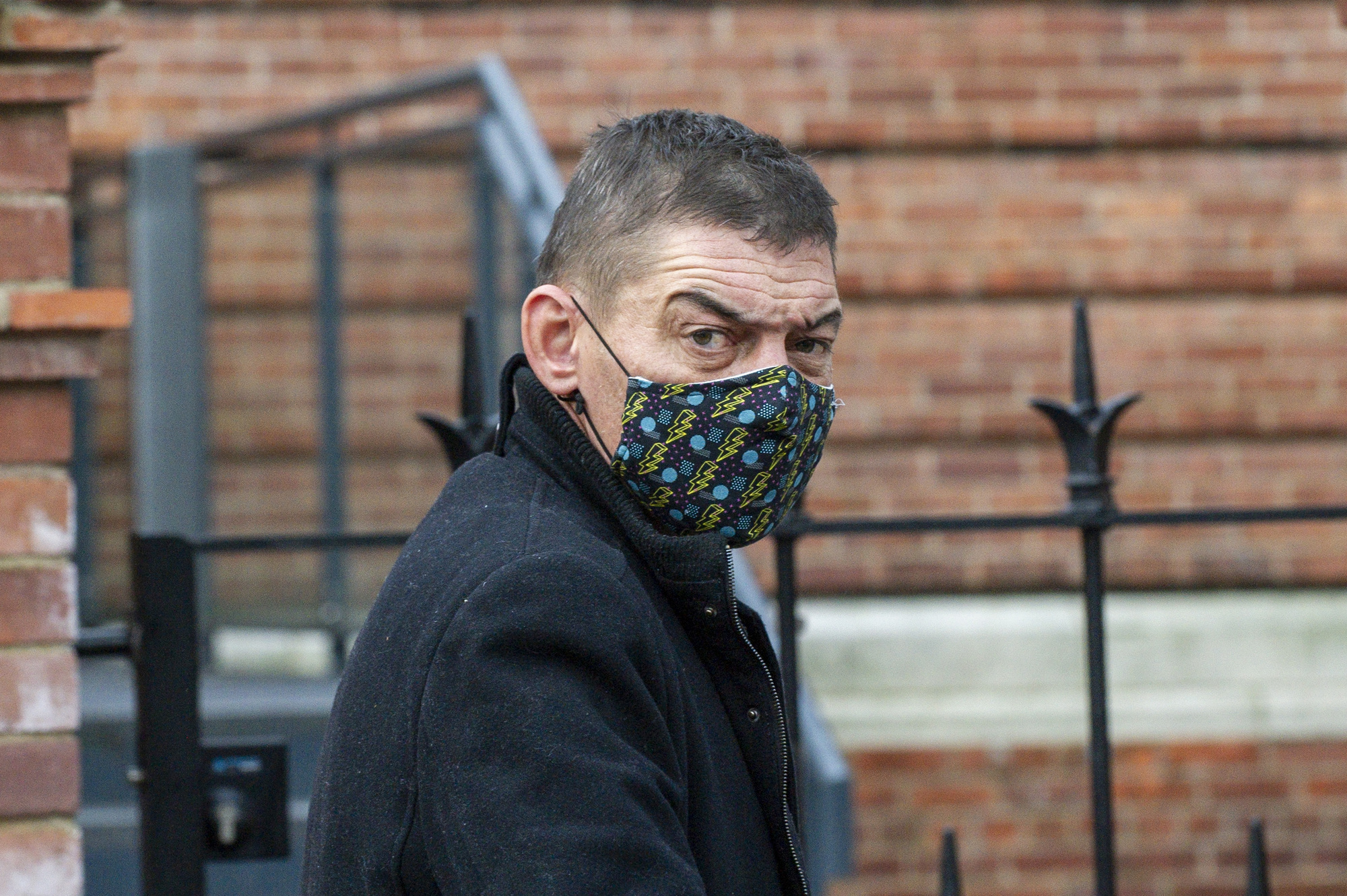
Adrian Henry (pictured) is charged with the manslaughter of James Duncan at St Patrick’s Street in Cork on September 12, 2019. Photo: Cork Courts Limited

The prosecution in a manslaughter trial in Cork has alleged that a man was injured when assaulted at a soup kitchen on the street in Cork city as a result of which he was “a dead man walking” but the defence claimed that looking at the evidence in this way could result in “a major miscarriage of justice.” 

Adrian Henry of Seminary Road, Blackpool, Cork, is charged with the manslaughter of James Duncan, 40, at St Patrick’s Street in Cork on September 12, 2019. He denies the manslaughter and is on trial at Cork Circuit Criminal Court before Judge Helen Boyle and a jury of eight men and four women. The late James Duncan was from Dunmore Gardens, Knocknaheeny in Cork.

Lawyers for both sides addressed the jury at the close of the evidence in the case.

Closing speech for Prosecution

Prosecution senior counsel Ray Boland said the accused man assaulted the deceased. He said: “The assault was sudden, violent and dangerous. Sudden – there was precious little preamble and it happened very quickly. Violent – a witness said she saw he was pushed forcefully to the ground and dragged on the road in the face of oncoming traffic and dropped. Being dragged into traffic was the dangerous aspect.

“Aoife O’Connor (witness) said he dropped him forcefully on the ground. That he had dragged him by the hood out into traffic and drops him. It is a matter of common sense that he would fall on his head.

“You heard from Dr Ong (pathologist) that unfortunately, Mr Duncan as well as looking vulnerable, that inside his head he was particularly vulnerable to this injury of subdural haematoma. You could say Mr Henry is unfortunate because of Mr Duncan’s vulnerability but Mr Duncan is more unfortunate. As a result of the assault he died. This injury which killed him was as a result of the assault.

“Once the subdural haematoma started he was a dead man walking. He was walking and he was talking
 It did not happen instantly like having your head chopped off. It happened insidiously – it was a gradual and rapid deterioration. You can track that from the evidence.

“In most manslaughter cases you don’t hear the voice of the deceased. Extraordinarily in this case you do. You have the recording of his conversation with the emergency service.

“Yes there are witnesses who say he (the deceased) was intoxicated. In my observation of CCTV he was moving slowly and carefully but he was not falling over. In the 999-call that is not someone out of their minds on drink, not someone who is stocious.

“My view is that he suffered this subdural haematoma in the course of the assault.” 

Closing speech for Defence

Defence senior counsel, Tom Creed, said the deceased had what he categorised as “almost time-bomb vulnerabilities.” He reminded the jury of the “extraordinary situation that someone without a mark on him” died as a result of whatever happened to him.

“The prosecution – in the guise of inference – is asking you to speculate. They are asking you to infer or speculate that he banged his head in the first incident. I am not saying to you, he did not bang his head. Dr Ong (pathologist) said the subdural haematoma would require his head to strike something. It would be disingenuous to say he (the deceased) did not hit his head.

But I say the prosecution did not prove a particular head strike. 

"He may have struck it twice. But it would be speculation to say he struck his head the first time (when pushed to the ground) rather than the second time (when he slid down the side of a parked car he was leaning against) or both.

“We can infer he struck his head but to go further is to speculate. It would be conjecture that he must have struck his head on the first occasion
 If two versions are reasonably open to you on the evidence then you must adopt the version most favourable to the accused.

“If you follow what the prosecution says to you we could be looking at a major miscarriage of justice. If the subdural haematoma was caused by the second fall – not the first – then it is not caused by any action on the part of Mr Henry. It is not caused by an assault,” Mr Creed said.

Judge Helen Boyle will address the jury on February 21 on the legal issues which they must bring to bear in their deliberations on the evidence.

More in this section

Lunchtime News

Newsletter

Keep up with stories of the day with our lunchtime news wrap and important breaking news alerts.

Cookie Policy Privacy Policy Brand Safety FAQ Help Contact Us Terms and Conditions

© Examiner Echo Group Limited