Gerry Hutch challenges jurisdiction of Special Criminal Court to hear trial
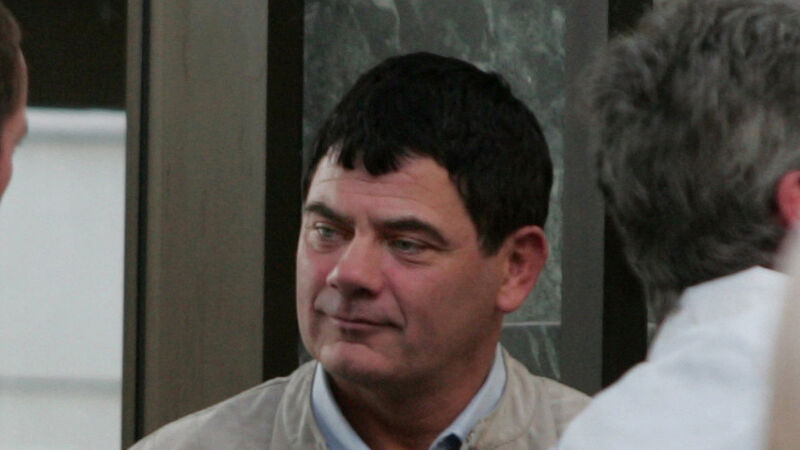
Gerry Hutch claims the decision to try him before the Special Criminal Court amounts to 'a significant curtailment of his rights'. File picture: Paddy Cummins/PCPhoto.ie
Gerry 'The Monk' Hutch has been given permission to bring a High Court challenge against the jurisdiction of the non-jury Special Criminal Court to hear his trial for the murder of David Byrne at the Regency Hotel.
Mr Hutch claims the decision to try him before the Special Criminal Court amounts to "a significant curtailment of his rights".
Mr Hutch is charged in connection with Mr Byrne's murder at the Regency Hotel, in Whitehall, Dublin 9, on February 5, 2016.
After he was charged with the offence, the DPP certified that under the 1939 Offences Against the State Act his trial should not proceed before an ordinary court and that Mr Hutch should be tried before the Special Criminal Court.
That trial has been fixed for October 2022.
Represented by Brendan Grehan, Mr Hutch argues he should not be tried under what amounts to temporary emergency legislation introduced in 1972 during the Troubles.
The Oireachtas has failed to enact legislation to permit the establishment of a permanent Special Criminal Court, he claims.
Trying him under temporary legislation breaches his rights, including his right to a fair trial, Mr Hutch claims.
He claims he should be tried before a judge and jury, and not the three-judge court.
In judicial review proceedings against the DPP, the justice minister, Dáil Éireann, Ireland, and the attorney general, Mr Hutch seeks various orders and declarations from the court.
Mr Hutch, with an address at Clontarf in Dublin 3, seeks an order prohibiting his trial from proceeding before the Special Criminal Court.
He also seeks various declarations from the High Court including that his trial before the Special Criminal Court is unlawful, outside the powers of the 1939 Offences Against the State Act, and violates his constitutional and ECHR rights.
He further seeks a declaration that the failure by the State to enact anything other than temporary measures in respect of procedures for the trial of persons before the Special Criminal Court also breaches his rights.
He wants the court to stay his trial pending the outcome of his High Court challenge.
His action came before Mr Justice Anthony Barr, at today's sitting of the High Court.
The judge, on an ex parte basis, where only Mr Hutch's lawyers were present in court, granted Mr Hutch permission to bring his challenge.
The matter will be mentioned before the court next month.
Earlier this year, former Sinn Féin councillor Jonathan Dowdall, who is also charged with Mr Byrne's murder, launched a similar challenge against the jurisdiction of the Special Criminal Court to hear his trial.
Mr Dowdall, of Navan Rd, Cabra, Dublin, who had been an elected member of Dublin City Council, also opposes being tried before the non-jury court. His case is due to be mentioned before the High Court early next year.


CONNECT WITH US TODAY



Be the first to know the latest news and updates