Cork boxer who represented Ireland at underage level faces retrial on drugs charge
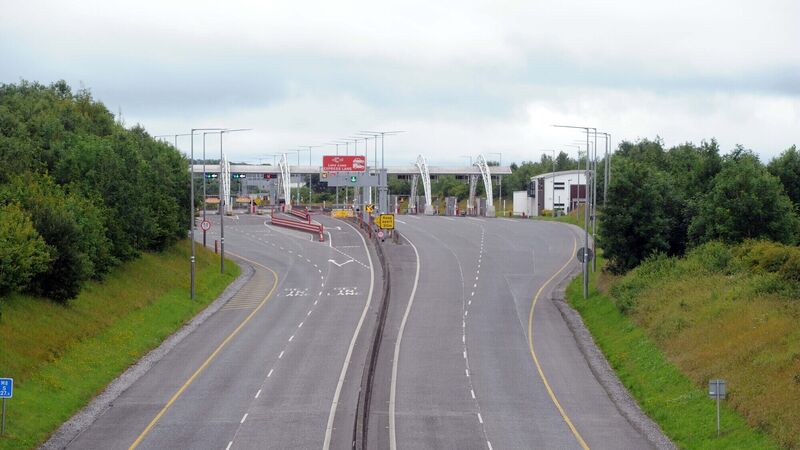
Roy Carroll had been a passenger in a car stopped by gardaí at the toll plaza on the M8 Motorway near Watergrasshill, Co. Cork, on January 10, 2018. File photo: Denis Minihane
A former youth boxer who had his drugs conviction quashed by the Court of Appeal is facing a retrial.
Roy Carroll (28), of Farranferris Park, Farranree, Cork, had pleaded not guilty to a charge of possessing a quantity of cocaine for sale or supply contrary to section 15 of the Misuse of Drugs Act, 1977.
A jury found him guilty, however, and Judge Brian O’Callaghan sentenced Carroll to four years’ jail with 18 months suspended at Cork Circuit Criminal Court on February 25, 2020.
This week the conviction was quashed after judges ruled that evidence of his silence during garda interviews went before the jury without proper direction as to how they must consider the exercise of that right. The judges also said they would consider the question of a retrial upon hearing further submissions from the defence and prosecution.
Today at the Court of Appeal, Donal T McCarthy BL, for the Director of Public Prosecutions (DPP), said the DPP intended to retry the matter based on the garda evidence.
Paula McCarthy BL, defending, told the court that if there was a retrial and a conviction, the majority of any sentence imposed by the court would have already been served by her client.
Mr Justice John Edwards, presiding, along with Mr Justice Patrick McCarthy and Ms Justice Aileen Donnell, said that court was “disposed to order a retrial” and returned the case to Cork Circuit Criminal Court.
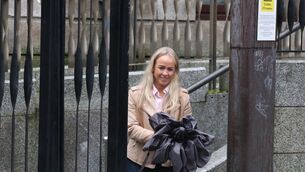
Prior to his arrest, Carroll – who had represented Ireland at boxing at underage level – had been a passenger in a car which had been stopped by gardaí acting on a tip-off.
Although he had provided officers with his correct name and address, Carroll bolted from the scene during a search of the vehicle. The gardaí said in evidence they had witnessed the accused drop a white package while he was running across a field.
The package was later retrieved and found to contain 124.6 grammes of cocaine worth €8,722.
Carroll had told the jury he had panicked after the driver shouted “run” during the search at the M8 Toll Plaza at Skanagh North, Watergrasshill, Co Cork, on January 10, 2018, and that was why he fled. However, he failed to provide this explanation to gardaí and did not answer questions put to him by officers during his garda interview.
His last interview with gardaí was carried out under sections of the Criminal Justice Act 1984 which permit a jury to draw inferences from an accused person’s failure to answer relevant questions and/or give an explanation.
The accused explained to the jury that he had been advised of his right to remain silent before the interview and that was why he did not answer any questions.
Lawyers for Carroll later submitted grounds for appeal, in which they stated the trial judge had erred in law in his charge to the jury before they retired to consider their verdict.
They submitted that the trial judge did not direct the jury on the reason the interview had been admitted into evidence and the nature of the inference they were permitted to draw from the exercise of the right to silence.
In a judgement issued on October 13 by the Court of Appeal, Ms Justice Aileen Donnelly, along with Mr Justice John Edwards and Mr Justice Patrick McCarthy, ruled that Carroll’s trial was “unsatisfactory” because the jury were not directed properly about inferences they could draw from Carroll’s unwillingness to answer questions during his garda interview.
Carroll, the judges added, had a constitutional right to remain silent.
The judges also noted that during the trial, jurors discovered Carroll was “simply not responding when being challenged in robust terms about matters the gardaí were attributing to his involvement in the alleged offence”.
Ms Justice Donnelly said the court found there was no doubt that the appellant's failure to give an explanation when challenged by gardaí was used by the prosecution as evidence from which the jury could draw an inference.
A fair trial meant that any adverse comment on the defendant's right to silence had to be strictly in accordance with the statutory provisions which permitted a jury to draw inferences as they considered proper from the exercise of that right, Ms Justice Donnelly said. The appellant, the court noted, gave an explanation for why he remained silent.
She said “the fundamental fairness of a trial in due course of law” had been lacking from Carroll’s case and that the verdict was unsafe as a result.
“There is a real risk of an injustice where the appellant’s reliance on his right to silence in an interview was permitted to go to the jury without any direction from the trial judge as to the legal parameters through which the jury must view and consider the exercise of that right,” she concluded.
“In those circumstances, it would be unsafe to permit the verdict to stand. We will consider the question of a retrial when we have heard further submissions from the parties; counsel for the prosecution having sought time for the DPP to give directions," the judge added.
CONNECT WITH US TODAY



Be the first to know the latest news and updates