More than 100 courts with technology for remote hearings in place by end of the year
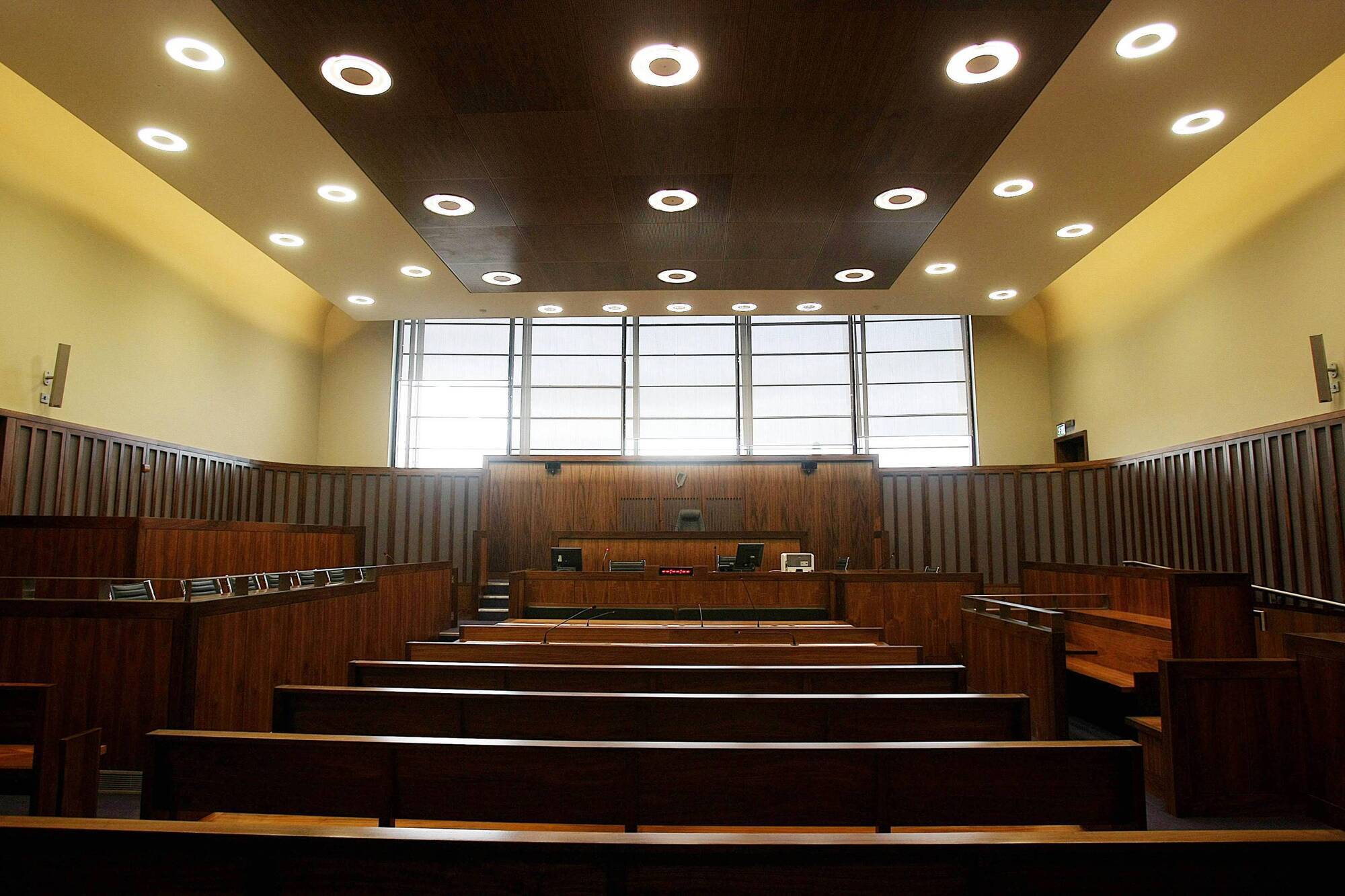
There will be videolink facilities in every county in the country by the close of 2021. File picture
The Courts Service plans to significantly increase the number of court rooms with online remote access by the end of the year.
It said there were 40 "technology courts" in place in March 2020 and this would increase to 103 by the end of the year.
The 160% increase will mean there will be facilities in every county in the country by the close of 2021.
Courts Service chief executive Angela Denning was one of a number of people addressing the Oireachtas Justice Committee.
She said since its establishment 21 years ago, the Courts Service had invested over €500m in 70 new or refurbished courthouses.
She said maintenance of court premises was generally provided by the OPW on a “reactive” basis and funded by the Courts Service.
She said planned maintenance was not always possible when limited funding was available.
Ms Denning said a "condition survey" of 60 venues undertaken in 2019 and 2020 found 83% of the buildings inspected were protected structures with an average age of 162 years.
“These findings set some context for our challenge,” she said. “While we always have ambitions to provide enhanced services, there is a limit to what can be achieved with the available resources and what constitutes value for money to the exchequer.
Ms Denning said that while these venues were extremely valuable to their locality, having these court buildings “sitting idle for most of the year is not a good use of public resources”.
She said in counties outside of Dublin, there was generally no issue with the sufficiency of courtrooms, but accepted that in Dublin, in the short term, courtroom capacity “will be a challenge” which would be alleviated by the development of a new dedicated family law centre at Hammond Lane.
She said during the pandemic, the Courts Service's aim was to protect people while continuing to provide access to justice and said physical distancing requirements had a dramatic effect on the operating environment.
“We dramatically increased the use of videolink to prisons. This has had significant benefits across the justice system as has the introduction of remote courts. To meet the challenges of the future and demand for new means of providing access to justice, we have commenced a €2.2m investment in the installation of video technology to provide 103 video-enabled courtrooms in total by year end.”
She said this compared to 40 technology courts in March 2020, at the start of the pandemic restrictions.
She said work was being done in some of the older building stock to facilitate access to services for people with physical disabilities.
But she said: “The question to be considered in retro-fitting these venues is whether the usage of the building justifies the investment. Increased use of technology and remote courts during the pandemic has eased some of the challenges associated with travel to court buildings for vulnerable users, including those with physical disabilities."
Separately, the justice committee published a report entitled ‘Civil Liberties during the Covid-19 Pandemic’ on Tuesday, which includes a series of recommendations that will be presented to the minister.
Among the 20 recommendations, the Committee states that the office of the Garda Commissioner should release data relating to the geographical spread of Covid-19 checkpoints, to ascertain the extent to which particular towns and regions are policed more frequently than others.
Cultural competency training should be an "integral part" of the continuous professional development for all members of the force, the report adds, and the gardaí should provide data on the use of "anti-spit" hoods.
In future similar situations, the committee recommends that more should be done to help protect the relationship between Gardaí and civilians and their approach of "policing by consent".
CONNECT WITH US TODAY



Be the first to know the latest news and updates