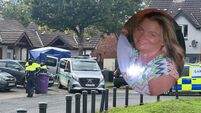
Deirdre Morley found not guilty by reason of insanity of murdering her children
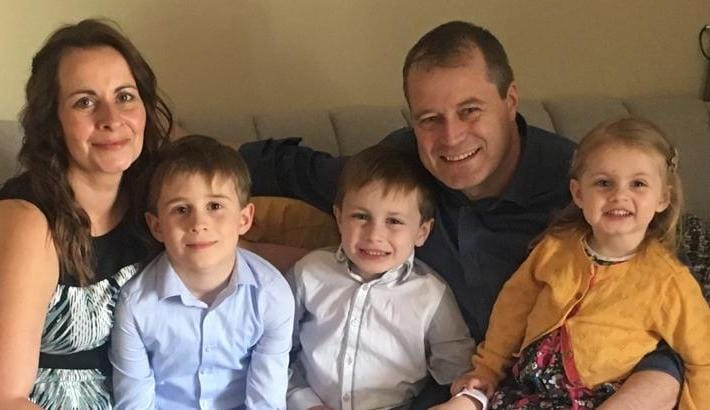
Deirdre Morley has been found not guilty by reason of insanity of the murders of her three children. Picture: Garda/PA Wire
Deirdre Morley has been found not guilty by reason of insanity of the murders of her three children, Conor McGinley, 9, Darragh McGinley, 7, and Carla McGinley, 3, at the family home on January 24, 2020.
After four hours and 23 minutes of deliberation, the jury returned a verdict of not guilty by reason of insanity on all three charges.

Justice Coffey thanked them on behalf of the people of Ireland for their work on this "short but very distressing case".
He exempted them from Jury service for the next 15 years as a sign of his gratitude.
Ms Morley has been committed to the Central Mental Hospital until July 31 when the matter goes back before the courts.
Her future care will be considered at that point.
This morning, the court heard how Ms Morley suffocated her three children at their home in Parsonâs Court, Newcastle, Co Dublin.
But psychologistsâ reports submitted by both the prosecution and the defence say that Ms Morley was suffering a mental disorder at the time of the killings which made her insane at the time.
Justice Paul Coffey told the jury at the Central Criminal Court that both Dr Brenda Wright representing the defendant and Dr Mary Davoren for the prosecution concurred that Ms Morley fulfilled the necessary criteria to make her insane at the time of the killings in the eyes of the law.
Justice Coffey said that case was âunusually free from controversy of any kindâ becasue both the prosecution and the defence agreed that Ms Morley was legally insane when she smothered her children.
He said that expert evidence supplied by both the defence and the prosecution was âall one wayâ.
To be found insane under the law, the accused must be found to have been suffering at the time of the acts from a mental disorder.
One of three legal criteria must also be fulfilled for the defence of insanity to apply, he said.
The defendant must have either: one, not known the nature or the quality of the acts they were committing; two, not known that what they were doing was wrong; or three, that they were unable to refrain from committing the relevant acts.
He said that it was important to note that these are alternative grounds for a verdict of insanity â not cumulative. One of these grounds alone is sufficient to prove insanity, he said.
The verdict of insanity can also only apply legally if the defendant is said to have been insane at the time by a psychiatrist.
Dr Brenda Wright, who was called on by the defence to give expert evidence, said that Ms Morley suffered from bi-polar affective disorder type 2 â a mental disorder, Justice Coffey said.
And that diagnosis was coupled with two grounds for legal insanity - not knowing what she was doing was wrong and that she couldnât refrain from committing three acts which resulted in the deaths of her children.
Dr Wright was not cross examined by the prosecution because the prosecution concurred with her expert medical opinion, Justice Coffey said.
Dr Mary Davoren, also gave expert evidence which supported Dr Wrightâs findings.
She too found that Ms Morley was suffering from a mental disorder which resulted in her not knowing that what she was doing was wrong and that she was not able to refrain from committing the acts
Thank you so much for all your messages. Iâm ok.
— Conorâs Clips (@conorsclips) May 20, 2021
If you want to give me some positivity on my birthday then the As Darragh Did charity is open to support us monthly @https://t.co/0x23iSE4x7
I canât do this without you all.
Hope to be back in a few days
Thank you
Andrew
The jury returned at 2.44pm with three questions on three pieces of paper for the judge.
They asked if, in the context of the special verdict of not guilty by reason of insanity, whether there were degrees of understanding regarding the act being wrong; whether remorse impacted on the understanding of the act being wrong; and they asked for clarification on the terms of being âunable to refrain from conducting the act.âÂ
After consulting senior counsel for the prosecution and the defence, Justice Coffey told the jury that these were issues for expert medical opinion.
âUnusually, in this case, the evidence is unanimous,â he said.
There are no issues of underlying fact that you have to resolve, he said.
âThis case is free from controversies that would usually exist in a murder trial.âÂ
Although there are cases where a defence expert is contradicted by the prosecution, that does not arise in this case, he said.
âI hope thatâs clear to you.
âYour duty is to give your verdict in accordance with the evidence,â he said.
Samaritans Helpline on 116 123Â
Pieta House 24/7 Helpline on 1800 247 247