Test case to determine if workplace dispute procedures are constitutional
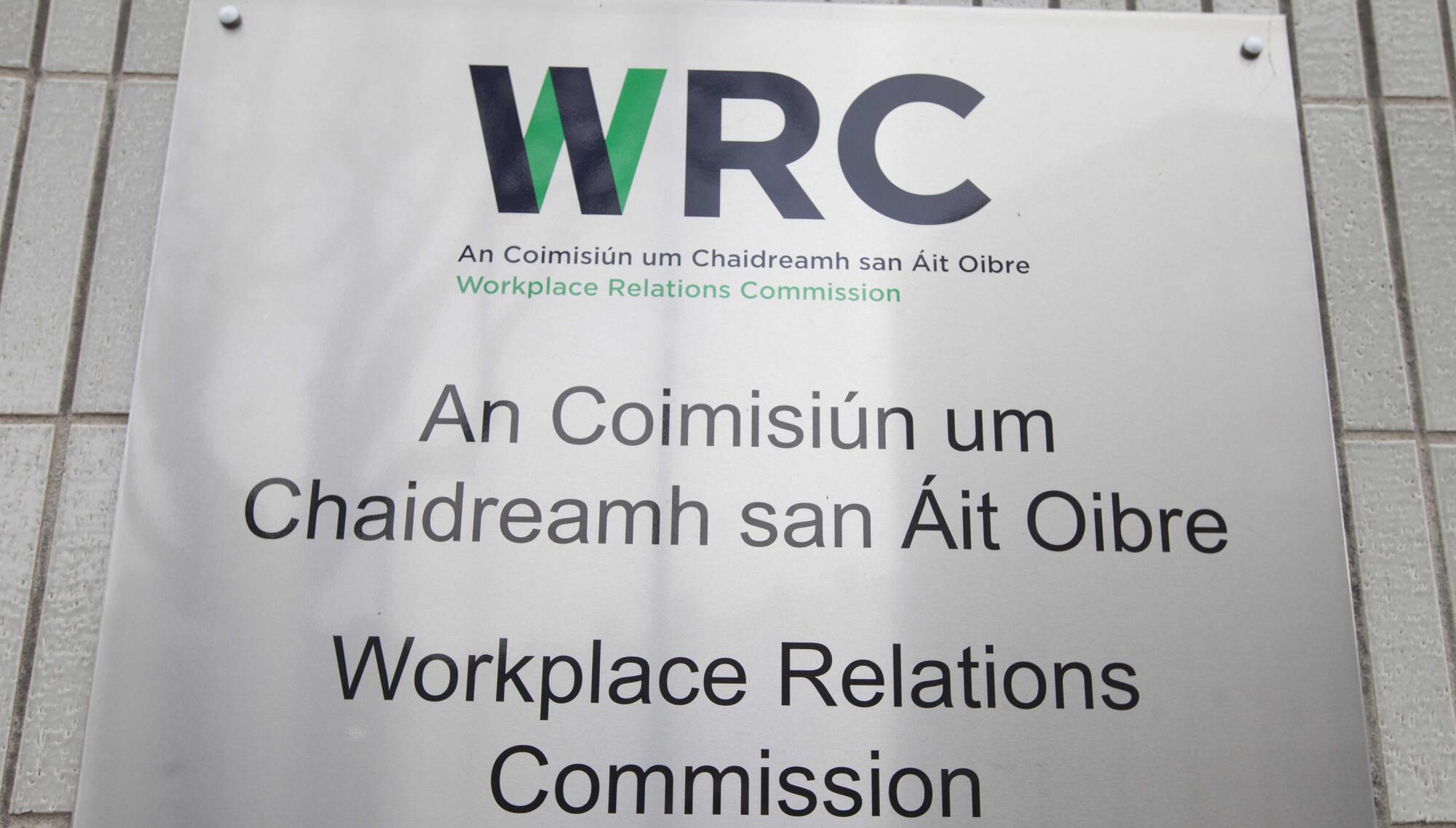
The core issue is whether the procedural mechanism established under the 2015 Act for resolving employment disputes involves the "administration of justice" under Article 15 of the Constitution, with the effect disputes cannot be decided by the Workplace Relations Commission (WRC) and are reserved for judges. File image
A seven-judge Supreme Court is hearing an important appeal over the constitutionality of new procedures for determining workplace disputes.
The appeal by Tomasz Zalewski over the treatment of his complaint alleging unfair dismissal from his job is regarded as a test case concerning the constitutional validity of procedures under Part V of the Workplace Relations Act 2015.
Its importance is underlined by the appearance of Attorney General Paul Gallagher as part of the State’s legal team opposing the appeal.
The core issue is whether the procedural mechanism established under the 2015 Act for resolving employment disputes involves the "administration of justice" under Article 15 of the Constitution, with the effect disputes cannot be decided by the Workplace Relations Commission (WRC) and are reserved for judges.
The 2015 Act was introduced after the abolition of the previous Employment Appeals Tribunal system for adjudicating claims under the Unfair Dismissal and Payment of Wages Acts.
Yesterday, Peter Ward SC, with Cian Ferriter SC, for Mr Zaleswki, urged the court to find the WRC procedures are “fundamentally flawed” and the High Court erred in finding the WRC is not engaged in the administration of justice.
Four years have passed since Mr Zalewski’s complaint was dismissed by an adjudication officer in a “travesty” and two years have passed since the High Court described his treatment as “unacceptable”, he said.
However, the State had come before the Supreme Court with no explanation for what happened and wanted to “swat it away” as a “one-off administrative error”. This case exposed the constitutional requirement that the type of adjudication at issue is one “reserved for judges”.
Counsel was opening the appeal by Mr Zalewski over the dismissal last February by the High Court’s Mr Justice Garrett Simons of his claim of unconstitutionality.
Arising from the State's acceptance the adjudication officer's 2016 dismissal of Mr Zalewski's unfair dismissal complaint was invalid, the judge directed it should be decided by a different adjudication officer.
Mr Zalewski of North Strand Road, Dublin 3, claims he was unfairly dismissed from his job as assistant manager at the Costcutter shop on Dublin’s North Strand in 2016, where he worked since March 2012. Mr Ward said, during that time, he was subjected to a robbery at knifepoint and another at gunpoint. He denied his employer’s claims of gross misconduct, including failing to follow policy for robbery prevention, and of having no interest in the success of the workplace.
In May 2016, he complained to the WRC alleging unfair dismissal and non-payment of wages in lieu of notice and maintained it would be necessary for him to give evidence in support of his claim and to cross-examine his employer’s witnesses.
A hearing at the WRC before an adjudication officer on October 26, 2016, lasted about 10 minutes, involved no oral evidence or opportunity to cross-examine, and the officer accepted written submissions and documents from the sides, it was claimed.
The officer stated in December 2016 she had decided against him and in a written decision dismissed his complaint. He got leave for a High Court judicial review in February 2017 during which the WRC conceded the adjudication officer's decision should be quashed because of "administrative error".
The Supreme Court in 2018 overturned a High Court finding that Mr Zalewski, as a result of the WRC concession, lacked legal standing to continue with the constitutional challenge. The matter then returned to the High Court.
Mr Justice Simon found, while powers exercised by adjudication officers and the Labour Court under the 2015 Act exhibit many characteristics of the administration of justice", they lack one essential characteristic, the ability of a decision-maker to enforce its decisions. An application must be made to a District Court to enforce the decisions.
The appeal continues today.
CONNECT WITH US TODAY



Be the first to know the latest news and updates