Sligo hospital apologises for 'shortcomings' as case settled after 'most protracted litigation'
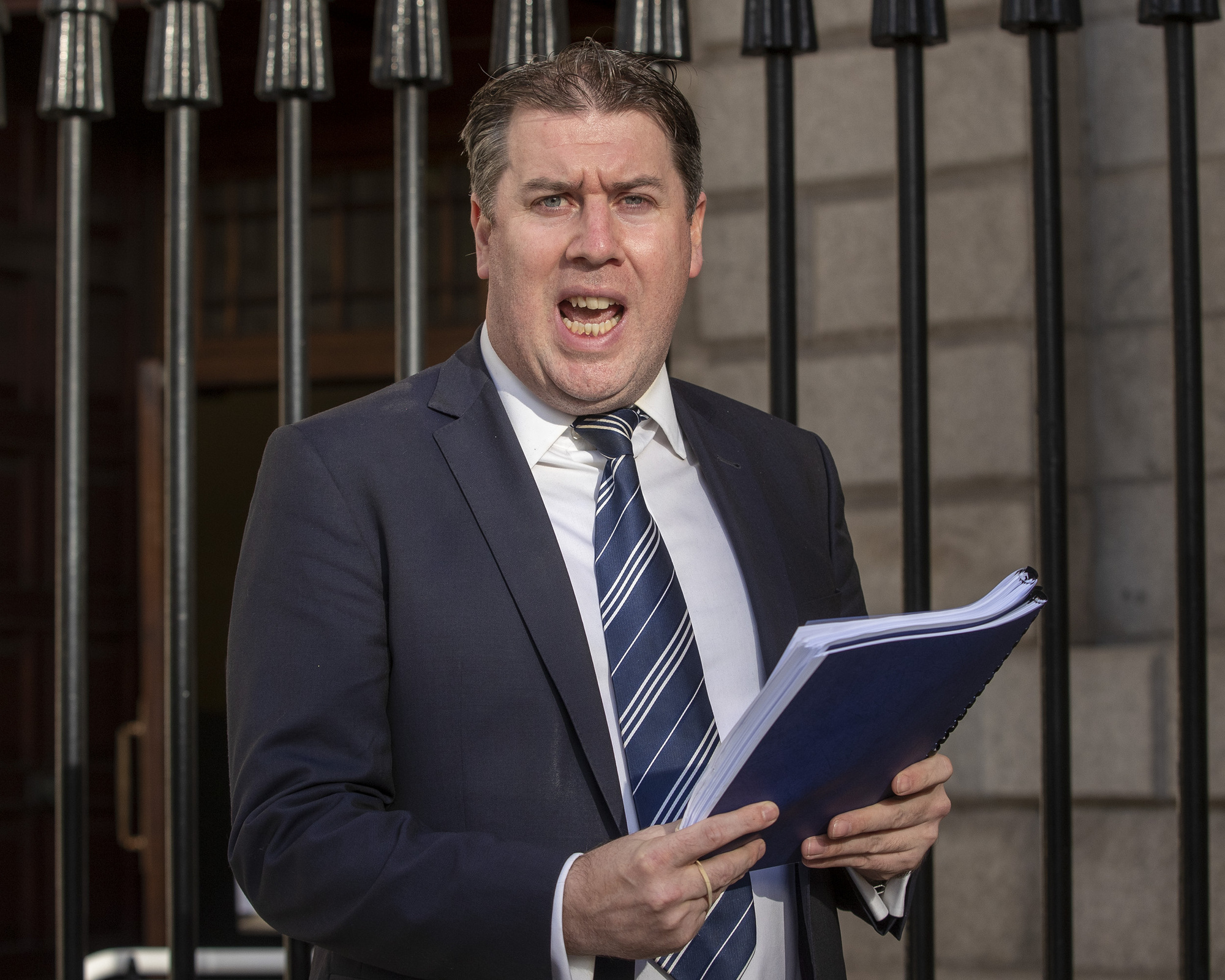
Outside court the family solicitor Daniel Hughes read a statement on behalf of the couple in which they said they were grateful after four years “and most protracted litigation” that the legal case had come to an end through a recent mediation. Photo: Collins
Sligo University Hospital has apologised in the High Court for “the shortcomings in clinical judgement” when a woman presented at its A&E in severe pain.
Jennifer McTague was in so much pain she had to be given morphine but it was claimed she was discharged home in the early hours. When she came back to the hospital hours later she was in severe distress and she had to have extensive surgery for a bowel obstruction.
The woman’s husband, who was later diagnosed with post traumatic stress disorder after the hospital events, thought his wife was going to die.
The couple sued the HSE claiming if Mrs McTague had been properly and appropriately treated when she presented at the hospital A&E four years ago she would have been spared a sepsis and a major bowel resection. The HSE admitted a breach of duty in the case for failing to admit Mrs McTague to the Sligo hospital when she first presented to the A&E.
Jennifer McTague and her husband Michael today settled their actions over her treatment at the hospital four years ago. When the case was called Sheila Reidy BL said the cases could be struck out. The details of the settlement are confidential.
In a letter read to the court from the hospital manager it said it wished to apologise to the couple for “shortcomings in clinical judgement rendered to Mrs Jennifer McTague during the course of her hospitalisation and treatment in Sligo University Hospital.”
Jennifer McTague (aged 41) and her husband Michael (aged 46) of Ballinamore, Co. Leitrim, had sued the HSE over the care she received at Sligo University Hospital when she was brought to the A&E by ambulance on June 17, 2016.
She was in severe pain and stress and had to be given morphine. She was discharged home in the early hours but later returned to the hospital.
Mrs McTague, it was claimed, despite showing significant clinical signs and evidence of an intestinal obstruction was not referred for appropriate surgical or consultant review or a CT scan.
Her condition continued to significantly deteriorate throughout the day. The couple were later informed Mrs McTague had a blocked bowel and would require extensive surgery. At this stage, it was claimed, her condition had deteriorated to such an extent she was at risk of death due to sepsis.
After the surgery, Mr McTague was brought into an office and told his wife had suffered a life-endangering event and was critically ill and it was hoped she would pull through.
Mr McTague, it was claimed, thought his wife was going to die and he suffered a devastating shock upon hearing the news of her condition and when he visited his wife in ICU she was on a ventilator.
She later had to have further major surgery in a Dublin hospital.
It was claimed a significant delay occurred in the diagnosis and treatment of Mrs McTague’s condition and her life was put at risk due to the onset of sepsis as a result of that delay.
Mrs McTague had claimed all elements of her life had been dramatically and substantially affected by the events.
Outside court the family solicitor Daniel Hughes read a statement on behalf of the couple in which they said they were grateful after four years “and most protracted litigation” that the legal case had come to an end through a recent mediation.
“We are fully determined to move on with our lives with our family. We remain strongly of the view that what occurred when we arrived at the hospital in June 2016 should never have happened.
“We sincerely hope that lessons have been learned and steps have been taken to ensure that no other family ever has to go through what we had to endure.”


CONNECT WITH US TODAY



Be the first to know the latest news and updates