Warning of possible link between Pfizer and Moderna vaccines and heart disease
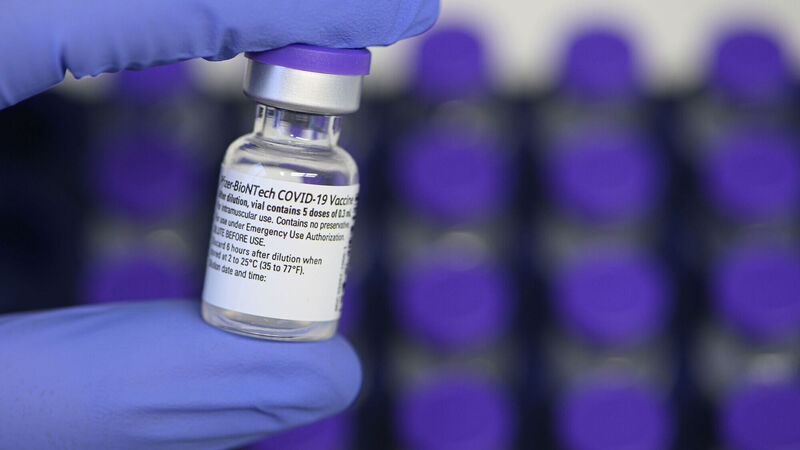
The European Medicines Agency will advise myocarditis and pericarditis be listed as new side effects from the mRNA vaccines, Pfizer and Moderna. File picture
The European Medicines Agency (EMA) has found a possible link between very rare cases of heart disease and Covid-19 vaccines from Pfizer and Moderna.
The EMA has also advised the single-shot Janssen vaccine should not be given to people with a history of capillary leak syndrome
The EMA’s safety committee PRAC is now recommending myocarditis and pericarditis be listed as new side effects of mRNA vaccines, and will alert healthcare professionals.
The warning follows a review of 145 cases of myocarditis and 138 cases of pericarditis in the European Economic Area among people who received the Comirnaty vaccine made by Pfizer, and 19 cases of each condition among people who received the Spikevax vaccine made by Moderna.
To put this in context, as of May 31, about 177m doses of Comirnaty and 20m doses of Spikevax had been given in the EEA.
In a statement, it said: “The PRAC has concluded that myocarditis and pericarditis can occur in very rare cases following vaccination with Comirnaty and Spikevax.”
During its July meeting, EMA’s safety committee (#PRAC) carried out its broad range of responsibilities, which cover all aspects of the risk management of the use of medicines, including #COVID19vaccines.
— EU Medicines Agency (@EMA_News) July 9, 2021
Read more:https://t.co/wAokMsDSW7 pic.twitter.com/bQI6h1t9YZ
Myocarditis is an inflammation of the heart muscle, and pericarditis is swelling and irritation of a thin tissue surrounding your heart.
Symptoms can vary but often include breathlessness, palpitations, and chest pain, the EMA said.
The EMA has now also advised against use of the single-shot Janssen vaccine for people with a history of capillary leak syndrome.
“The PRAC has recommended that people who have previously had capillary leak syndrome must not be vaccinated with Covid-19 Vaccine Janssen,” it said.
This follows a review of three cases of capillary leak syndrome in vaccinated people; two of these people subsequently died, including a person who had a history of this syndrome.
To put this risk in context, more than 18m doses of the Janssen vaccine had been administered worldwide to June 21.
Capillary leak syndrome is a very rare, serious condition that causes fluid leakage from small blood vessels, resulting in swelling, mainly in the arms and legs; low blood pressure; thickening of the blood; and low blood levels of a blood protein called albumin.
Vaccinators and other healthcare professionals are now being advised to be aware of the symptoms of capillary leak syndrome and the risk of recurrence for former sufferers.
Also, the EMA is now adding a warning to information about the Vaxzevria vaccine made by AstraZeneca due to potential links to the very rare condition Guillain-Barre syndrome (GBS).
However, in this case, the EMA has not found conclusive evidence and the risk-benefit balance between the vaccine and Covid-19 remains “unchanged”, the EMA found.
This follows reports of suspected cases of GBS among vaccinated people.
“The committee has assessed all the available evidence, including cases reported to the European database for suspected side-effects and data from the scientific literature, but at this stage the available data neither confirms nor rules out a possible association with the vaccine,” it said.
The syndrome is an immune system disorder that causes nerve inflammation and can result in pain, numbness, muscle weakness and difficulty walking.
The advice now for vaccinated people to seek medical attention if they develop: “weakness and paralysis in the extremities that can progress to the chest and face.”
The EMA noted monitoring would continue, and said: “GBS was identified during the marketing authorisation process as a possible adverse event requiring specific safety monitoring activities.”
Meanwhile, AstraZeneca have started a trial on a booster-type vaccine for use against variants of concern including the Delta variant. Initial data is expected later this year.
About 2,250 vaccinated people in the UK, South Africa, Brazil and Poland are taking part.
Chief investigator and director of the Oxford Vaccine Group at the University of Oxford Professor Andrew J Pollard said: “Testing booster doses of existing vaccines and new variant vaccines is important to ensure we are best prepared to stay ahead of the coronavirus pandemic, should their use be needed.”
A spokesperson for AstraZeneca in Ireland said July will see at least 490,000 doses delivered here, with some doses arriving at the end of the month for use in August. Up to Wednesday, 1.067m doses of this vaccine have been given in Ireland.
And to the same date, 3.02m doses of the Pfizer/BioNTech vaccine have been given here.
A spokesperson for Pfizer in Ireland said for July: “the weekly allocation in comparison to the weekly amounts delivered in June will be lower for all countries.
“However, the allocation amounts will ramp up each week to deliver on Pfizer’s commitments by quarter’s end.”
CONNECT WITH US TODAY



Be the first to know the latest news and updates