Three national networks criticise Government's new drugs strategy
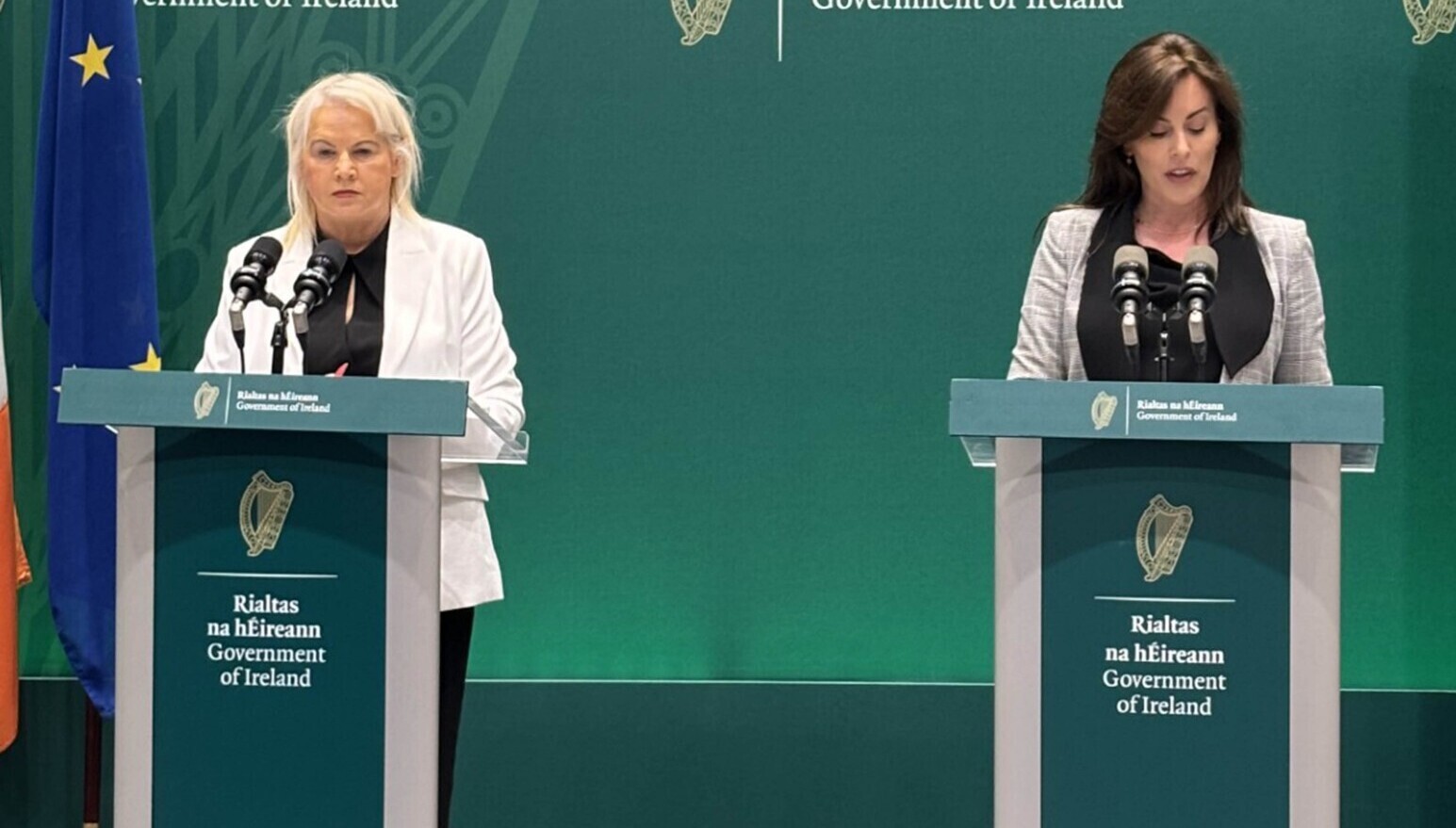
Public health, wellbeing, and national drugs strategy minister Jennifer Murnane O’Connor and health minister Jennifer Carroll MacNeill launching the new 2026–2030 strategy on Tuesday. Picture: Cate McCurry/PA
Three national drug networks have said that the Government’s new drugs strategy does not provide for independent infrastructure and ring-fenced budgets necessary to implement the promised actions.
The National Drugs Strategy 2026-2028 was published by the Department of Health this week, along with an action plan.
National networks representing community drug organisations, current and former users of drugs, and families of loved ones in addiction have issued a joint statement raising their concerns regarding the strategy.
Citywide Drugs Crisis Campaign, UISCE (National Advocacy Service for People who use Drugs in Ireland), and Family Addiction Recovery Ireland said they are worried the new strategy doesn’t protect the independent capacity of communities to operate and organise themselves, shape policy, and hold the State accountable.
Their statement notes that the strategy does acknowledge the relevance of poverty, inequality and community development in addressing the drugs problem and that local drug and alcohol task forces should be co-decision makers in relevant budgetary decisions.
“The problem is the failure to secure the authority, independent infrastructure, and protected resources needed to give these commitments effect,” the statement said.
“Responsibility for planning, funding, and delivering drug services is explicitly assigned to HSE health regions, while the practical authority of communities within those arrangements remains insufficiently defined.”
Read More
It said: “In our assessment, the resulting architecture is predominantly a State-led service delivery model, with participation organised around priorities determined from above.”
It said that community and voluntary membership of an implementation and monitoring committee “does not, by itself” establish community development or secure independent national organisations’ role in shaping policy.
It said that people who use drugs, family members and affected communities have rights whose concerns extend beyond treatment and recovery.
“When participation confines people to helping improve a State-defined service system, it can reproduce the unequal power relationships that community development seeks to change,” the statement said.
The networks said that independent national organisations are essential to this work: “They connect local experiences across the country, identify patterns of exclusion, develop collective analysis, and bring community demands into national policy. They sustain expertise, relationships and organising capacity beyond individual consultations or regional structures.”
It said their independence enables them to “challenge funding decisions and institutional practices” that produce harm, including those of the bodies funding them.
“This accumulated knowledge and representative capacity should be strengthened and resourced, with an explicit place in national governance,” it said.
The statement pointed out that the Government’s new strategy for the community and voluntary sector, Ar Scáth a Chéile 2026–2030, describes the community sector’s role in changing policy and addressing the root causes of poverty, inequality and exclusion.
“It recognises the sector’s democratic role independent of State institutions and defines community development as collective action for social justice, equality and human rights, locally and nationally,” it said.
- Cormac O’Keeffe, Security Correspondent

CONNECT WITH US TODAY



Be the first to know the latest news and updates