HSE warn against health misinformation as controversial 'alternative nutritionist' comes to Ireland
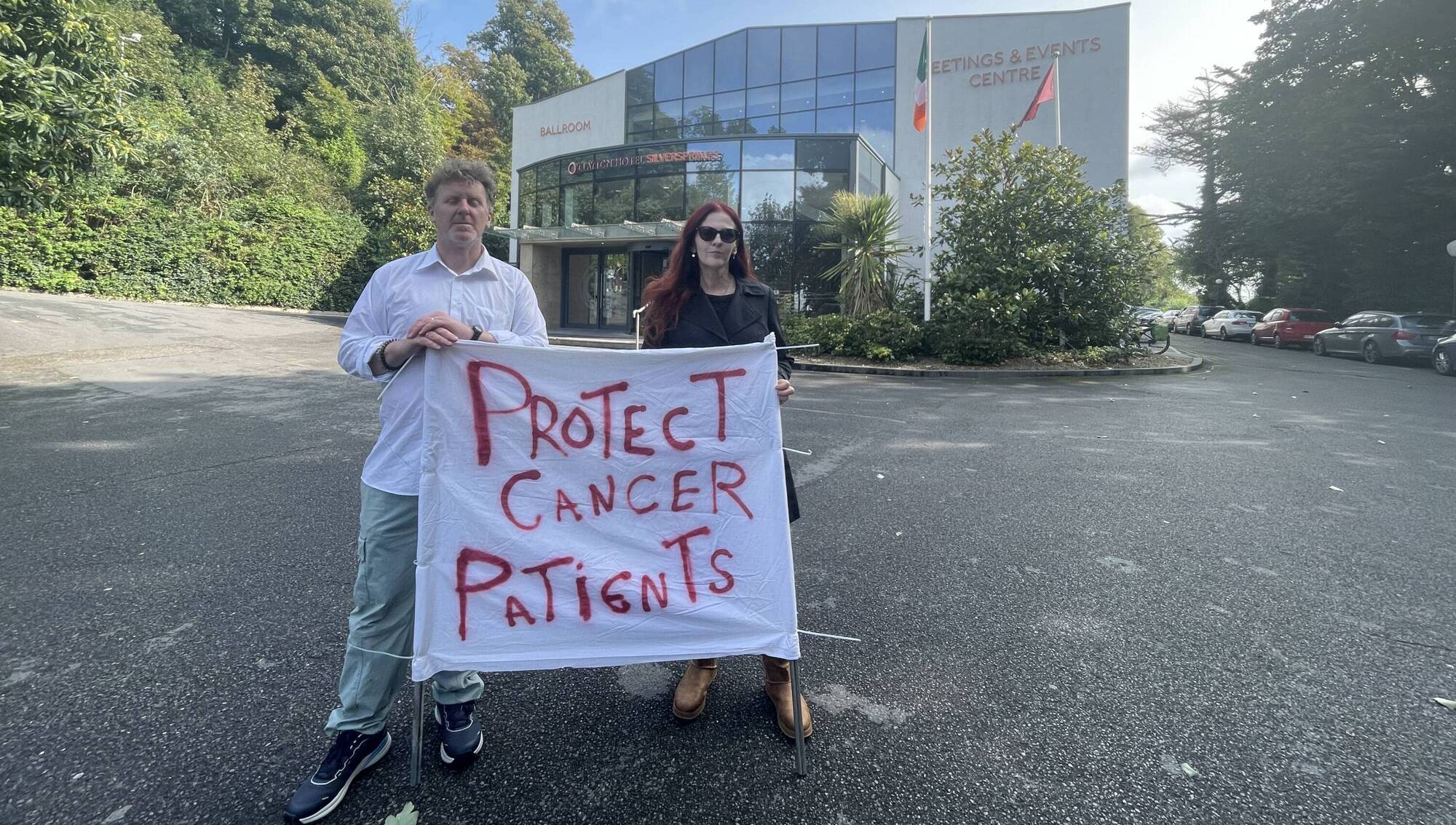
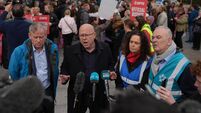
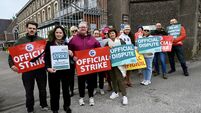
A protesting outside the Clayton Hotel Silver Springs in Cork in 2023 where controversial naturopath Barbara O'Neill was delivering 'health seminars' this week. File picture
The HSE has said that it is "crucial" to question where health information comes from after experts warned against appearances in Ireland by a controversial "alternative" health speaker who wrongly claims cancer is a "fungus".
Australian alternative health promoter Barbara O’Neill is hosting and speaking at scheduled events in Ireland.
Ms O'Neill describes herself as a naturopath and nutritionist but was permanently banned from providing health services in New South Wales. The Australian state's Health Care Complaints Commission found she had told clients that cancer is a fungus treatable with bicarbonate of soda and had discouraged them from having chemotherapy.
That investigation found that Ms O'Neill "does not recognise that she is misleading vulnerable people (including mothers and cancer sufferers) by providing very selective information".
A number of Irish, Australian, and UK medical experts have signed a letter to venues, warning that the talks will likely spread medical misinformation.
Professor Mark Lawler, Professor of Digital Health and chair in Translational Cancer Genomics, Queen's University Belfast, said that the scientific community "needs to speak up".
"This person has told cancer patients to avoid chemotherapy, and that is among the reasons she has been banned for life from giving health advice in New South Wales. I am appalled that she is able to speak to audiences on this island.
"These messages are irresponsible and dangerous, and delaying treatment will put patients at risk."
Jennifer Feighan, CEO of the Irish Nutrition & Dietetic Institute, added that "more and more self- proclaimed or alternative ‘nutrition practitioners’ are emerging from informal courses". "The title "nutritionist" is not protected by law in Ireland, so people with different levels of training and knowledge can use it.
"Many nutritionists and public health nutritionists are well qualified to provide information about food and healthy eating and often work in public health, health improvement, health policy, education and research. However, it can be difficult for the public to know whether advice is coming from a qualified, accountable source.
"As a guide, a nutritionist should hold at least have a BSc (Hons) or MSc in nutritional science from an accredited, evidence-based university program and ideally be registered with the Association for Nutrition (AfN), which maintains the UK Voluntary Register of Nutritionists (UKVRN)."
Dr Paula Byrne, senior research fellow/evidence synthesis methodologist, Centre for Health Research Methodology, University of Galway, added: "My advice is simple: ask for the evidence behind any health claim you hear and take the time to build your critical thinking skills. Excellent free resources can help, such as Informed Health Choices and Sense About Science's ‘Ask for Evidence’."
A HSE statement said: "Public safety is our top priority to the HSE. It is crucial to question where information has come from. Take your time to check it out against reliable sources of information. This will help you decide if you can trust the advice. This advice is especially important for patients with cancer.
"We take steps in the HSE to enhance media literacy by making our content accessible and easy to understand by all age groups; we proactively share accurate information through our social channels and elsewhere, and we have health experts available for media interviews and to fact-check our content.
"You can get up-to-date health information at HSE.ie, a trusted source of factual information. If you have questions or concerns about your health, talk to a health professional."
- Paul Hosford, deputy political editor


CONNECT WITH US TODAY



Be the first to know the latest news and updates