Collagen, cancer and sun cream: How to spot health misinformation on social media

'If you want to improve your body’s ability to produce collagen or if you want firmer, plumper skin with fewer wrinkles and better tone, you basically need to improve the quality of the protein going into your body.'
What do collagen, cancer, and sun cream have in common? They are all hot topics on social media, with advice flooding people’s feeds daily.
However, questions are now being raised about the accuracy of many claims, with fears vulnerable patients and consumers are spending a lot of money on products that do not work.
Tom McKenna is a pharmacist, whose no-nonsense online explanations have gained him more than 130,000 followers.
This echoes what he said about how he deals with patients at Balally Pharmacy in Sandyford, Dublin: talking about why they might need a product or supplement, as well as the evidence behind it.
“Up and down the country every day of the week, pharmacists and doctors are dealing with a whole pile of questions coming from Dr Google, from patients trying to empower themselves to look after themselves better,” he said. “They’re asking questions; there’s a bewildering amount of information out there.
Questions about collagen are frequent. Supplements are widely promoted online, targeting middle-aged women and, to a lesser extent, men.
His main concern is the sales pitches do not match the science.
He describes collagen as a long-chain protein like a bicycle chain, which humans build from amino acids (often described as the building blocks of protein), while also using zinc, copper, and vitamin C in the process.
“What is also a fact is humans can’t absorb collagen,” he said.
Read More
These supplements are usually very expensive, but he said: “If you want to improve your body’s ability to produce collagen or if you want firmer, plumper skin with fewer wrinkles and better tone, you basically need to improve the quality of the protein going into your body.”
He advised spending the money on steak or oily fish instead.
In contrast, supplements such as marine collagen, he said, are "generally made from the stuff the fishmonger can’t sell; it’s made from all the garbage".
"There’s little or no quality control because food supplements don’t play by the same rules as medicines," Mr McKenna said.
His advice often centres around using real food.
“I consistently tell people to invest in your health; buy food from first principles,” he said. “You’ll not just get the thing you’re looking for, you’ll get other benefits as well.”
Food first principles mean prioritising whole foods and their nutrients over supplements or marketed medical products to meet basic health needs.
Kiwis for example, Mr McKenna said, have fibre, Vitamin C and many other minerals but can also help people sleep, which he advised is better than magnesium supplements.
“It’s not as simple as ‘here’s a pill’. The messaging around food from first principles isn’t a very marketable message in 2026; people want the quick fix.”
In contrast to the positive promotion of collagen products online, sun cream is now often falsely demonised as causing skin cancer.
On her account, pharmacist Lauren O’Reilly focuses on general education, walking her 6,000 followers through topics including skin protection and products.
“I’ve seen people making their own, unfortunately,” she said. “There’s a perception that ‘natural’ or ‘homemade’ is better.”

She understands why people raise questions but said: “The consumer needs to be aware there’s an industry making money off of a counter-argument for products that can potentially do harm and not protect them from things they need to be protected against, such as UV rays.”
In general, she said about a lot of pharmaceutical or pharmaceutical-adjacent products, “we have refined what nature has given us through the power of science to make something that’s more effective and oftentimes safer.”
She is very aware products are dressed up deliberately to catch attention.
“It looks very genuine, and people may use titles or language that suggests it's authoritative, so I can totally understand why there could be confusion there,” she said.
Language can be manipulated to imply certain ingredients are worse than others, including any chemical. She pointed out even water is made of chemicals — hydrogen and oxygen — but this gets sidelined.
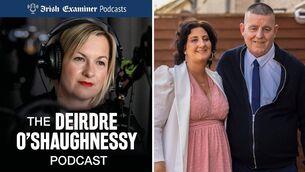
Her podcast says it “separates fact from fiction” and offers listeners “evidence-led conversations with real experts”.
Ms O’Reilly advised anyone unsure who to follow to look for local creators first.
“The things they recommend are available for me to look into, and second of all, it’s easier to verify their status as a healthcare professional,” she said.
“Obviously there are creators all over the world, but there’s a reason why. As healthcare professionals, we have local guidelines. Different drugs are available locally, different products are available, we follow different guidelines in different countries.”
"Check if they say they’re a doctor: do they specify in their bio that they’re a medical doctor? It can be misleading, and sometimes people do just lie as well."
Ms O’Reilly urged anyone considering a supplement or health product seen online to talk to their pharmacist or GP first.
“There would be no judgement,” she said.
She occasionally runs advertising on her social media account, marked #Ad to make this clear.
Collagen also featured earlier this week on BBC’s .
The medical doctor and TV presenter Xand van Tulleken described visiting a Chinese collagen factory. He said they “boil donkeys to make collagen supplements”.
“You boil it up with hydrochloric acid, and you get collagen out the other end.”
His co-presenters were horrified, and he said he used to take this supplement before, adding people think “eating collagen makes sense”.
The research says it doesn’t work, he said, as he called collagen supplementation “too good to be true”.
A spokeswoman for the Advertising Association of Ireland (AAI) said: “All advertising must be legal, decent, honest and truthful, and advertisers must be able to substantiate any objective claims they make.”
Its code of standards says any health claims “should be backed by substantiation".
This should include results from robust and reputable trials on humans, and these should be “of sufficient rigour, design and execution as to warrant general acceptance of the results".
Posts can refer to relief of symptoms such as superficial signs of ageing only if they can be substantiated.
“But unqualified claims such as “cure” and “rejuvenation” are not generally acceptable,” she said.
“Advertisers also must not suggest or imply that a product is safe or effective just because it is ‘natural’."
Under this code, social media users do not need to state their qualifications. However, she said they must not mislead followers with claims about expertise, qualifications or endorsements.
The public can complain to the AAI about adverts they think breach the code, and it can have such ads taken down if appropriate.
CONNECT WITH US TODAY



Be the first to know the latest news and updates