Somali women fighting to end FGM says her time in Ireland inspired her to bring change to girls at home
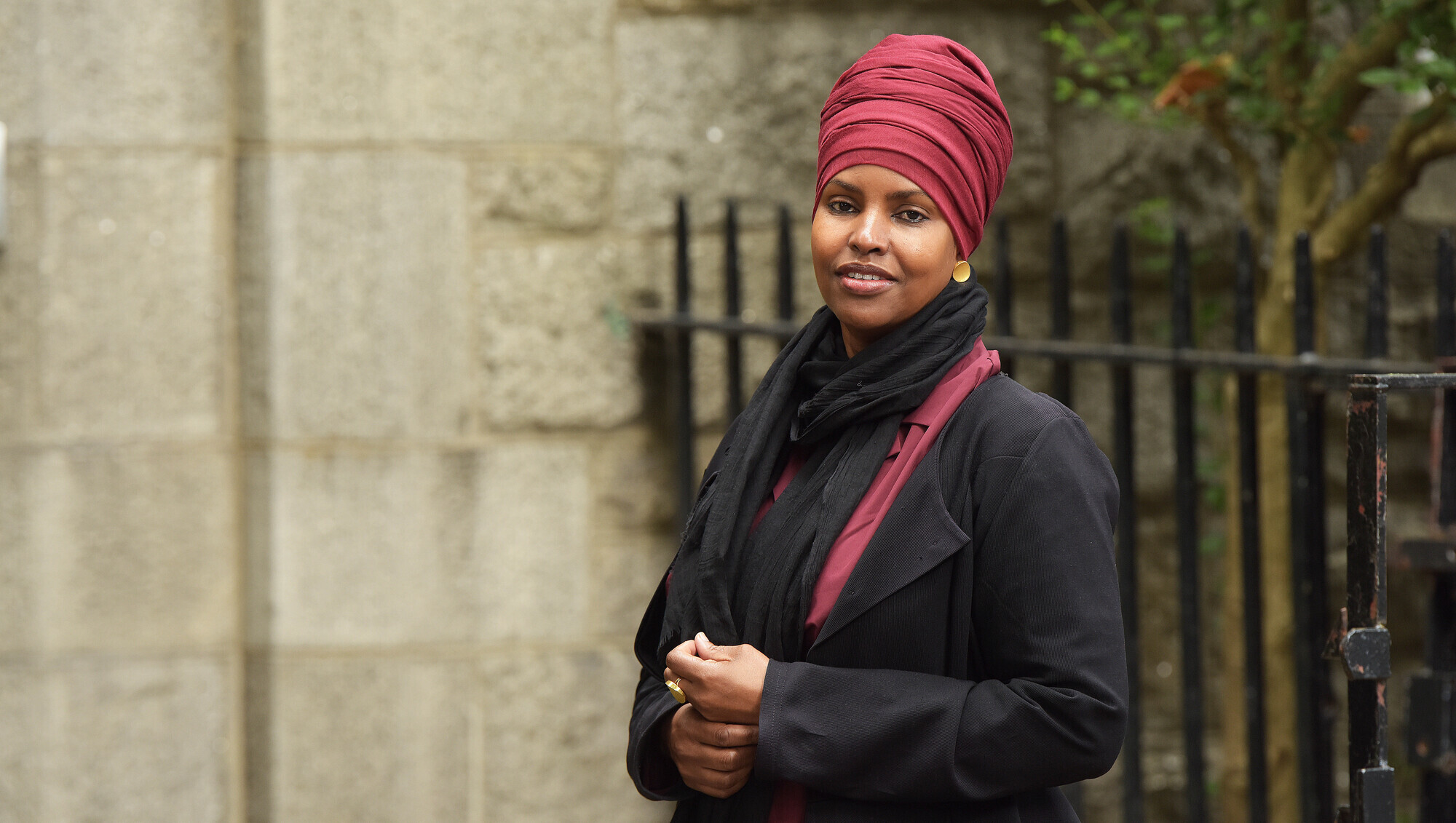
Sadia Alin, country director in Somalia for Plan International. Picture: Moya Nolan
A Somali woman fighting to end female genital mutilation has told how her time in Cork and Limerick inspired her to bring change for girls in her home.
Sadia Allin has faced threats, including of being shot, but continues to advocate against the “very degrading” practice.
Female genital mutilation (FGM), female circumcision or cutting, is when a girl or woman's genitals are deliberately cut or changed.
There is no medical reason for this, according to the HSE.
About 6,000 women living here have had FGM done to them before they moved to Ireland, the HSE said.
“I believe Somalia is the worst country to be a girl,” Ms Allin said, describing FGM as “really very degrading and undignified".
"The minute you open the legs of that girl, you take away her dignity and her aspirations in life,” she added.
For girls, “the feeling of betrayal even by your parents is really very hard to imagine”, she said.
Ms Allin also pointed out it increased the risk of dying in pregnancy.
“I’m also a survivor of FGM, it happened to me when I was just five. At that time, it was really a noble thing to do for your child. So although the child is crying and in pain, people around you are celebrating,” she said.
As country director with Plan International for Somalia and Somaliland she speaks there against FGM.
One day in a village she said her own daughters would not be cut.
“All of a sudden there was shouting and people running. I looked out and this guy went out and got a gun and wanted to shoot me,” she said.
“He said ‘why would she bring such nonsense to our community’.”
However, she said: “After three years, I went back to that community and the same guy was standing by my side denouncing FGM.”
It is about “breaking through barriers”, she explained, talking with parents, workers, neighbours and politicians.
She also now sees young Somali people who are "increasingly challenging FGM and traditional gender roles" in the community. Some of this is due to the growing desire among girls to stay in school.
She described how young girls or teens can easily drop out of school after having FGM done to them. Menstruation can become painful and younger girls are embarrassed to talk about this to teachers so they leave school.
"You feel alone," she said.
Life was very different when Ms Allin studied at University College Cork and lived in Limerick.
“I was here 20 years ago, it’s a long time ago now,” she said during a visit to Dublin.
“I lived three years in Limerick, then went back and then came again so in total I lived for five years in Ireland.
"I studied in Cork university, where I studied a youth and community degree.”
The idea was this practical, academic course would complement her advocacy work back home.
“Being based here and seeing girls having a different kind of life, different experiences gave me the motivation to know ‘I’m not the odd one’ and know there are girls in the world who are living free from those harmful practices.”
She found Irish people very aware of ongoing conflict and challenges in Somalia.
“I loved my time in Ireland, it was really such a great experience,” she said.
“I found Irish people very accepting and friendly.”
She added, laughing: “You will have heard about the instinct of the Irish to stand with the little guy; I found that experience in real terms.”
In Dublin, she spoke at an EU event on child protection.
Ms Allin also met minister of state for international development Neale Richmond ahead of International Day of the Girl, which falls on Wednesday.
The HSE said FGM was child abuse. It is illegal in the EU.
“It's also illegal to remove a girl from Ireland to mutilate her genitals abroad,” it said.
“It's very painful and can seriously harm the health of women and girls. It can also cause long-term problems with sex, childbirth and mental health.”
The HSE advised anyone worried about a girl being at risk of FGM to contact An Garda Síochána.


CONNECT WITH US TODAY



Be the first to know the latest news and updates