Discovery of synthetic cannabinoids in vapes prompts calls for stronger regulation
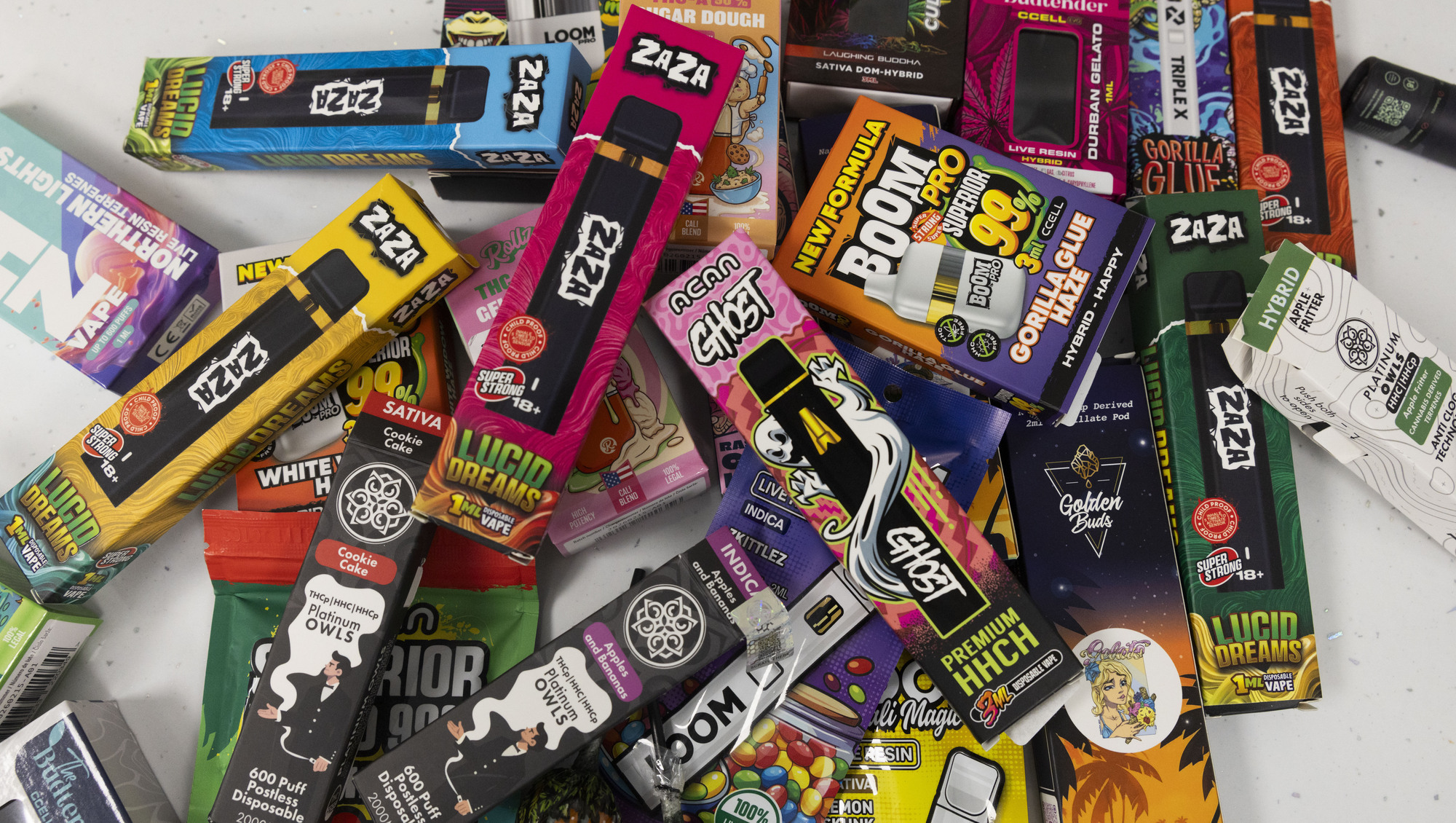
A sample of products which have been tested at the HSE National Drug Treatment Centre in Dublin, as high-risk synthetic cannabinoids have been found in products sold in shops in Ireland, according to the HSE’s early warning system for drugs. Photo: PA
There have been calls for stronger regulation around the sale of vape products in Ireland after high-risk, potential harmful synthetic cannabinoids were found in products in shops.
The substances are linked to “serious physical and mental health harms”, including psychosis, loss of consciousness, and severe intoxication. Concerns have been raised around the mislabelling of vape products sold in shops and online, as research found substances were not displayed on the packaging.
The HSE’s national drug treatment centre lab has identified the cannabinoids in vapes, vape “juice” and edible products in shops and the illicit market.
A total of 76 vapes or vape juice products have been analysed to date in 2026 and 28 contained HHC or related compounds such as semi-synthetic cannabinoids.
Eight contained potent synthetic cannabinoids while 10 had an acetate-containing compound linked to lung disease. A dozen had cannabis or related compounds while 41 contained CBD.
Professor Eamon Keenan, HSE national clinical lead in addiction services, said new synthetic cannabinoids and semi-synthetic cannabinoids are more potent than traditional cannabis.
“When I say they are more potent, that means they’re more likely to cause harm and problems associated with their use,” he said.
“These 76 vapes are a mixture of vapes which are being sold in shops, from online and from the black market.
He said some of the products said they had CBD but when they analysed they also found cannabinoids.
"That’s a real concern for us and it’s a real concern in terms of the regulatory aspect around these shops.
“Some of them are even being sold as psychoactive substances, and really we want people, first of all vendors, to be responsible about what they’re selling. We want parents to be aware about these vapes and young people then also to be aware about the contents and the risks associated with these vapes."
He said they would be calling for a group to be set up of the relevant stakeholders. "That includes the Department of Health and the Department of Justice, because they are responsible for the Misuse of Drugs Act and the Psychoactive Substances Act," he said.
“But we also need the HPRA (Health Products Regulatory Authority), and the Food Safety Authority because there’s edibles involved here. As well as environmental health and consumer protection need to look at what’s going on, what’s being sold, and how we can define the roles and responsibilities in relation to these products."
A total of 57 new products were identified in Ireland between 2021 and 2025. “These are products that have never been seen before,” Prof. Keenan said.
“They’ve been identified through our lab, or through forensic science, so it shows you the amount of these new products that are there, how hard it is for authorities to keep up to date.
“That’s why we need to have legislation that’s agile enough to be able to deal with these new psychoactive substances as they appear."


CONNECT WITH US TODAY



Be the first to know the latest news and updates