Department has no control over school book about tree that doesn't sustain Ireland's ecology
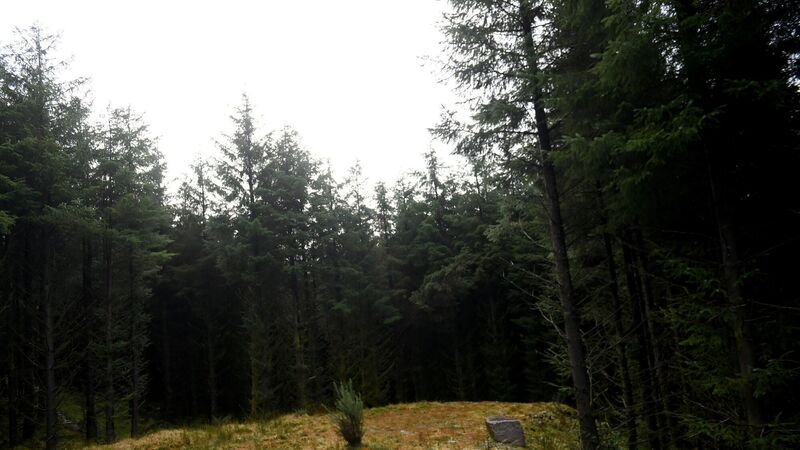
The Sitka Spruce has faced significant criticism for its effect on Ireland’s native ecology, notably in its tendency to overly acidify the soil in which it grows — thus negatively affecting waterways — and its inability to support native wildlife. File picture: Larry Cummins
The Department of Education says it has no control over the texts used in schools after a book endorsing the Sitka Spruce was sent to all primary schools last week.
Copies of the book, titled , were distributed to the schools last week.
While the tree is one of the most prominent in Ireland, it is non-native, hailing from North America and first introduced in the 1830s. It has faced significant criticism for its effect on Ireland’s native ecology, notably in its tendency to overly acidify the soil in which it grows — thus negatively affecting waterways — and its inability to support native wildlife.
The book features a foreword by former forestry minister Michael Healy-Rae expressing “hope” that the story will help the reader “see forests in a new way”.
The book itself was jointly funded by the Society of Irish Foresters, the Irish Timber Council, and the Social Economic Environmental Forestry Association of Ireland (SEEFA).
A letter to schools accompanying the book from those groups said timber processors regard the spruce as “the most adaptable tree species growing in Ireland, capable of producing outstanding yields”, albeit with the caveat that "other stakeholders regard it as a species that Irish forestry has become too reliant on”.
A spokesperson for SEEFA said the groups had, in publishing the book, “followed the example recently used in Scotland and Wales, where stakeholders took the initiative and paid to distribute a book for children across all schools in both countries”.
“The book is designed to allow children of various ages to consider wood in their built environment. This is the amazing tree which provides a roof over each and every one of our heads. It also has huge potential to replace carbon-intensive building materials such as steel and concrete in future building projects,” the spokesperson said.
They added that, although not funded by the Department of Education, the foreword by Mr Healy-Rae for the book “was agreed before the book’s publication”. Mr Healy-Rae had not replied to a request for comment at the time of publication.
A spokesperson for the Department of Education said that its current policy “is not to endorse or promote any particular programme, product or publication to support teaching and learning”.
“There is no obligation for a school to use any particular textbook or programme in their delivery of the curriculum,” they said.
“In terms of content, the Department of Education does not have a role in approving, commissioning, sponsoring or endorsing any content in any publication or product. External companies and organisations are free to make direct contact with schools with regard to their own resources.”
Dr Eoin Lettice, a lecturer in plant science at UCC, said the main issue with the Sitka Spruce is that it “does not support biodiversity in the same way that native or mixed forests do”.
“There is a need to shift our commercial forestry towards more mixed planting, which doesn't rely on just one non-native species which has been demonstrated to have negative impacts on the environment,” he said.


CONNECT WITH US TODAY



Be the first to know the latest news and updates