Minister asks farmers to protect hedgerows
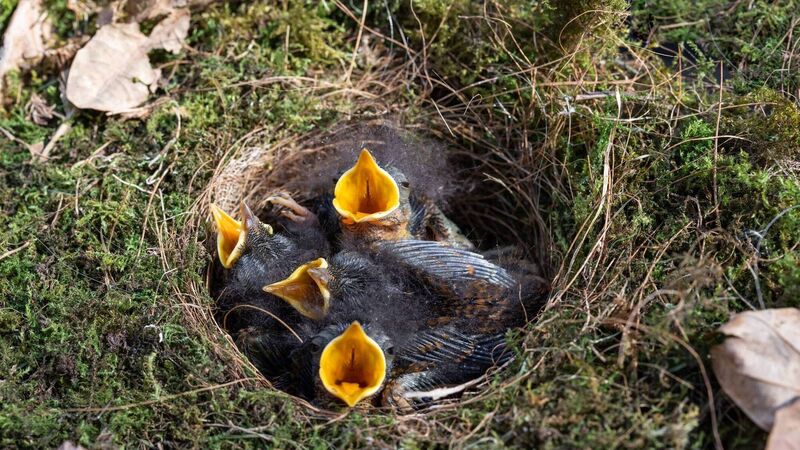
Hedgerows can benefit from cutting from time to time, but it is important that this activity takes place outside of nesting season to avoid disturbing nesting birds and other wildlife. File picture
THE public has been asked to play their part in protecting birds as they start to build nests, lay eggs and raise their young.
Nature, Heritage and Biodiversity minister Christopher O’Sullivan said vegetation such as hedgerows, trees and shrubs provide food and shelter for birds and wildlife.
The Wildlife Act prohibits the cutting, grubbing, burning or other destruction of vegetation growing on “any land not then cultivated” between 1 March and 31 August annually.
Legislation also prohibits the removal of vegetation during the nesting season with some limited exemptions.
It is also an offence to wilfully destroy, injure or mutilate the eggs or nest of a protected wild bird, or to wilfully disturb a protected wild bird on or near a nest containing eggs or unfledged young at any time of the year.
The National Parks and Wildlife Service (NPWS) has published guidance to help landowners understand the legislation and their responsibilities.
Minister O’Sullivan said hedgerows are a unique feature of the Irish landscape. These living fences provide food and shelter for birds and pollinators and serve as corridors for wildlife to move across fragmented habitats.
Hedgerows can benefit from cutting from time to time, but it is important that this activity takes place outside of nesting season to avoid disturbing nesting birds and other wildlife.
He urged everyone to familiarise themselves with the guidance and their responsibilities. Breaches of legislation is a matter the NPWS takes very seriously with 17 prosecution cases initiated in 2025 under Section 40 of the Wildlife Act.”
The cutting, grubbing, burning or other destruction of “vegetation growing in any hedge or ditch” in the bird nesting season is prohibited to safeguard nesting birds and other wildlife during their critical breeding season.
Any activities which involve removing vegetation should take place outside of this time. Guidance published by the NPWS assists landowners in their responsibility to ensure compliance when managing vegetation on their property.
Landowners should take precautions to protect wild birds, such as monitoring vegetation for any nesting activity and the presence of eggs, before undertaking any cutting or removal.
It is an offence to wilfully disturb or harm the eggs or nest of a wild bird or a wild bird on or near a nest containing eggs or unfledged young birds at any time of the year.
The guidance also explains the exemptions which apply during the bird nesting season. If activities must take place when nesting birds may be present, it will be necessary to carry out checks for nests and breeding birds before they begin.
Hedge cutting in Special Areas of Conservation (SACs) and Special Protection Areas (SPAs) may require separate consent to be given prior to being undertaken. There is no exemption to the burning of vegetation during nesting season.
Minister O’Sullivan said the engagement we’re seeing from landowners and farmers is encouraging. Their actions to leave hedgerows intact for the Spring and Summer months are giving wildlife a better chance to thrive.
NPWS director general Niall Ó Donnchú said damage to habitats caused by destruction or burning undermines decades of careful conservation work.
A well-managed species-rich hedgerow (especially older, traditional ones) can support up to 2,000 species per kilometre.
Ireland has around 689,000 km of hedgerows, making them one of the country’s most important biodiversity habitats.
In addition, a square kilometre of healthy Irish peatland can harbour roughly 500 –1,000 species, depending on its age, hydrology, and management.
Intact raised bogs and blanket bogs are biodiversity hotspots for rare and specialised species.
“We take breaches of the legislation very seriously. We have strengthened our co-operation with An Garda Síochana, landowners and communities.
We continue to investigate wildlife crime, as part of our work to protect nature. And to bolster our protection of our special habitats we will deploy air resources too,” he said.
The NPWS initiated 17 wildlife crime prosecutions in 2025 for offences under the Wildlife Act.
Five cases have concluded successfully, with a further 12 currently before the courts and awaiting outcomes. The most significant penalty was a €14,000 fine imposed in Co. Laois.