‘I don’t believe someone who has done something like that should ever be released’
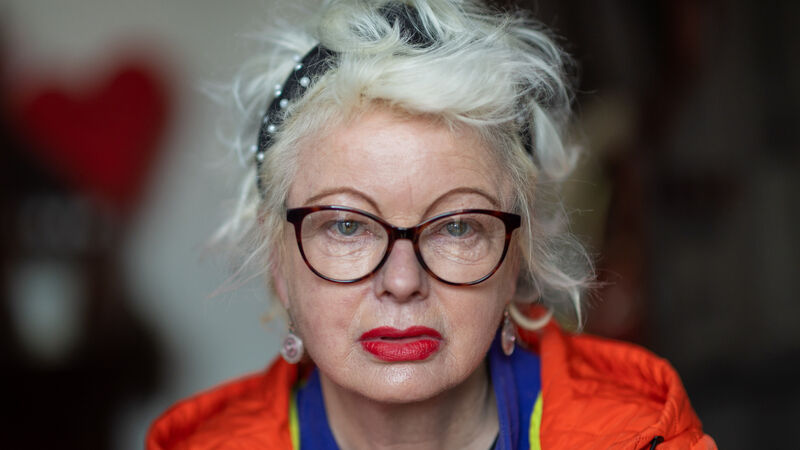
Sister of Siobhan Kearney, Deirdre McLaughlin, at her home in Dalkey, Dublin: 'The law, as I see it, is on the side of the prisoner'. Picture: Gareth Chaney
More than two decades after the murder of her sister, Deirdre McLaughlin jnr still finds herself confronting a question she believes should never need to be asked.
Why should Brian Kearney, the man convicted of killing his wife Siobhán McLaughlin, ever be considered for release?
But for 62-year-old Deirdre, who is being interviewed for the first time today about her sister’s murder, that question sits within a broader concern, one that goes beyond her own family and into the workings of the State itself.
“This is where your taxes are going,” she told the at her home in south Dublin this week.
Read More
“Taxpayers paid for his murder trial despite him being a millionaire, and the State pays for his time behind bars. I don’t think we think about and question these things enough.”
Her focus is not only on the possibility of parole, but on the system that surrounds it, a system she believes continues to allocate “public resources, legal protections, and procedural rights” to the man convicted of her sister’s murder, while requiring victims’ families to repeatedly re-engage with their trauma and loss.
The original investigation and trial were publicly funded because Brian Kearney successfully applied for legal aid, even though he was a millionaire.
Today, the parole process, including reviews, legal structures, and administrative procedures, continues for lifers like Kearney.
Within that process, Deirdre said, “the balance feels uneven”.
The man convicted of the murder is entitled to read submissions made by the victim’s families. He can receive minutes from parole board proceedings. He can respond to what is said about him.
“That means he can shape how he presents himself,” Deirdre said. “He knows what we’re saying. He can work around that.”
For families like the McLaughlins, Deirdre said “there is no equivalent position”.
“You’re putting everything down on paper, the worst thing that ever happened to you, and he gets to read it and use it.”
She also points to decisions she finds particularly difficult to reconcile, including the granting of compassionate leave.
“The fact that someone who has taken a life in that way can be given compassionate leave, people should know that,” she said.
“He was granted compassionate leave, although I don’t think it went ahead in the end. But you have to ask, where is the line?”
Her concerns extend further into how public resources are distributed.
“People are sleeping rough all over the country,” she continued.
.
“There are people in hospitals waiting for treatment that is not coming fast enough. And yet this is what the system is spending time and money on?
“Do people understand that lifers like him have access to multidisciplinary teams, psychiatrists, and hospital appointments, as well as educational courses of his choice?
“This is part of his so-called rehabilitation, and members of the public who need rehabilitation and support systems for their family members have to struggle and fight for the same services.
“People are entitled to know that. If they did know, I think there would be serious questions, or maybe people do know but need reminding of the reality of it all.
“I believe in the court of human rights for the innocent. I don’t believe in the entitlements he gets as someone who murdered my sister and never ever acknowledged what he did”.
Siobhán McLaughlin was murdered on February 28, 2006, at the home she shared with her husband Brian Kearney, a businessman with whom she had a son.
She was strangled with a vacuum cleaner flex by her husband, who then attempted to stage her death as a suicide.
His plan fell flat on his face as the McLaughlins were able to see through his lies, as were gardaí.
In 2008, he was convicted of murder at the Central Criminal Court and sentenced to life imprisonment in a case that made international headlines.
Legally, that marked the end of the case, but the reality, Deirdre said, is that “it marked the beginning of something else”.
“It doesn’t end with the trial,” she said. “You think it might. It doesn’t.”
Under Irish law, individuals serving life sentences may apply for parole after a minimum period.
The Parole Board assesses applications based on a range of factors, including risk, behaviour in custody and evidence of rehabilitation.
A life prisoner is entitled to apply for parole after 12 years, and reviews are ongoing. However, the justice minister has the final say in the sign-off of any Irish prisoner.

For families, this creates an ongoing cycle of fighting to keep him behind bars, while also bringing up their suffering over how their sister’s life was extinguished by the man she was trying to leave.
“You’re asked to make submissions again and again,” Deirdre said. “To explain why you don’t want the person who killed your family member released.”
Each time, she said, it brings her back to that horrific day, and that is why she has decided to speak out now, after she recently decided not to engage with the last parole hearing.
“It brings you straight back to that day. To everything that happened. It’s like being put back into it.”
Central to the parole process is the concept of rehabilitation, a word that Deirdre rejects outright in this context. “I won’t use that word,” she said. “I won’t write it down.”
Her objection is not only philosophical, but procedural. Submissions made by families to the parole board, she understands, form part of the material considered in assessing Brian Kearney’s progress.
“He can read those letters,” she said. “He can use them to shape what he says, to present himself in a certain way.”
For that reason, she has chosen to limit her participation and refused to take part in his last parole hearing earlier this year, the outcome of which “could be in December this year”.
“I’m not going to put anything in writing that could benefit him,” she said. “I don’t want to be involved in that at all. You cannot rehabilitate evil.”
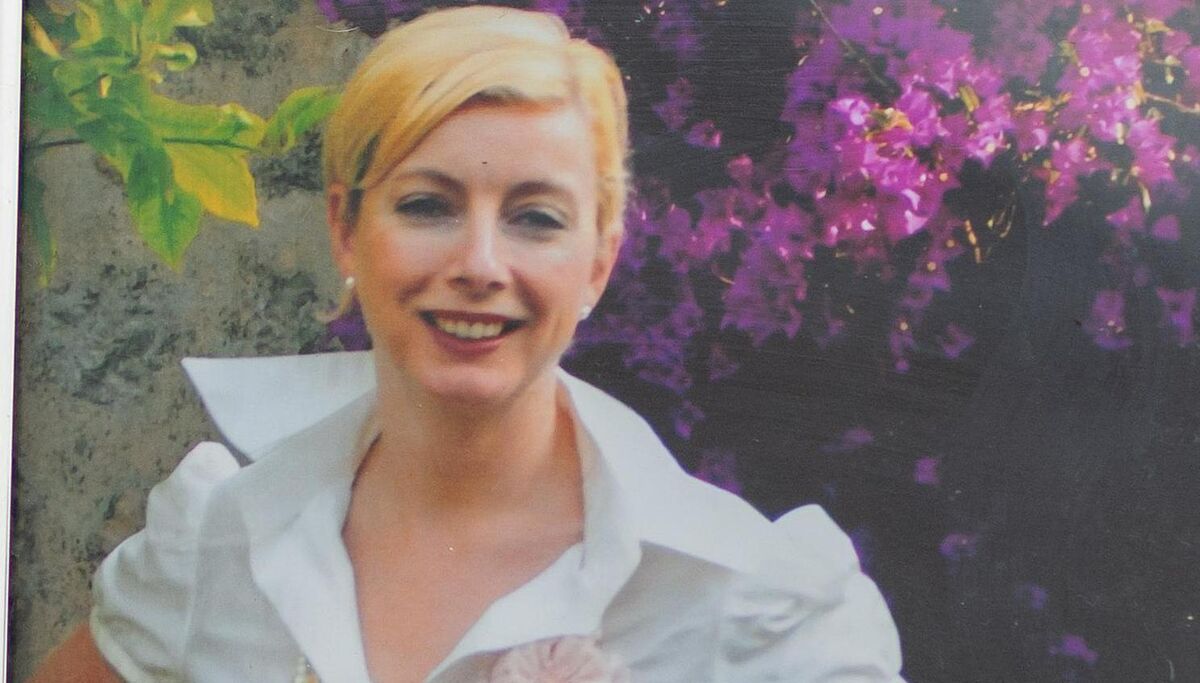
Before her death, Siobhán McLaughlin was, in her sister’s words, “a bundle of sunshine”.
“She had energy, warmth, independence,” Deirdre said. “She lit up a room.”
Raised in a large family in north Dublin, Siobhán was one of eight children. Like Deirdre, she did not thrive in formal education, but showed determination early in life.
“She wasn’t academic, but she was capable,” Deirdre said. “More than capable.”
She trained in catering at a time when that path was less typical, eventually building her own business and achieving financial independence.
“She built her own life,” Deirdre said. “Her own business, her own home. She worked hard for everything. She was very successful and independent; she did not need anyone’s money.”
That independence was matched by a “strong sense of social responsibility”.
“She helped people,” she said. “If someone was struggling, she’d do what she could for them with food, work, whatever it was.”
It is this part of her sister’s life that Deirdre is determined “should not be overshadowed”.
“She wasn’t just a victim,” she said. “She lived a full life. She was a wonderful mother and sister, and everyone loved Siobhán. She was great craic”.
When Siobhán began her relationship with Brian Kearney, there was no immediate indication of what would follow. But Deirdre recalls “a persistent unease”.
“I never felt comfortable around him,” she explained. “There was something off.”
Over time, she noticed changes in her sister. “She became quieter. Less herself,” she said. “The light went out of her.”
Some moments stood out for Deirdre too. After the birth of her son, Siobhán spoke about needing to lose weight because her husband did not like it.
“That didn’t sit right with me,” Deirdre said. “She was so tiny, and when she had the bit of weight on her, I remember thinking she looked absolutely gorgeous, but when I said it to her, it was a complete ‘no no, Brian doesn’t like it’.
“I thought there was something really wrong there”.
Siobhán and Brian married abroad, without any family present, a decision that contrasted sharply with Siobhán’s personality.
“She would have loved a celebration,” she said. “That wasn’t what happened, and that wasn’t like Siobhán at all. He was slowly digging into her, but she never said anything about it”.
Siobhán had consulted a solicitor about separating from Brian in January 2006, and legal letters were sent to him, but were unanswered.
“She wanted out,” Deirdre said. “She wanted a simple arrangement to live with her child, for him to have access. But he wasn’t going to let her go.”
On February 28, 2006, Siobhán McLaughlin was found dead in her home in Goatstown. She was 38. At first, her death was presented as a suicide by Kearney, who was “inconsolable” over her death in front of the family and gardaí.
Deirdre remembers the moment she was told about Siobhán’s death.
“There was screaming down the phone ‘Siobhán is dead’,” she said. “I couldn’t process it. I thought there had to be some other explanation.”
When she arrived at the house in Goatstown, it was surrounded by emergency services. Inside, her family was there, but she felt deeply uneasy around Kearney.
“He was roaring crying,” she recalled. “Then someone asked him a question, and he stopped immediately, answered it calmly, and went straight back to crying. It didn’t make sense. I remember thinking ‘that is very odd’.”
In the days that followed, suspicions within the family grew.
“When we were asked by a detective, every one of us said we believed he was responsible,” Deirdre said.
A year later, he was charged with Siobhán’s murder and in 2008, he was convicted and sentenced to life behind bars.
Deirdre and her family attended the trial, “which was an ordeal”, she said.
“It was very hard. Just sitting there, seeing his family, watching them take notes. It was intimidating. I didn’t like any of it.”
While the conviction brought legal resolution, it did not bring closure, and Siobhán’s memory is as much alive today as it was back in 2006 when Deirdre last saw her.
“It just changed the form of it,” she said.
“I remember feeling something bad was going to happen to her, and when I said it to her on Killiney Hill, she laughed and said ‘don’t be ridiculous’.”
While Kearney is entitled to parole, that process “has kept the case active”, Deirdre said.
Kearney has applied for parole, most recently in 2024, when he was refused. The process, however, remains open-ended, which is the same for all lifers here.
For Deirdre, this raises bigger questions about the balance within the justice system.
“He has rights,” she said. “I understand that. But my sister had a right to live. That was taken from her.”
She questions how that balance is struck and whether it “adequately reflects the impact on victims’ families”.
“How does he get to be free someday?” she said.
Her concerns also extend to specific decisions within the system, including the provision of legal aid despite owning significant assets at the time of his conviction.
“Their hotel in Spain is still in business, so how was everything paid for by the State? People are entitled to ask how that happens,” she said.
She also questions the roles made available to prisoners, including peer-support positions. Kearney was given a role on the Listener Scheme with the Samaritans.
“If you were a parent of one of these young prisoners, would you be comfortable with that?” she asked.
For Deirdre, the passage of time has not changed her position.
“I don’t believe someone who has done something like that should ever be released,” she said.
And while the parole system may revisit Kearney’s case again in the future, she is clear about her response.
“It will be the same answer,” she said. “It’s a life for a life.
“This is not only about personal loss, but it’s also about public accountability.
“The law, as I see it, is on the side of the prisoner,” she said.
“And people should know that.”
Both the Parole Board and the Irish Prison Service say they do not comment on individual cases.
CONNECT WITH US TODAY



Be the first to know the latest news and updates