What the 1926 census reveals about Ireland a century ago
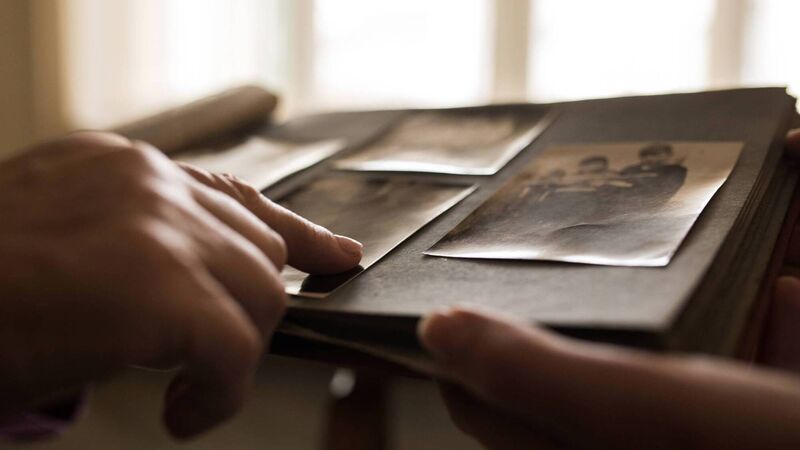
It was taken on the night of April 18, 1926 — exactly a century ago. Picture: iStock
Census information recorded 100 years ago is set to be released on Saturday, offering a snapshot of life in Ireland at the time, including family histories and previously unseen details.
Some 700,000 individual household returns will be made freely available and fully searchable online.
This is the first census carried out following the establishment of the Irish Free State in 1922.
It was taken on the night of April 18, 1926 — exactly a century ago. At the time, the population of Ireland was 2,971,992, compared with 3,139,688 recorded in the 1911 census.
Additionally, 92.6% of the population identified as Catholic, 18.3% could speak Irish, and 51% of the workforce worked in agriculture.
HISTORY HUB
If you are interested in this article then no doubt you will enjoy exploring the various history collections and content in our history hub. Check it out HERE and happy reading
Read More
Fiona Fitzsimons, a genealogist at EPIC's Irish Family History Centre, said there is "a huge amount to learn" from the census as the information is released in waves.
"It's the first census that was released after independence and after partition," she told on Friday.
"It also happens after a 15-year gap. There was supposed to be a census in 1921, but that didn't happen because we had the War of Independence. You couldn't very well send out the RIC, who were the enumerators, to collect the census returns.
"And that 15-year gap of 1911 to 1926 happens to be the time when some of the most tumultuous events in Irish history took place. We had the land commission, the land purchase scheme and that made a nation of stakeholders, farmers who had the right to actually buy out their own land.
"We have the Irish Revolution between 1913 and 1923, and from that, Independence and then World War I and we also come to the end of one of the biggest waves of Irish immigration from the 1820s to the 1920s, when America in 1926 put on quotas on immigration for the first time," Ms Fitzsimons added.
Ms Fitzsimons added that there is a "huge amount to try and see" due to the digitising of the census.
"The big data allows us to ask big questions. Even just with the last of the 1901 and 1911 census, we actually began to reconfigure, to reunderstand some of our history," she said.
"Previously, we always thought that Ireland had the lowest rate of return of any immigrant group to North America, and in fact, we found out that the rate of return was something like eight or nine times higher," Ms Fitzsimons added.
She said there is a huge interest in this census, especially considering that last time, the National Archives server "kept on crashing."
The records were stored in 1,344 boxes. As part of a major digitisation project by the National Archives of Ireland, supported by the Government, the initiative involved preserving the records using high-volume scanning equipment and “intelligent automation” to transcribe handwritten responses.
Unlike the 1901 and 1911 census records, which are already available online, the 1926 census does not include Northern Ireland.
The dataset includes 13 categories, such as names, addresses, age, sex, marital status, birthplace, relationship to the head of the household, ability to speak Irish, and occupation and employment.
Another category relates to married women, who were required to state how long they had been married and record the number of children born alive.
Married men, widows, and widowers were also asked to state the number of living children, stepchildren under the age of 16, and whether they were residing in the household or elsewhere.
The returns also recorded the total acreage of agricultural holdings associated with each household.
The census includes information at district electoral division level, broadly comparable to today’s local electoral areas.
People searching for ancestors are being urged to have as many details as possible before using the database and to be aware of language differences, as some forms were completed in Irish rather than English.
Ms Fitzsimons added that in her role at the Irish Family History Centre, she sees people every day researching their background.
She said that one of the "frequent scandals" to learn from these records is whether your ancestors were Protestant.
"Once that inter-marriage happens and children are brought up, it's often not talked about again by the family...this is probably the most common scandal that we find, and it always knocks people for six because they think 'how could that have happened so recently, three or four generations, and I don't know about it?'," Ms Fitzsimons said.


CONNECT WITH US TODAY



Be the first to know the latest news and updates