Rare Greenland shark found on Sligo coast taken in by National Museum
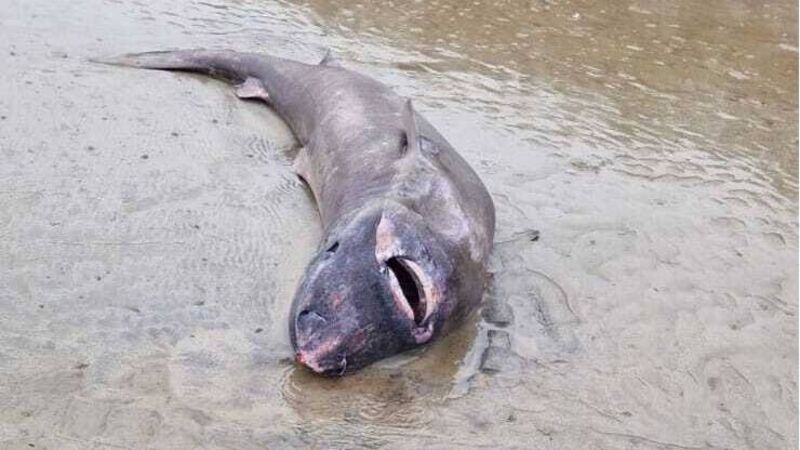
Greenland Shark Picture: Irish Whale and Dolphin Group via Facebook
The remains of a rare, three-metre-long Greenland shark, which washed up on a Sligo shore, have been taken in by the National Museum of Ireland.
It is the first recorded stranding of this species on an Irish coast. The animal is known for its extreme longevity and deep-sea habits and is "extremely rare in Irish waters".
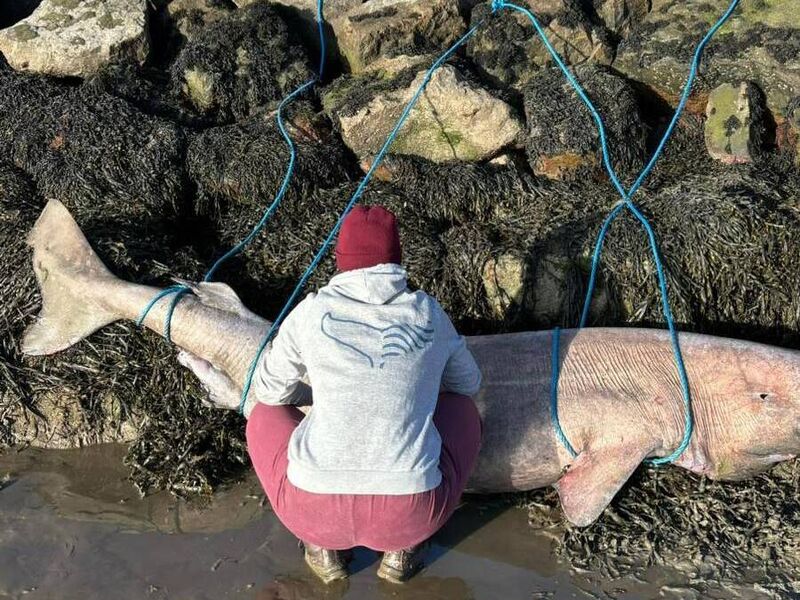
The dead animal was found by members of the Irish Whale and Dolphin Group in a "difficult-to-access part" of the coast.
Read More
Because of challenging terrain, as well as threats posed by tidal conditions — which could have caused further deterioration or resulted in the loss of the remains to sea — an urgent multi-agency response was needed.
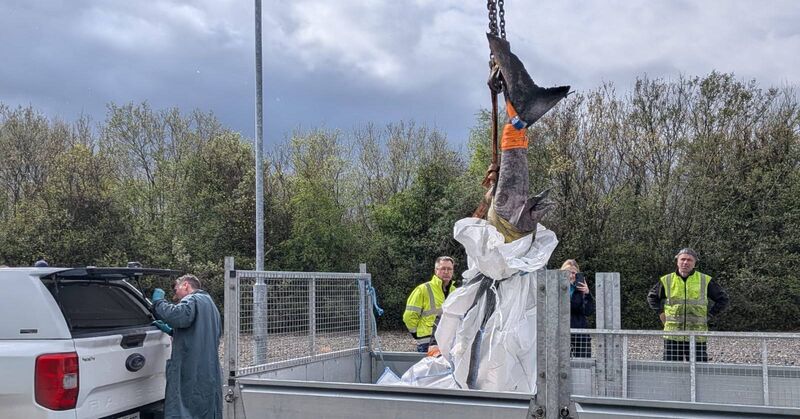
The operation involved members of the Regional Veterinary Laboratory Sligo, Department of Agriculture, Food and the Marine (DAFM), Sligo County Council, the Harbour Master, members of the IWDG, and a number of academic and independent researchers.
Specialist equipment and access to private property were required to retrieve the specimen safely, and a crane was used to lift the animal from the shore.
The remains of the Greenland shark are now undergoing a "detailed scientific" post-mortem examination, which the museum says will contribute "valuable data to the understanding of this elusive deep-water species".
"Tissue samples and selected anatomical components are being preserved as part of the National Museum’s scientific collections, ensuring a permanent record of this exceptional specimen," a spokesperson said.
"This stranding represents a significant opportunity for research into its biology, health, and ecology," they added.
The National Museum hopes to display the specimen in future, subject to the condition of its skin and its suitability for preservation.


CONNECT WITH US TODAY



Be the first to know the latest news and updates