Fuel price protesters call for national strike
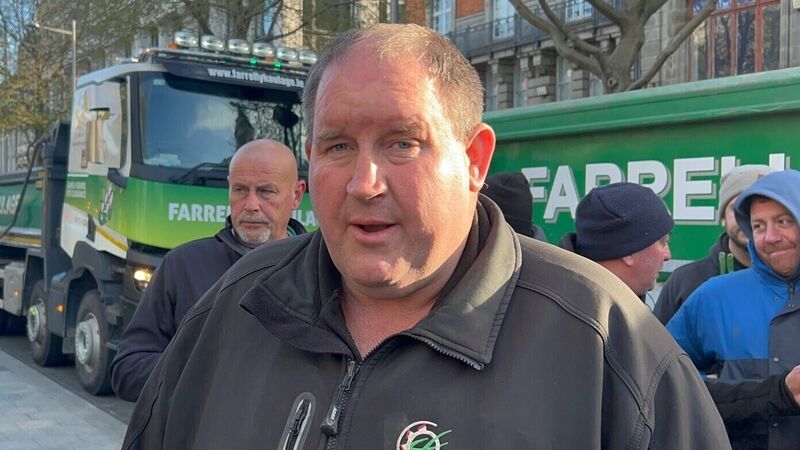
Fuel protest spokesman Christopher Duffy speaking on O'Connell St in Dublin yesterday. Picture: Cillian Sherlock/PA
Blockades of the country’s fuel terminals were finally lifted on Sunday, but whether the Government’s additional €500m in supports is enough to end protests on the roads remains to be seen.
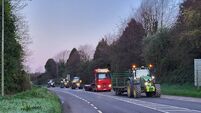
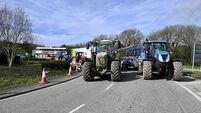
The slow-moving convoys, which protesters used to bring major arterial routes to a virtual standstill for a number of days last week, were again taking place on Sunday across the country on motorways and major national routes. Among the places impacted were Cork City, Bandon, Clonakilty, and Tralee.
The convoy protests are taking place again on Monday.
Read More
A spokesman for the protesters in Dublin, Christopher Duffy, called on social media on Sunday for a “national day of strike and protest” today, adding: “They [authorities] went too far.”
However, that was before the Government announced:
- The cut in excise duty extended to June;
- A 10c cut on petrol and diesel and 2.4c on green diesel from midnight on Tuesday;
- A fuel subsidy for farming and fisheries.
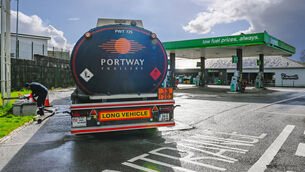
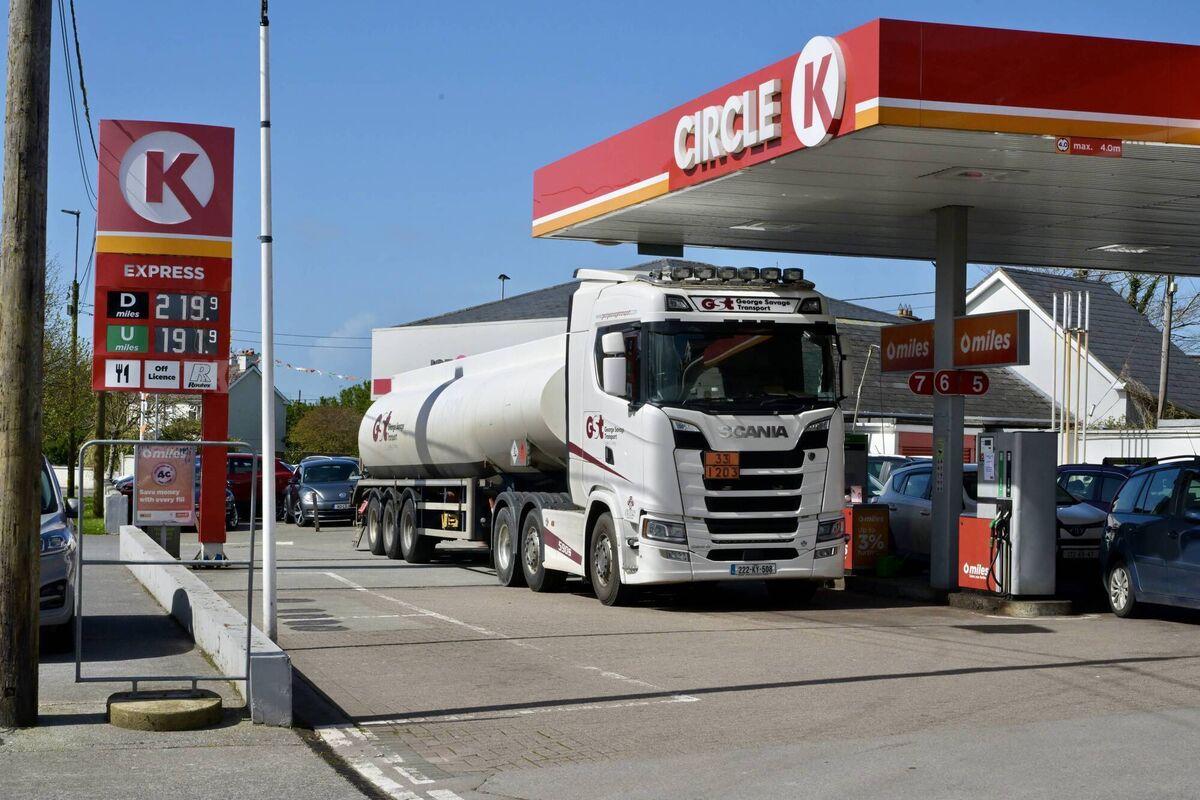
Meanwhile, despite 19 trucks of fuel leaving the unblocked Whitegate oil refinery in East Cork yesterday morning and a further 40 due to leave by lunchtime, Fuels For Ireland predicted it will be 10 days before issues getting fuel supply to forecourts are fully dealt with, even if the terminals in Whitegate, Foynes, and Galway are not blockaded again.
Fuels For Ireland chief executive Kevin McPartlan said: “The reason it is taking so long is because with drivers’ hours and regulations, drivers burned up their weekly hours in behind convoys and sitting behind blockades.
“There have been a number of false starts with drivers going to places and being told they might be able to collect and then being turned around with nothing. So drivers hours are a bit of a problem today.
However, he said: “It is really complex and there are so many moving parts. I am much more optimistic now than I was 24 hours ago. I think there has clearly been a change in attitude from the gardaí.”
Mr McPartlan called on the government to set up an expert group comprising of a range of different groups including Fuel for Ireland, road hauliers, agricultural contractors, coach operators and the environmental lobby.
He said: “The last time we had a price crisis on fuel in Ireland was in the immediate aftermath of the invasion of Ukraine. That is only four years ago. And in that four years, the government has caused the price of diesel to go up 26c per litre – that is carbon tax, the better energy levy, the renewable transport fuel obligation, a number of different things.
“I think the government needs to take a step back, bring an expert group together.
"We want to be part of it but you also need hauliers, you do need agricultural contractors, you need coach operators, you need the environmental lobby to talk about how we use taxation as a driver for the behavioural change we want.
"If they set that up as part of the response to this particular issue, then I think we would be future-proofing the solution that we come up with.”
On Sunday afternoon, the national emergency co-ordination group confirmed that, while the depot blockades had been lifted, “pinch-points” would remain particularly with key supply chains.
“Engagement is ongoing to support continuity of supply with the most immediate priority to address key pinch points in the movement of goods, including fuel access for freight, warehousing and retail operators, access to distribution and processing sites and congestion at some ports and transport routes,” the group said in a statement.
“The focus is on relieving disruptions to freight flows and deliveries to trade and retail, with particular focus on manufacturing and food processing sectors that rely on continuous operations.
“In dairy processing, fuel, and logistics challenges are affecting collection and processing schedules, while across the economy some businesses are highlighting the risks of operational downtime as inputs and outputs are delayed.”
The group also said concerns remain that workers, including essential workers, may not have sufficient access to fuel to drive to and from work, jeopardising the provision of critical services, health services, and business operations.
Meanwhile, a number of Leaving Cert and Junior Cert practical music and home economics exams due to take place today =have been deferred at short notice as a result of the nationwide fuel protests seen over the past week.
A spokesperson for the Department of Education said that the decision had been taken to cancel the practicals only for those subjects because it could not be guaranteed that all students and examiners would be able to travel to their schools.
The deferment applies to those exams due to take place today only, with all exams slated for tomorrow set to go ahead as planned.
Gardaí cleared a blockade of Whitegate around lunchtime on Saturday and vowed to implement further enhanced enforcement actions.
On Sunday morning they announced all blockades in Dublin had been cleared following an overnight operation on O’Connell Street.
In Galway, the Defence Forces helped gardaí to clear a makeshift barrier erected by protesters blockading Galway docks in an operation which began just after 8am.
Footage posted on social media by gardaí showed a Defence Forces heavy-lift recovery truck — nicknamed 'the Beast' — driving through the barrier constructed with pallets and logs.
A second heavy-lift recovery truck operated by the Defence Forces was also at the scene while gardaí worked to restore access to the harbour.
Members of the garda public order unit, wearing protective gear and batons, had been at the scene for hours overnight.
A blockade at Rosslare Europort continued until 2pm before being lifted. On Sunday morning a spokesperson for Irish Rail had warned the port would soon be unable to take in any more freight – resulting in ships having to wait on anchor or being diverted to another port if possible.


CONNECT WITH US TODAY



Be the first to know the latest news and updates