LIVE: Fuel protests cause more disruption as Government faces no confidence vote
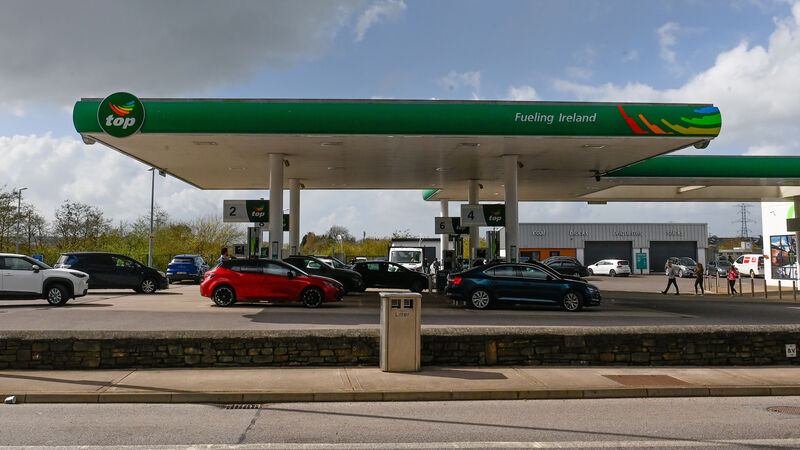
Customers return to the pumps at the daybreak service station on the Ballyhooly Rd after it received a small interim amount of fuel. Picture: Noel Sweeney
- Slow moving convoys and road blockages continue again this morning;
- Fuel price protesters have called for a 'national day of strike and protest';
- Carbon tax increase postponed; a 10c cut on petrol and diesel kick in from midnight on Tuesday;
- Government to face a motion of no confidence — tabled by Sinn Féin — on Tuesday;
- A number of Leaving and Junior Cert practical exams have been deferred.
Volunteers of a soup kitchen say they were intimidated in Dublin at the weekend’s fuel protest.
The Muslim Sisters of Éire host a weekly soup run on O'Connell Street, to provide food and hot meals to people experiencing homelessness.
The charity says last week's run "took a deeply upsetting turn" when they experienced verbal abuse from a group of people protesting outside the GPO.
Chairperson Lorraine O’Connor says the situation turned hostile when she asked the man to leave because there were vulnerable people around and he told her to "get the hell out of this country".
Ms O'Connor, from Coolock in Dublin, was told "you don't belong in the country with this rag on your head".
She thanked the homeless community for stepping up to protect them.
Agriculture minister Martin Heydon acknowledged there was “frustration out there” and that people had been driven to protest due to “a really significant shock to their energy bills”.
Mr Heydon said that a narrative had formed on social media that the government “don’t understand” and were “not listening”, but he said they were “reacting in real-time” to the war in the Middle East.
“I would very much counter that, we are reacting in real-time, but as a government, we absolutely listen and have to respond when an awful lot of people protest – protests and blockades are two different things,” he told .
“I absolutely, fundamentally respect and will passionately fight for people’s right to protest and tell me they disagree with me, but when people block critical infrastructure, that is different.”
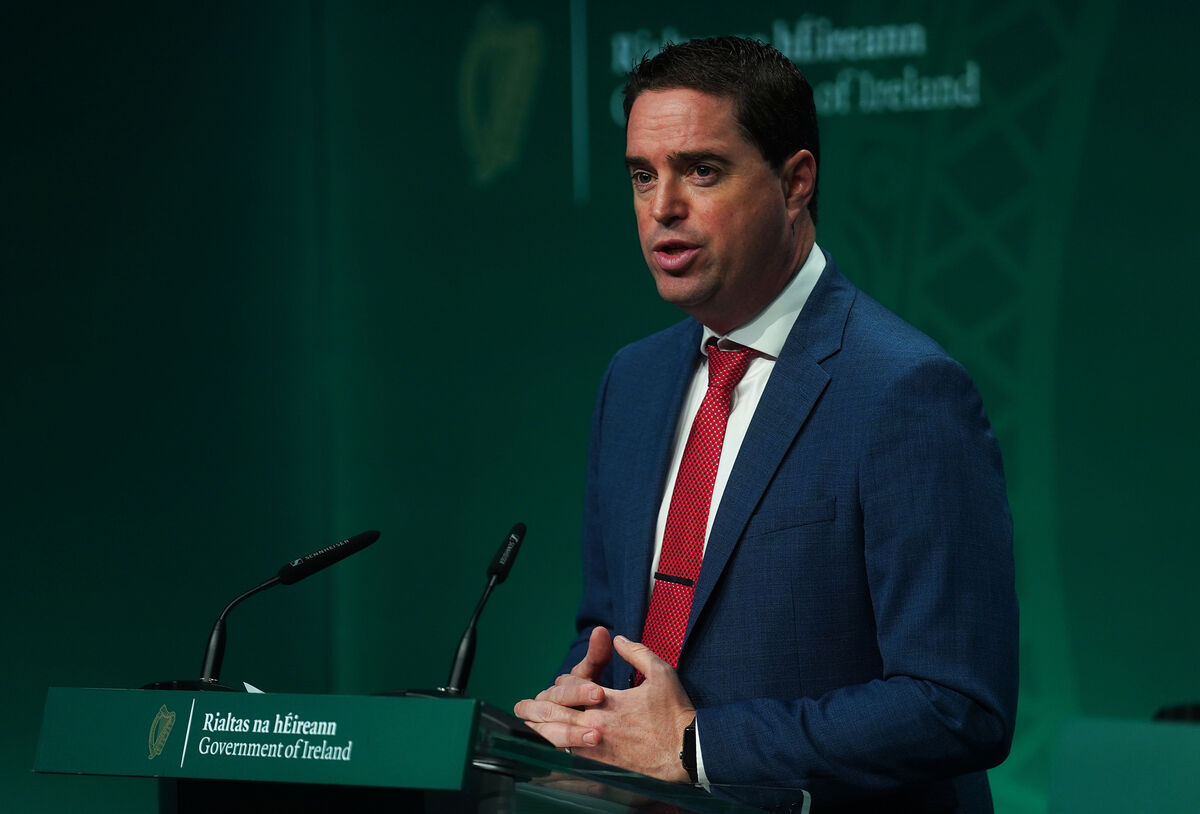
Mr Heydon said that along with the 7.2c cut on excise on green diesel, he had secured a new €100m subsidy scheme for high fuel users which would see a further cut of 20c a litre.
“Government has put €100m behind us, the same way they put €140m behind the package for the hauliers, at the same time as helping every citizen of the state who drives a car or who relies on the cost of white diesel,” he said.
“We now see further reductions, cumulatively now: 32c per litre is the reduction on diesel; 27c a litre is the reduction on petrol, as well as the clearing of the remaining excise on green diesel and the subsidy on top of that.”
Mr Heydon agreed, saying: “We have to be very honest with people, that an intervention of three-quarters-of-a-billion euro is not without its consequences in terms of future decisions.
“But the implications of not making interventions now, in terms of that impact on the cost of living for everybody, the impact on inflation for the general country, would also have implications.”
Dara Calleary, the social protection minister, said the protesters had not won as engagement had been ongoing with farming and transport representative groups on further support before the protests began on Tuesday.
He told that the two packages announced by the Irish government were among the largest in Europe, and that the measures would have an influence on the government’s budget in October.
Kevin McPartlan, chief executive of Fuels For Ireland, said fuel trucks are moving around the country following the lifting of blockades over the weekend but he warned that it could take 10 days before supplies return to normal levels.
He called for secure access to supplies for his members following days of what he said ere “intimidation and threats and insults to drivers”.
Mr McPartlan said drivers had been identified and intimidated by protesters, and family members had been contacted “when they’re sitting waiting to load. It’s really poor. I’m not suggesting that everybody involved in protests is involved in that stuff but there are [some] still doing that.”
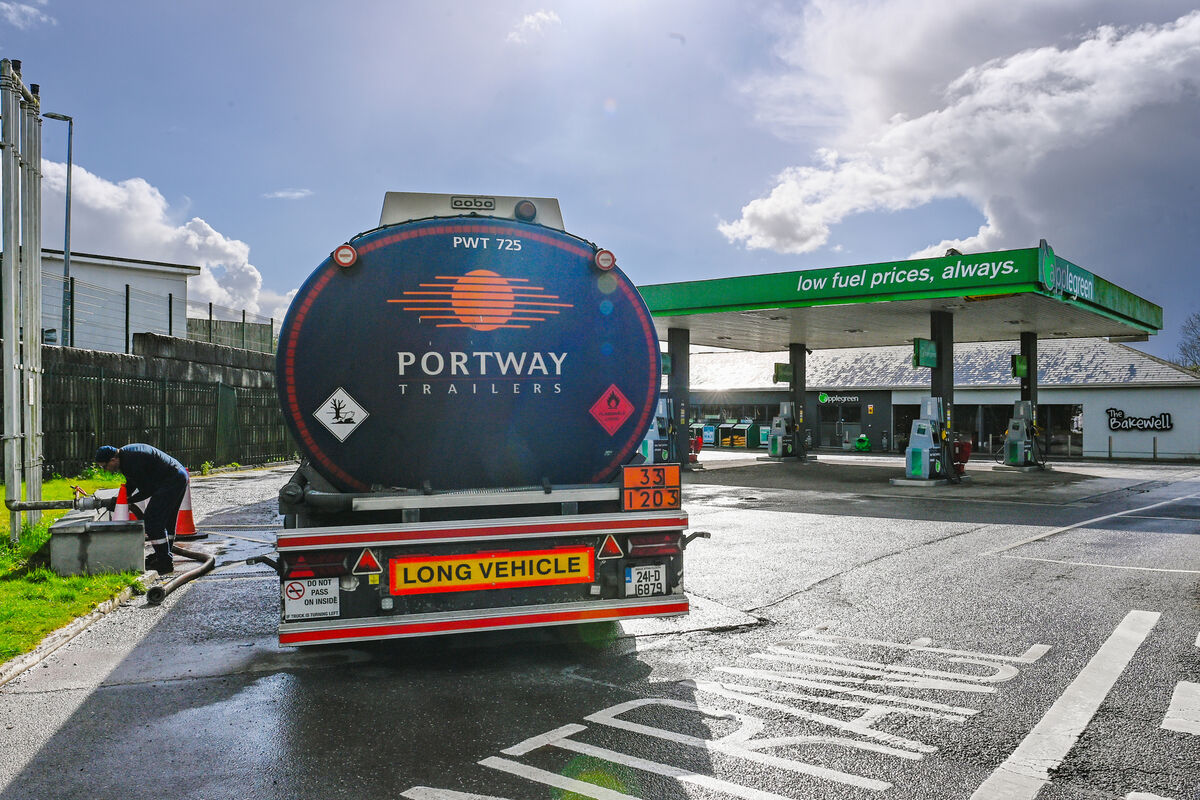
He told that the next key thing “is to make sure that the road network across the country is unhindered so we can actually get fuel to the people who need it.”
He said that in the long term “what has happened over the last few days has kind of created a precedent that people could see these as targets for the future so I think they’re going to need to be conversations around the security of those sites and the way the State manages that that security.”
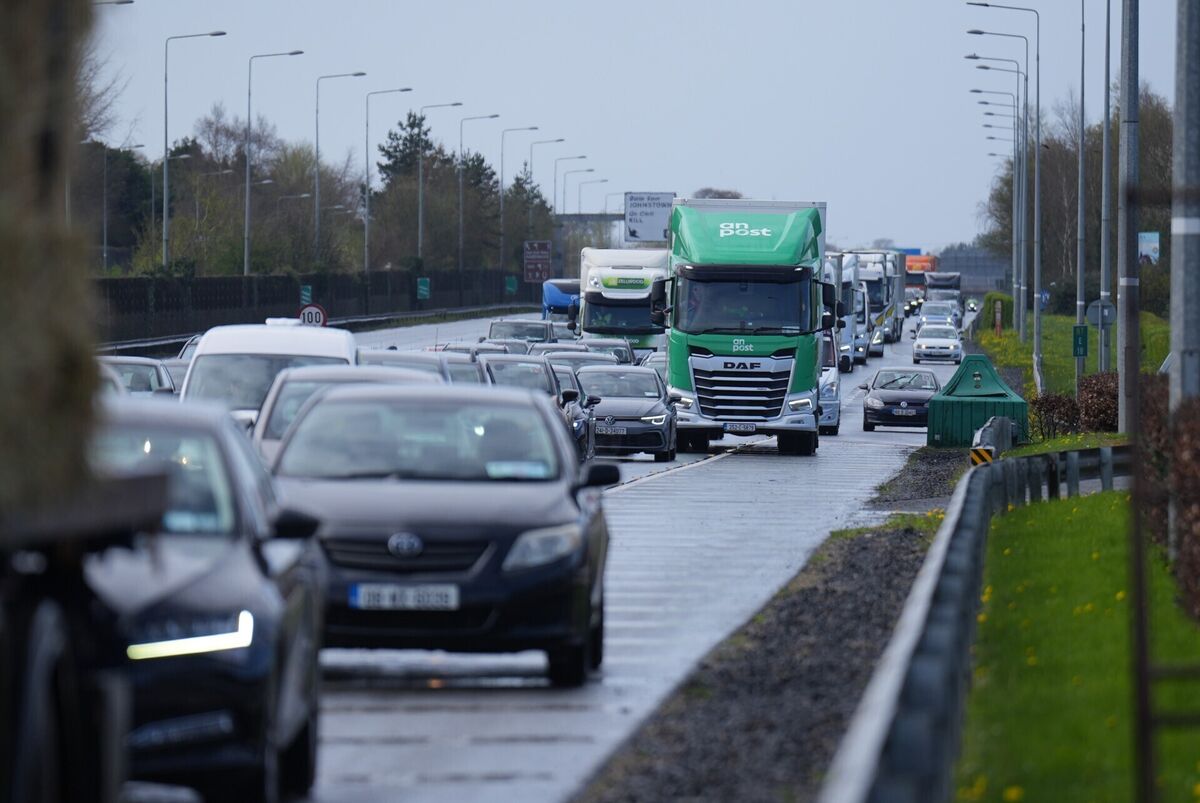
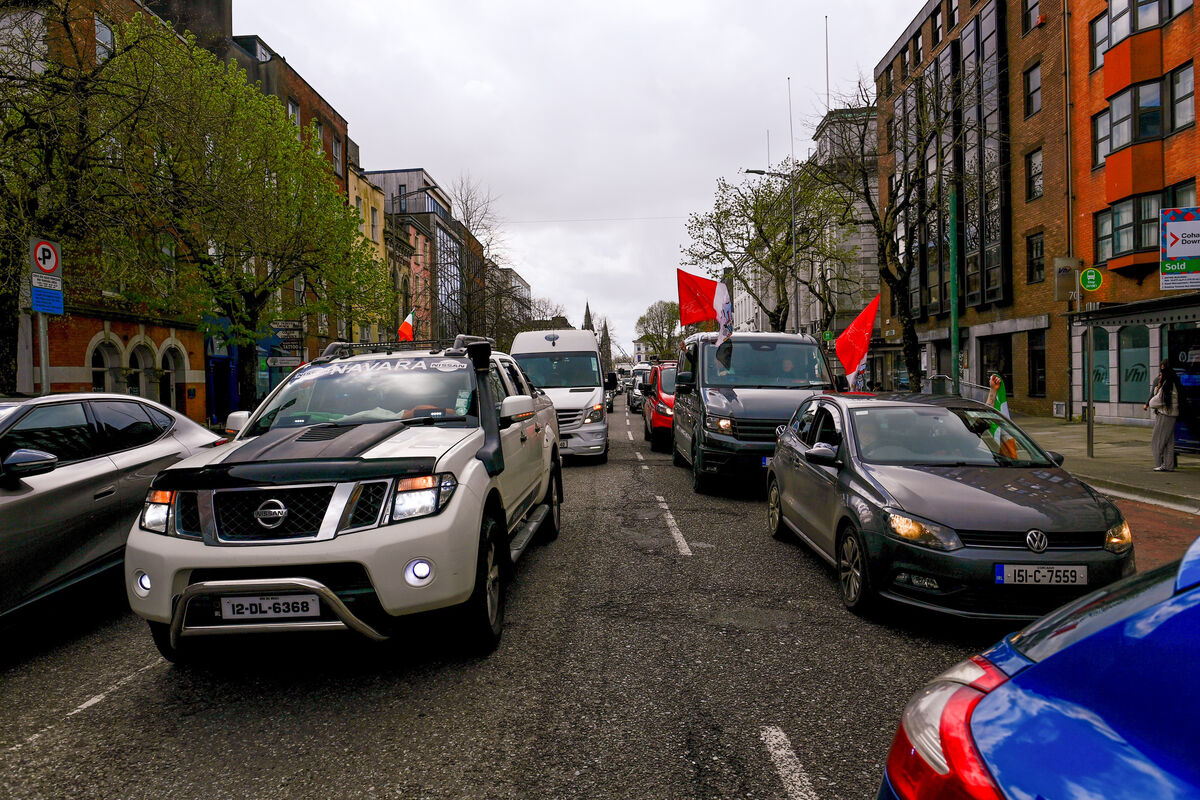
Sean O’Neill of Transport Infrastructure Ireland has urged motorway protestors to keep hard shoulders clear for emergency vehicles and highlighted how the rolling protests across the Irish road network are fluid and evolving.
Speaking on RTÉ Radio he said that “on the M1 southbound, there is congestion between junction 12 and junction 9, so that’s earlier at Drogheda, and that’s a go slow, there are people protesting there".
“And then on the M3 we have a full closure now, which wasn’t fully closed earlier today, and that is between Kells junction 11 southbound and junction N9 in Navan is fully closed in both directions."
He said there was “a go-slow movement” on the M7 leading onto the Long Mile Road this morning, but it was cleared, although not before it caused “significant congestion”.
He added that there was also a go-slow on the N28 Cork to Ringaskiddy, “Anyone listening and people out on the network, we do ask that they keep the hard shoulder open. It’s for emergency vehicles and emergency trips.
"Whatever your actions are on the motorway network, please keep those open, because it’s just unacceptable. People need those it’s for emergency needs.”
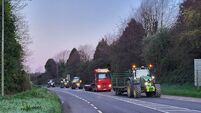
Fuel protesters in the Carrigaline-Ringaskiddy convoy were informed that tractors would be seized if they stopped or blocked roads.
Before protests began this morning, the Carrigaline-Ringaskiddy convoy was approached by Gardaí who informed them that they were under orders to seize any tractors or vehicles that stop or block the Shannonpark roundabout or the N28 (Ringaskiddy road).
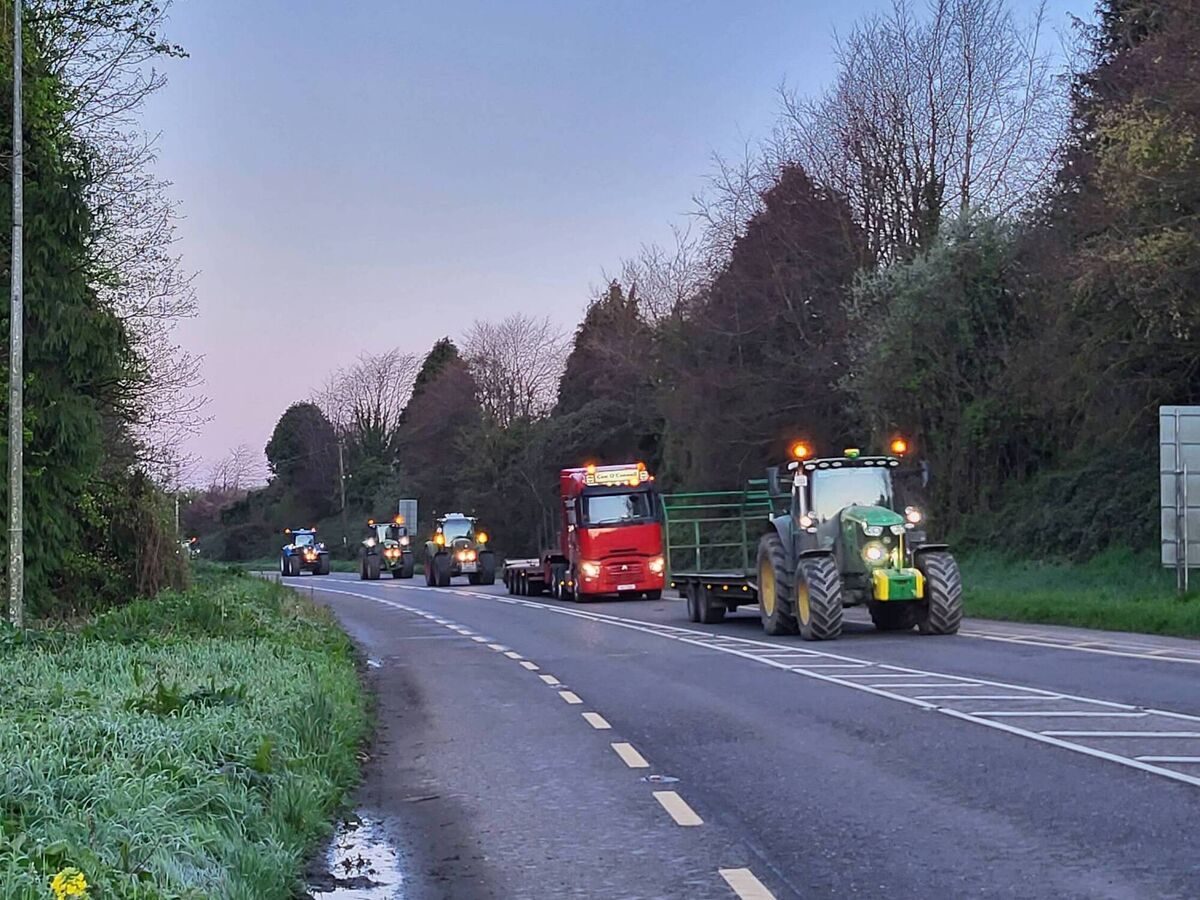
“I thought I was dreaming, but actually it was a nightmare I had,” Finbarr O’Mahony, a contractor who has been protesting for the last seven days, told the
“There isn’t much point in giving the hauliers 10 cents, including Vat and giving us 2.4 cents, including Vat, because the price of diesel has gone up about 25 cents a litre since we started this protest last week. Diesel was up to 170 last week. So what is the point?”
He went on to say that the price of diesel “needs a cap” for a period of time, like the three-month caps applied in other European countries.
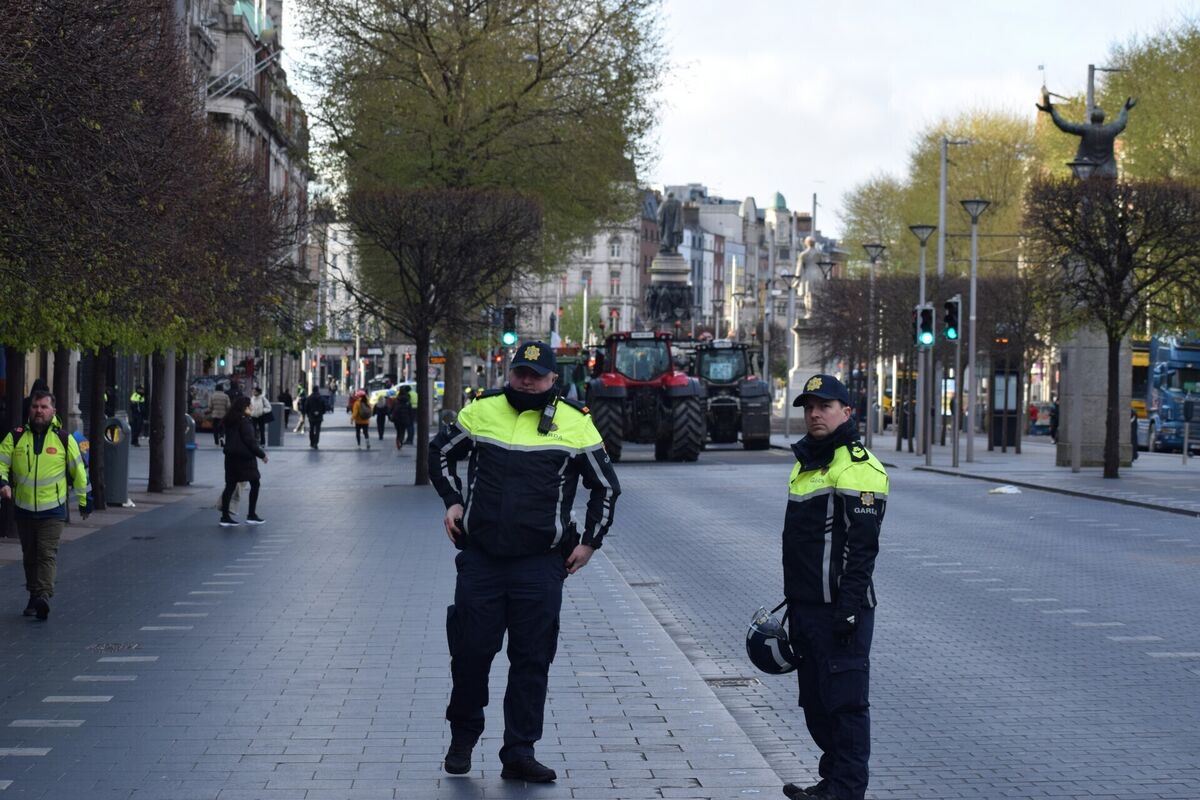
Gardaí remain present around O'Connell Street on Monday morning as the road reopens for cars and public transport.
It comes after fuel protests saw over a hundred vehicles block one of Dublin's busiest streets for almost six days.
The tractors, lorries and trucks were removed in the early hours of Sunday morning by the Garda Public Order Unit.
The seventh day of disruption on Monday comes as the Government faces a motion of no confidence in the Dáil on Tuesday.
Sinn Féin is to table the motion criticising the government for not reconvening the Dail last week and not engaging directly with the protesters, while also calling on the Government to take the “maximum action necessary” to cut fuel prices.
Finance spokesman Pearse Doherty criticised the government for “laughable” measures announced on Sunday, the government’s second response to fuel price rises caused by the US and Israeli war in Iran.
“Again, they come up short, and that’s why so many people are annoyed this morning,” Mr Doherty said on Monday.
“Nobody wanted to be out there. The Government forced people to take the street.
“Indeed, the government made matters worse. They went from insulting people, to demeaning them, to threaten them with the army, to refuse to talk to people and try and resolve this.”
He added: “For many people, yes, it was about fuel.
“Yes, it was about petrol, diesel, home heating oil, but it was also about all of the other pressures that people are feeling – whether it’s energy costs, whether it’s groceries, whether it’s rents that continue to go up, and basically a tipping point that the government aren’t listening, that we needed something to happen in terms of (a) cost (of) living package.”
A spokesman for the Dublin fuel protest has said that they “achieved something small” in €505m worth of government measures, but said he has “no control” over further protests.
Blockades at fuel depots and Ireland’s only oil refinery have been lifted, but traffic disruption continued in parts of the country on Monday due to some protests.
“Nobody knows what the plan is, that’s being straight out there,” said John Dallon, a Kildare farmer and agriculture contractor who was at the Dublin protest.
He said that he welcomed the reduction in green diesel, but the government “should have done something” on kerosene.
“This protest is out of my hands, it escalated to somewhat so big, and I don’t know where it’s going to end, but it’s the government’s fault,” he told Newstalk radio on Monday.
“We achieved something small, but this is something way bigger now, and I have no control over it, and that’s exactly where I’m coming from.
“It’s gone to the stage that it seems like, looking out there, that the people of the island of Ireland have no confidence in this government anymore.”
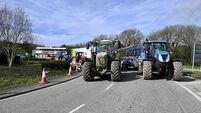
Protesters – largely led by hauliers, farmers, and agricultural workers – began distinct but co-ordinated action on Tuesday with slow-moving convoys and outright stoppages on major motorways, as well as blockades of critical infrastructure which had largely wound down or been disbanded by police by midday on Sunday.
In , the N28 Ringaskiddy Road westbound is busy between Shanbally Cross and a protest near Rafeen Bridge.
In , there is a full road closure on the M3/N3 between Junction 11, Kells, and Junction 9, Navan, southbound.
Significant delays are likely, and Transport Infrastructure Ireland (TII) is advising drivers to use alternative routes.
In , the N3 southbound is heavily congested behind a convoy on the Kells side of Virginia.
In , the M9 northbound is busy at Junction 3, Athy, where protesters have gathered.
In , convoys are reported on the M1 southbound before Junction 14 Ardee and Junction 12 Dunleer.
The Justin Kelly has extended the declaration of an “exceptional event” until Tuesday.
Mr Kelly has directed that all rest days are cancelled until 7pm on Tuesday, extending the previous deadline of 8pm on Monday.
“Exceptional events” are declared when the Commissioner determines there is a security threat against the State.
It is understood gardaí were informed by their representative bodies of the extension last night.
Read More
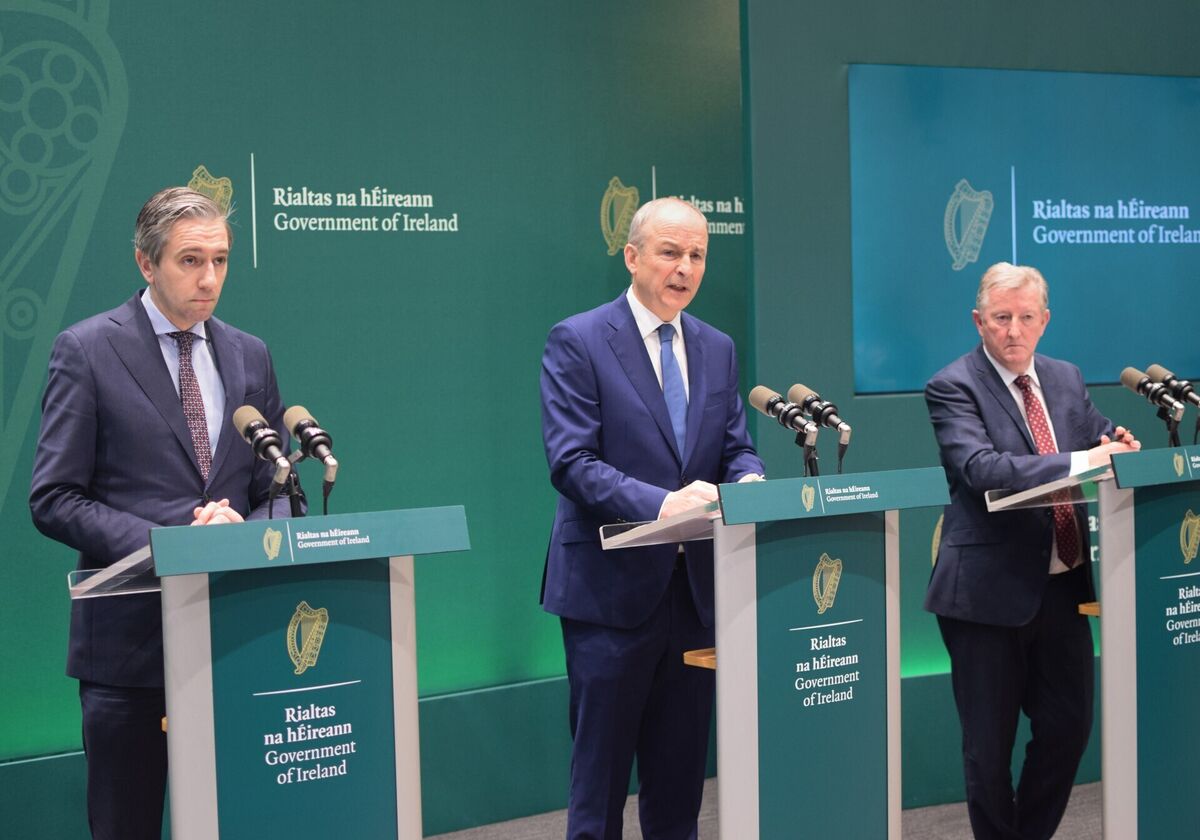
Taoiseach Micheál Martin, along with Tánaiste Simon Harris and junior minister Seán Canney, announced the plan after blockades at Whitegate Oil Refinery, ports at Foynes Port and Shannon Port, and O’Connell Street were lifted, while protests continued in other locations including Cork, Kerry, Offaly and Louth.
The package will include:
- An extension of the excise duty cut to June;
- A 10c reduction on petrol and diesel and 2.4c on green diesel from midnight tomorrow;
- A fuel subsidy for farming and fisheries.
The scheme is additional to the €250m package announced last month.
Mr Martin said the measures would reduce the Government’s projected budget surplus this year but were a response to “real pressures” being felt by people due to rising fuel costs.
A new transport support scheme to help hauliers and those in the food and agri industries will be backdated to March 1.
Mr Canney said the scheme will be modelled on the licensed haulage support scheme and will “help and support those who are vital in our economy”.
Both Mr Harris and Mr Martin were critical of those who blockaded ports in recent days, with Mr Martin warning that if blockades recur, particularly at Whitegate, “the full rigours of the law will be applied”.
Mr Harris said that while the Government will “always” engage with representative bodies, it cannot be “reasonably or rationally be expected to engage with self-appointed spokespeople”.
He also said that while the Government will work to protect people from the effects of rising prices, “no government can completely shield people” from the fallout of war in Iran.
The cut to diesel will require European Commission approval, as Ireland has gone below the minimum tax allowed under EU rules.
Mr Harris said that “many countries” have engaged with the EU on the issue due to price shocks caused by the US-Israel war in Iran and the disruption of the Strait of Hormuz, adding that much will depend on how long the conflict continues.
Mr Martin criticised the Opposition for preparing to table and support a motion of no confidence in his Government this week, saying many Opposition TDs had “acted as wardens” for “illegal blockades” or had spoken in support of protesters who had stopped oil from leaving the country’s only refinery at Whitegate in East Cork.
He said that those TDs were “not fit for government”.
Mr Martin said there would be a review of the “latitude” shown to protesters and a “comprehensive security review” of how the country’s oil supplies were curtailed.
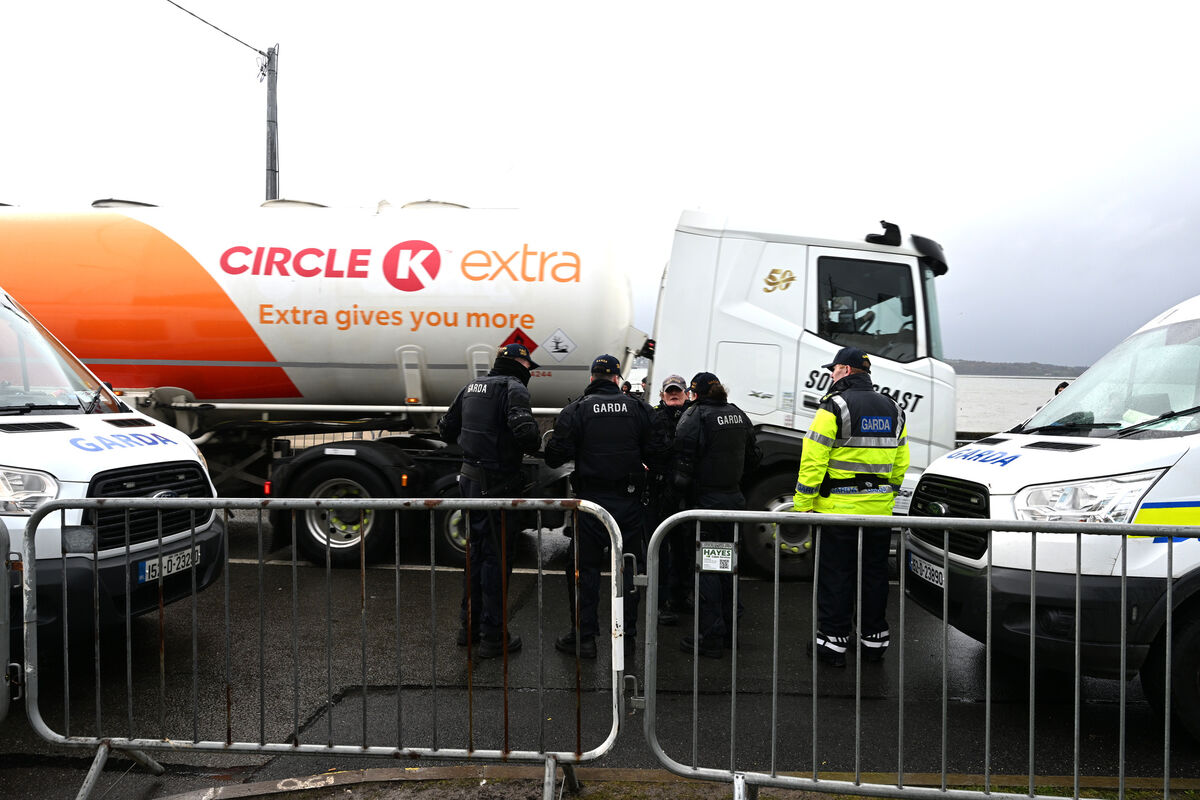
Throughout Sunday, blockades at the entrances to the Shannon Foynes Port Company and fuel terminals at Foynes in Co Limerick and Galway dispersed, while organisers of the blockade of O’Connell Street said they had been “ambushed” by a 3.30am Garda operation to remove their six-day blockade.
The National Emergency Co-ordination Group warned it will take “several days” for fuel distribution to return to normal and that a “risk to key supply chains” remains.
The group also said “concern remains that workers, including essential workers, may not have sufficient access to fuel to travel to and from work, which jeopardises the provision of critical services, including healthcare and business operations”.
The NECG added that supplies of fertiliser and animal feed “remain a challenge and will take a number of days to replenish stock”, while exports of fresh fish, a time-sensitive product, are “especially compromised due to the blockades”.
The NECG also announced that, due to ongoing disruptions, the State Examinations Commission (SEC) has deferred practical examinations scheduled for today, Monday, for Leaving Certificate Music and Junior Cycle Home Economics.
This decision was made because the SEC "cannot be sure that all examiners and students will be able to travel to their schools".
The deferral applies only to practical examinations scheduled for Monday. The SEC will put alternative arrangements in place and contact affected schools directly with further details.
- additional reporting from PA


CONNECT WITH US TODAY



Be the first to know the latest news and updates