LIVE: 10c cut to petrol and diesel, delay to carbon tax increase in new €505m fuel-cost measures
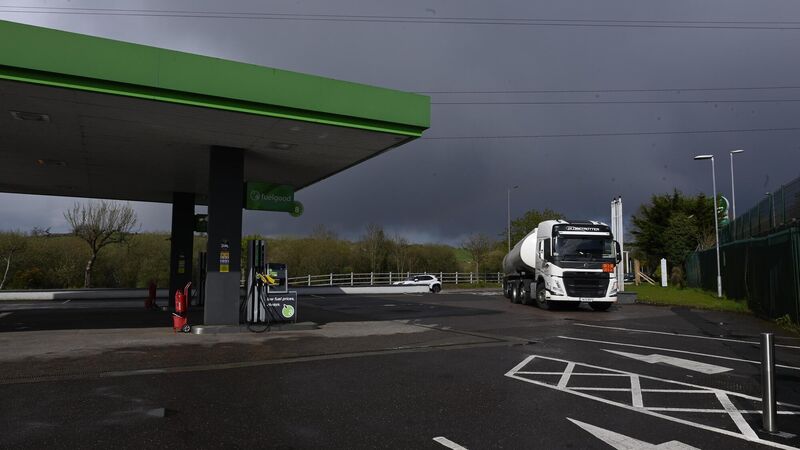
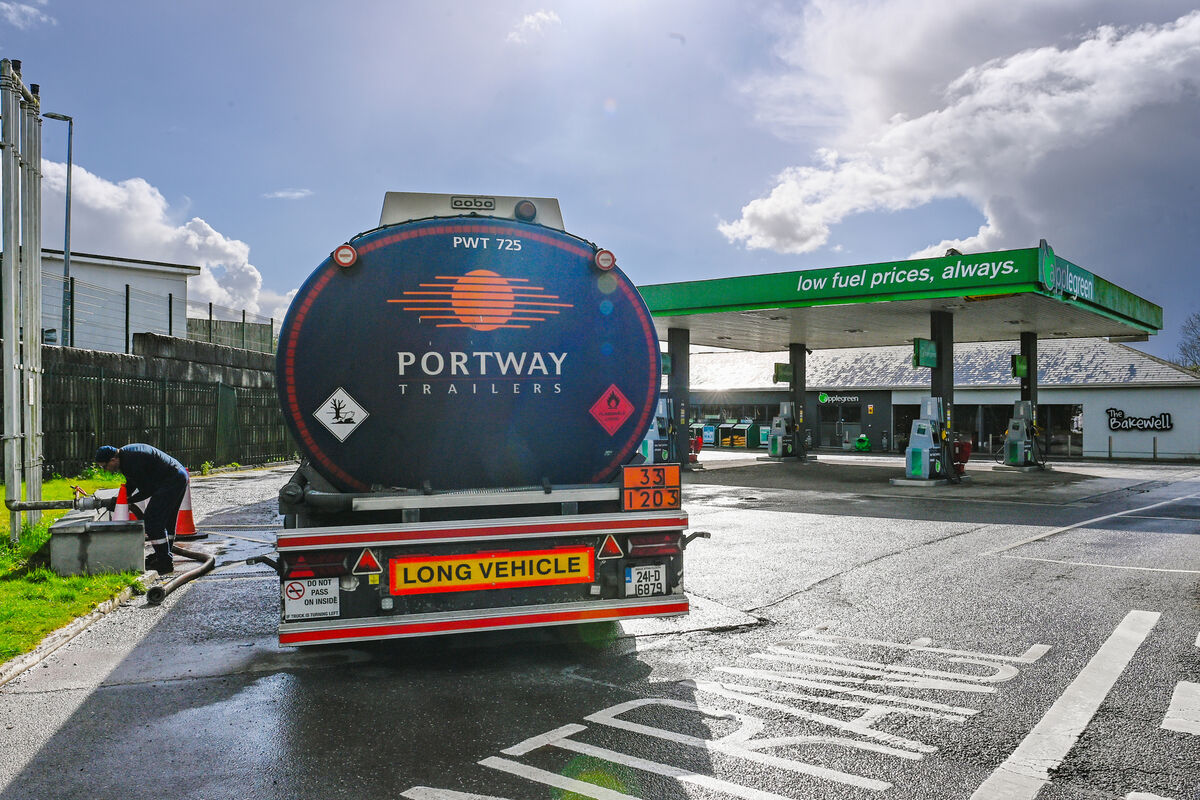
A truck making a fuel delivery to the Applegreen Service station on the North Ring rd in Ballyvolane. Picture: Noel Sweeney
- An increase in the carbon tax has been postponed until October;
- Excise duty on petrol and diesel has cut by a further 10c;
- Some Leaving and Junior Cert practicals deferred due to the fuel crisis;
- Sinn Féin will call a motion of no confidence in the Government;
- Gardaí clear blockades on Dublin's O'Connell St and in Galway; Organisers of Foynes blockade vote to stand down;
- Nineteen trucks of fuel left Whitegate oil refinery in East Cork on Sunday morning;
- Fuels for Ireland's Kevin McPartlan warns it would "still take 10 days to recover" to normal.
A number of Leaving and Junior Cert practical exams, which had been due to take place on Monday, have been deferred at short notice due to the nationwide fuel protests of recent days.
Students set to sit their Leaving Cert music or Junior Cert home economics practicals on April 13 have been informed that those exams have been deferred to a later date.
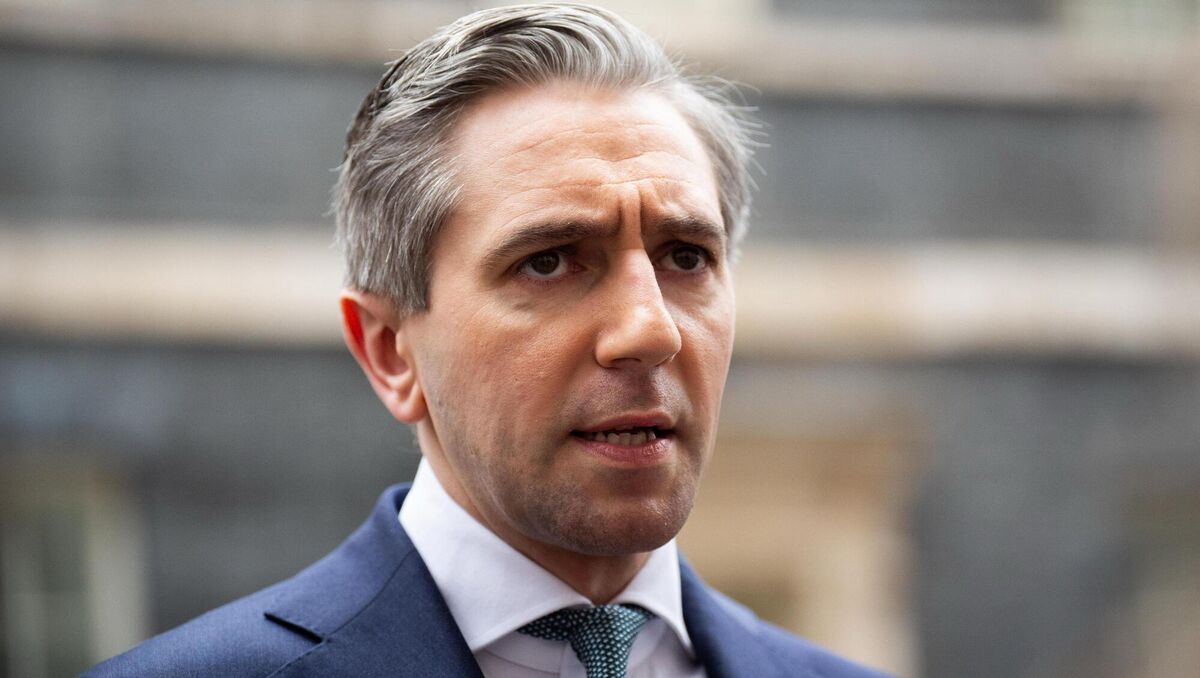
Tánaiste Simon Harris said that while the Government will "always" engage with representative bodies, but that the Government cannot be "reasonably or rationally be expected to engage with self-appointed spokespeople".
While Mr Harris said that the Government will work to protect people from the effects of rising prices, "no government can completely shield people" from the fallout of war in Iran.
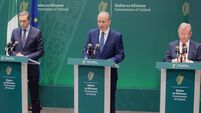
Mr Martin confirmed that the new package will cost €505 million.
Asked what would happen if blockades appear again, Mr Martin said that the "full rigours of the law" will apply. He said that there will be "no toleration of people being stopped from moving around their country".
Mr Martin said that damage was done to Ireland's ability to withstand an oil supply crisis and that while he supports the right to protest, this "made no sense" and was "illogical".
He said that the gardaí had lifted the blockades in a "studied, methodical" way, but that there would be a review of the "latitude" shown to protesters in recent days.
An increase in the carbon tax has been postponed from next month until October, the Government has confirmed.
A new package was announced by Taoiseach Micheál Martin, Tánaiste Simon Harris and junior transport minister Sean Canney in the wake of a week which saw fuel depots blockaded.
The new scheme will also see:
- The cut in excise duty extended to June A 10c cut on petrol, a 10c on diesel and 2.4c on green diesel from midnight on Tuesday;
- And a fuel subsidy for farming and fisheries Speaking at Government Buildings on Sunday.
Mr Martin said that "nobody had the right" to block ports and fuel depots and that this had been undertaken by a group with a "self-declared mandate".
Fuel tankers have been entering and leaving the depot at Foynes Port this evening.
Gardaí continue to maintain a presence on the N69 after protesters ended a blockade at the entrance to the port earlier on Sunday.
School bus services are intended to resume on Monday, Bus Éireann has confirmed.
The bus operator says it is liaising with contractors through local school transport offices to ensure there is minimal disruption to school transport services tomorrow.
Over on the North Ring Road, the Applegeen service station this evening received its first delivery of fuel in several days.
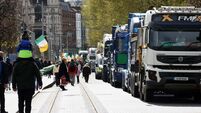
Traffic was bumper to bumper on the South Ring Road as a slow moving convoy travelled eastwards on Sunday afternoon.
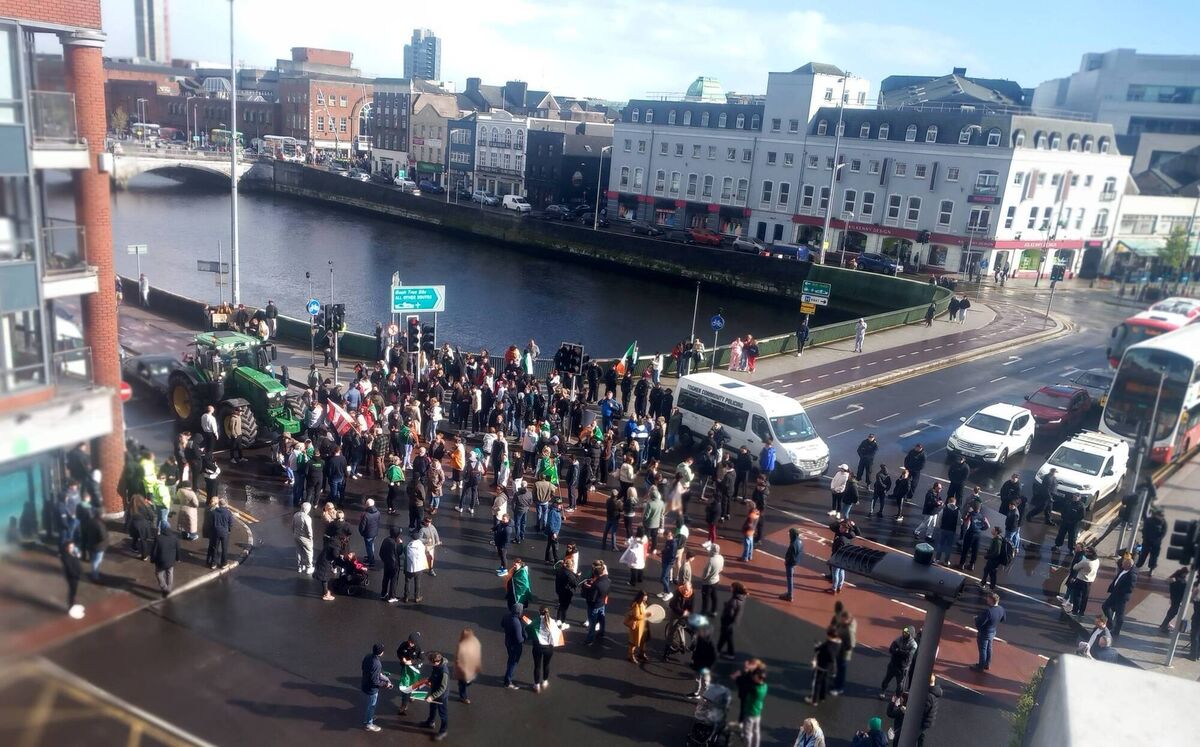
Traffic was also halted at the junction between Camden Quay and Christy Ring Bridge in Cork city centre when a number of people blocked the junction.
The Social Democrats, People Before Profit, and Independent Ireland have said they will support Sinn Féin's motion of no confidence in the Government.
Sinn Féin leader Mary Lou McDonald said her party had met on Sunday morning and had decided to move the motion after a week of major protests over the fuel crisis.
The Social Democrats, People Before Profit, and Independent Ireland have said they will back the motion, while Labour and the Greens — while heavily criticising the Government — said they would consider the text before making a decision.
Minister of State Timmy Dooley said the Government would set out how its response best “met the needs and expectations of society”.
Fuel protests have continued on Sunday, despite blockades in Cork, Galway, Limerick and Dublin coming to an end.
In Cork City, a slow-moving protest of cars made its way through the city centre at lunchtime on Sunday.
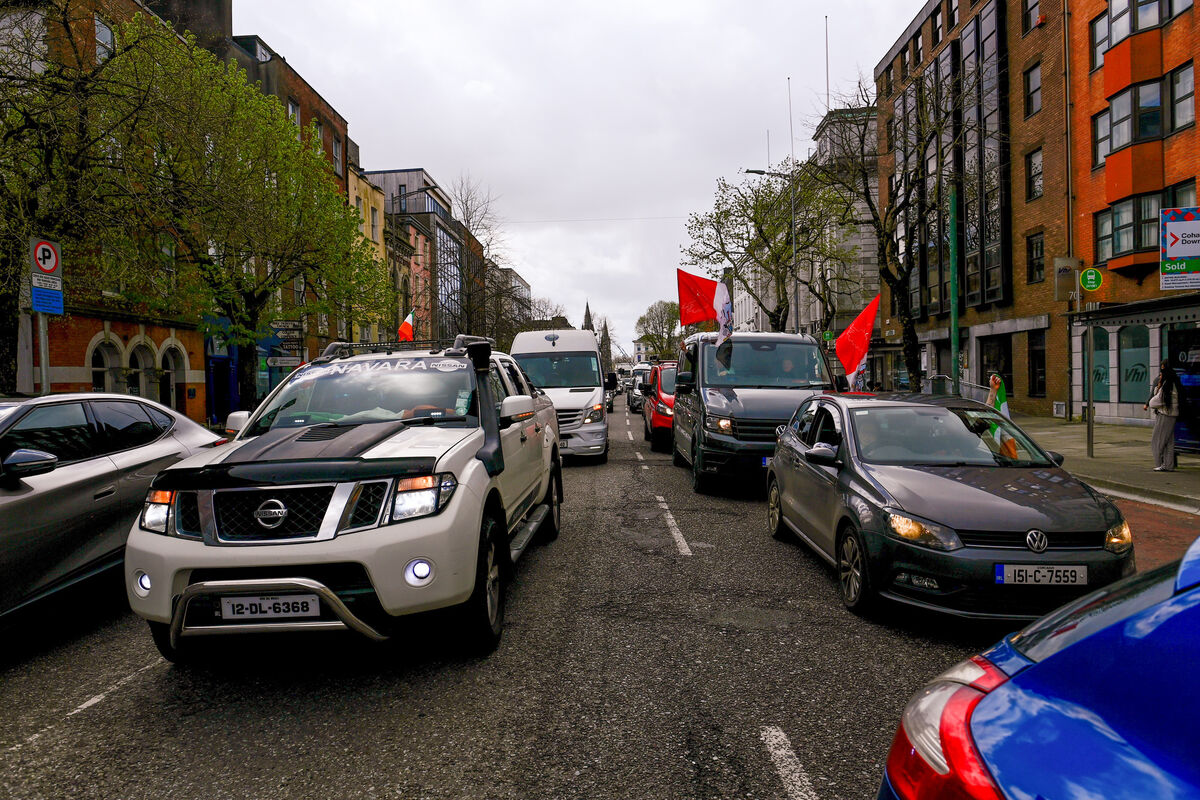
Slow-moving protests were also taking place in areas including Bandon and Clonakilty. Smaller groups turned out in other areas of Cork.
Meanwhile, in Tralee, Co Kerry, vehicles and demonstrators lined Denny St, bringing traffic to a slow pace as placards were displayed and horns sounded in support.
It comes as agricultural contractor and protest spokesman Christopher Duffy posted on social media on Sunday afternoon calling for a "national day of strike and protest" on Monday, adding "they went too far".
An earlier post by Mr Duffy said: "We are only getting started".
The blockade that had been erected at the entrances to the Shannon Foynes Port Company and fuel terminal at Foynes in Co Limerick has dispersed.
Organisers voted to end the blockade on Sunday.
It was anticipated that a Garda public order unit, which had opened blockades in Cork on Saturday, and Galway on Sunday, would travel to Foynes.
Independent Ireland TD Richard O’Donoghue, who supported the blockade at Foynes, said: “We've taken a vote with the hauliers, the contractors, agriculture contractors, the people that have been here, and the community.
“And I'd like to thank every one of the communities, the businesses, and the support that we've had from our homes.
“We’re on our way home. Thank you.”
Sinn Féin is to bring a motion of no confidence in the Government when the Dáil reconvenes next week.
In a statement, party leader Mary Lou McDonald said that Sinn Féin TDs and Senators met on Sunday morning and "will be moving a motion of no confidence in the government".
"The actions of Fianna Fáil, Fine Gael and Independents have been disastrous," she said.
"They have lost the confidence of the public. It is clear that they still are not listening and do not accept the scale of this fuel and cost of living crisis.
"All reports indicate it will be more of the same half measures from them this evening. This is unacceptable. We need the maximum reductions now, as proposed by Sinn Féin weeks ago."
Iran is unable to find the mines it laid in the Strait of Hormuz and does not have the capacity to remove the explosives, preventing Iran from allowing more traffic, including ships carrying fuel, through the waterway, the New York Times has reported citing US officials.
Iran laid mines in the strait of Hormuz last month after the US and Israel declared war against the country, dropping explosives throughout the waterway with small boats.
The US was mostly unable to monitor the small boats that were mining the strait, leaving the country uncertain about the location and number of mines in the waterway.
Maritime traffic through the strait ground almost to a standstill due to the mines, as well as Iranian drones and missiles that threatened to hit ships.
A small number of ships have continued to pass through after being given the go-ahead by Iran, which allowed through vessels from friendly nations that paid tolls.
US officials have said that Iran placed mines in the strait erratically, and may not have marked where it put all of them. Some mines also drifted or moved from their original location, US officials suggested.
Neither Iran nor the US have the capacity to quickly demine the strait, particularly after the US destroyed much of Iran’s navy.
The Guardian
The fuel blockade at the entrances to the fuel terminal at Foynes, Co Limerick, is to stand down at 1pm this afternoon, organisers said.
A decision to open the blockade, erected six days ago, came after a vote among protestors was taken earlier.
It was anticipated that a garda public order unit, which had opened blockades at Cork on Saturday, and Galway on Sunday, would travel to Foynes next.
Independent Ireland TD Richard O’Donoghue, who supported the blockade there said: “I've just had a meeting with the people that have been here for the last five and six days, here in a peaceful protest here in Foynes, and we've taken a vote with the hauliers, the contractors, agriculture contractors, the people that have been here, and the community.
“We are going to pull out of Foynes here today peacefully, as we came in peacefully, at 1pm today."
The Cabinet will meet on Sunday for a rare emergency meeting to update on the security and transport situation related to the protests.
It is understood, however, that work is still ongoing on the final shape of a package of supports for those most heavily impacted by surging energy prices. Such a package will require Cabinet approval and will focus on agribusiness, haulage and fisheries industries, with no plans for additional supports for home energy or fuel.
A spokesperson for Taoiseach Micheál Martin last night said: “The Taoiseach has convened a cabinet meeting tomorrow for a security update, to be provided by Ministers O’Callaghan and McEntee. There will also be an update on the talks that have been ongoing throughout the weekend.”
In a statement last night, Tánaiste Simon Harris said significant progress had been made on resolving the blockades.
"It is very important that law and order is maintained in this country. It is essential that people can exercise their rights to freely go about their business and that critical supply chains, including for fuel, are allowed to function properly.
"The Government is eager to work sector by sector to try and make real progress on some of the very significant challenges that people are facing. That was the subject of intensive work across today," Mr Harris said.
Nineteen trucks of fuel left Whitegate oil refinery in East Cork on Sunday morning, with approximately 40 more due to leave by lunchtime.
Fuels For Ireland chief executive Kevin McPartlan said that it is not yet possible to establish how many service stations will remain out of fuel, but said that original projections of 1,000 being empty by the end of the weekend are now unlikely.
Mr McPartlan said that it is expected that Whitegate will be operating at full capacity on Monday but added that the clearance operation in Galway was still underway this morning, while no efforts had yet been made to end the blockade at Foynes port.
But he warned that it will be 10 days from when all three sites are back up and running before issues with fuel supply are fully dealt with.
Meanwhile, police in Northern Ireland said they are “maintaining an ongoing assessment” in relation to social media posts calling for similar planned protests there.
A PSNI spokeswoman said: “A policing response has been prepared, if needed, to ensure public safety and to help minimise any potential disruption to the wider community.”
The Defence Forces have assisted gardaí with clearing a makeshift barrier erected by protesters blockading Galway docks.
Footage posted on social media by gardaí showed a Defence Forces heavy-lift recovery truck — nicknamed 'the Beast' — driving through the barrier constructed with pallets and logs.
A second heavy-lift recovery truck operated by the Defence Forces was also at the scene while gardaí worked to restore access to the harbour.
A Garda Operation is ongoing at Galway Docks to ensure critical supplies of fuel to maintain critical emergency public services, including Ambulance and Fire Services.
— An Garda Síochána (@GardaTraffic) April 12, 2026
Garda Public Order Units have been deployed.
Blockaders must comply with Garda directions. pic.twitter.com/rntbR4DMR3
Reports suggest the blockade in Galway is being brought to an end. The barricade there started to be cleared shortly before 8am to give access to the Port of Galway, which had been blocked with tractors and a barrier of railings, wooden pallets and felled trees.
Members of the Public Order Unit, wearing protective gear and batons, were at the scene for hours overnight.
RTÉ reports that a line of gardaí from the Public Order Unit are now securing the bridge leading to the port's terminal.
Fuel protesters in Dublin city centre were “ambushed” by an “army” of public order gardaí, according to a spokesman for the blockaders.
Around 20 large vehicles and tractors remained on O’Connell St and the nearby quays in Dublin at 8am on Sunday, with dozens of protest participants and supporters.
Steel barriers have been erected on surrounding roads to prevent further access, with the Irish police service An Garda Siochana monitoring the cordon while street cleaners cleared debris.
Speaking about the overnight Garda operation on O’Connell St, protest spokesman Christopher Duffy said he was “upset”, “disappointed” and “angry” as he described the Garda response to the blockade as “overkill”.
He added: “Nobody in the city of Dublin or the country could say our assembly was anything but peaceful.”
Read More
Mr Duffy said he believes protesters were denied due process, adding: “We got absolutely ambushed here last night by what I can only describe as an army of (public order gardaí).
“At this point, we’re pulling out of O’Connell St because we have been threatened with — I don’t know the law, section 8 on the vehicles — if we don’t get out by a certain time they’re threatening to tow the vehicles on us.
“These vehicles are very expensive with automatic transmissions and everything, and if they drag them with the engine not on they could wreck them.
“So we have no choice, financially we have to move the vehicles.”
Mr Duffy said the operation was “frightening” for some of the younger drivers and said there were “mixed messages” about tractors and trucks being towed.
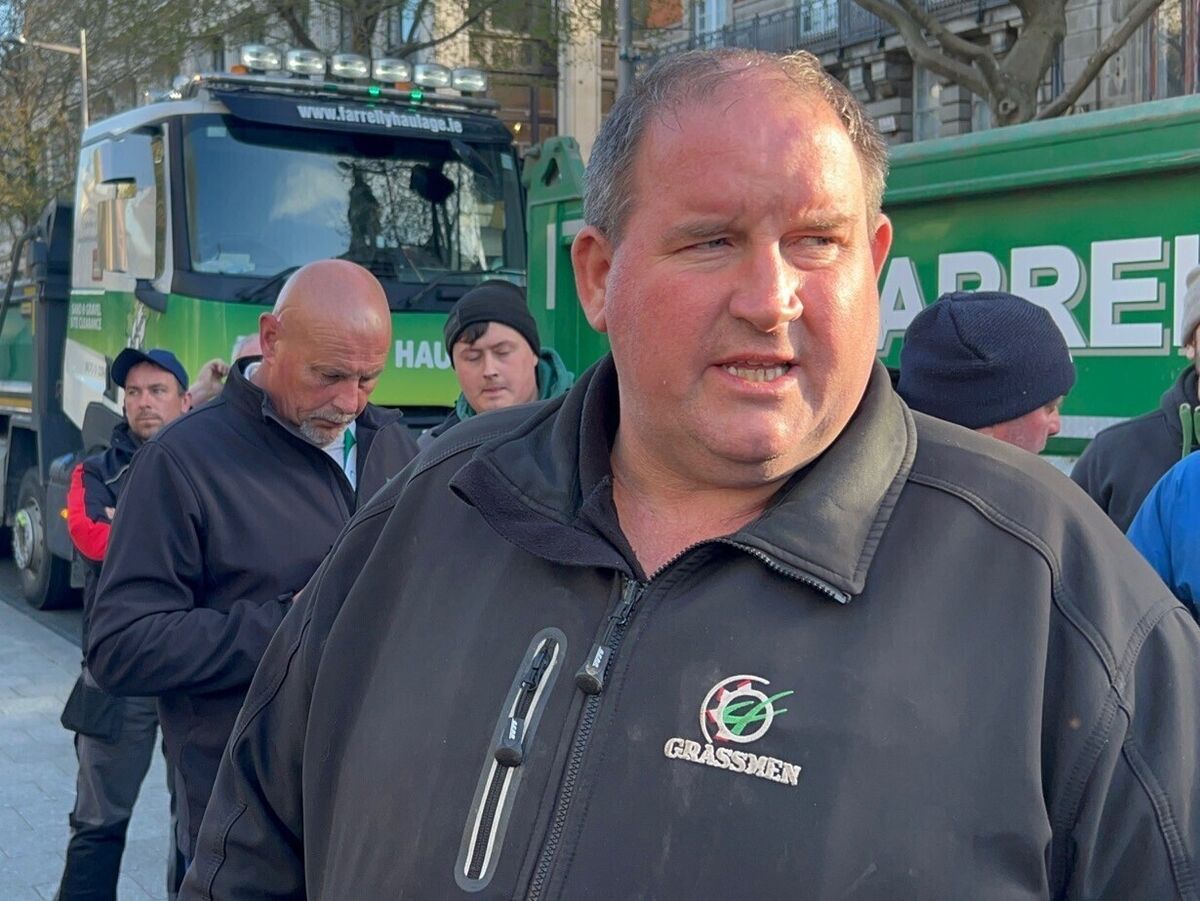
Mr Duffy also called for a motion of no confidence in the Government. He said the power lies with rural TDs and independents “propping up the Government”.
He said: “How could a rural TD or any independent go back to their constituency after this and see what was done to the farmers, truckers and builders?”
Reflecting on the protest, Mr Duffy said: “I don’t know where we move on from here.
“I know we came united, and we leave united.”
Asked if the overall protests are now over, he said: “I don’t think so.”
A Garda Operation is ongoing on O'Connell Street to remove all illegally parked vehicles.
— An Garda Síochána (@GardaTraffic) April 12, 2026
Frontline Uniform Gardaí, Plain Clothes Gardaí and Garda Public Order Units have been deployed.
Blockaders must comply with Garda directions. pic.twitter.com/2qvGP0GzZ4
Around 20 large vehicles and tractors remain on O’Connell St and the quays in Dublin following a major Garda operation to clear the blockade in the early hours of Sunday.
Steel barriers have been erected on surrounding roads to prevent further access.
A small group of protest participants and supporters remained at the scene at 8am.
A Garda presence was monitoring the cordon while street cleaners cleared debris.
A blockade of Dublin’s main thoroughfare has been cleared in a late-night Garda operation, ahead of an emergency Cabinet meeting to sign off on measures the Government hopes will bring all protests over fuel costs to an end.
The protests, which involved blockades of Ireland’s only oil refinery in Whitegare in East Cork, as well as key depots, strangled fuel distribution across the country and prompted an escalated Garda response that resulted in several arrests and public order gardaí deployed in Cork and Galway and Dublin.
Participants – largely led by hauliers, farmers, and agricultural workers – began separate but coordinated actions on Tuesday with slow-moving convoys and outright stoppages on major motorways, as well as the blockades of critical infrastructure.
The protests rolled into a sixth consecutive day on Sunday, with spokesmen calling on Government to take urgent action to reduce fuel costs which they say are at unsustainable levels and will lead to people going out of business.
On Sunday morning, gardaí announced all blockades in Dublin had been cleared following an overnight operation on O’Connell St.
It said illegally parked vehicles would be removed and blockading vehicles were removed under escort.
Gardaí said: "Frontline uniform gardaí, plain clothes gardaí and Garda public order units have been deployed. Blockading vehicles being removed under escort."
In a separate operation, gardaí have also been clearing blockades on the M50.
The Coalition is expected to sign off on fuel-cost measures on Sunday, but it remains to be seen if it will convince protesters to call off their actions before the return of schools on Monday adds to pressure on the roads.
Gardaí cleared a blockade of the Whitegate oil refinery in Co Cork around lunchtime on Saturday and vowed to implement further enhanced enforcement actions.
It saw physical clashes between protesters and gardaí, who used pepper spray during the hour-long operation which resecured access for fuel trucks.
Gardaí were later called to a similar action at Galway harbour, where hundreds of protesters gathered in pouring rain while restricting access to a fuel depot by blocking the way with tractors.
Members of the Public Order Unit, wearing protective gear and batons, were at the scene for hours overnight.
Garda Commissioner Justin Kelly had vowed to step up enforcement against fuel-cost protesters “endangering the State” by blocking critical infrastructure.
Protesters’ demands for meetings with Government were not acceded to but relevant ministers held talks with established national representative bodies on Friday and Saturday.
These meetings concluded with a “substantial” package involving a temporary fuel transport support scheme” and “temporary fuel support”.
It is understood the transport support scheme would see direct payments to businesses in the sectors affected by high fuel costs.
A senior source said the scheme will be part of a broader package on the fuel crisis.
The engagements included Irish Road Haulage Association president Ger Hyland, who said there were “the bones of an agreement” with the Government.
He added that he hoped the “substantial package”, understood to include a direct payment scheme, would be agreed by Sunday morning.
The Cabinet is due to meet on Sunday afternoon to sign off on the measures.
The pledge of a “substantial” package was not enough to dissuade protesters away from other blockades of a fuel depot in Foynes, Co Limerick and the main thoroughfare of Dublin city centre.
Mr Kelly said: “Some people have decided to escalate an already difficult situation by blockading critical national infrastructure such as fuel depots and refineries.
“This has resulted in fuel shortages that are directly impacting on emergency services such as hospitals, the ambulance service and the fire service, as well as businesses and the general public.
“These are blockades. They are not a legitimate form of protest.”
He said: “We gave the blockaders fair warning that we were moving to enforcement and they choose to ignore it and continue to hold the country to ransom.”
A small number of Defence Forces personnel with heavy-lift recovery trucks have been on standby to assist gardai with moving large vehicles if needed.
The escalated enforcement action came after Fuels for Ireland chief executive Kevin McPartlan said around 600 of the 1,500 filling stations in the Republic of Ireland had run dry on Saturday morning.
He had predicted that the number “would grow quite dramatically” if the blockades on Whitegate in Galway and Foynes, Co Limerick, continued.
CONNECT WITH US TODAY



Be the first to know the latest news and updates