LIVE: Protest at Whitegate refinery in Cork officially stood down; Cabinet to meet on Sunday
- Several arrests made as gardaí restore access to Whitegate refinery;
- The protest at the facility has now been stood down;
- Further day of nationwide protests planned Sunday;
- Fire brigades and ambulances curtail operations as fuel shortages worsen across Ireland;
- Fuels for Ireland CEO says approximately 1,000 of the country's 1,600 service stations may be empty tonight;
- Taoiseach convenes Cabinet meeting for Sunday.
- Fuel protests at GPO symbolic of how our democracy conceived in 1916 has evolved;
- : How this week's protests fuelled confusion and consternation at Leinster House.
: The protest has been officially stood down at the Whitegate refinery in East Cork.
"We're disappointed," protester Anthony Kelleher told the after leaving the oil refinery tonight.
A garda presence is expected to remain in the village to ensure access to the the facility is maintained over the coming days.
A "significant support package" to address the ongoing fuel crisis is now close to being finalised after "constructive" meetings between government ministers and representative groups from the transport, agriculture and fisheries sectors, a government statement said tonight.
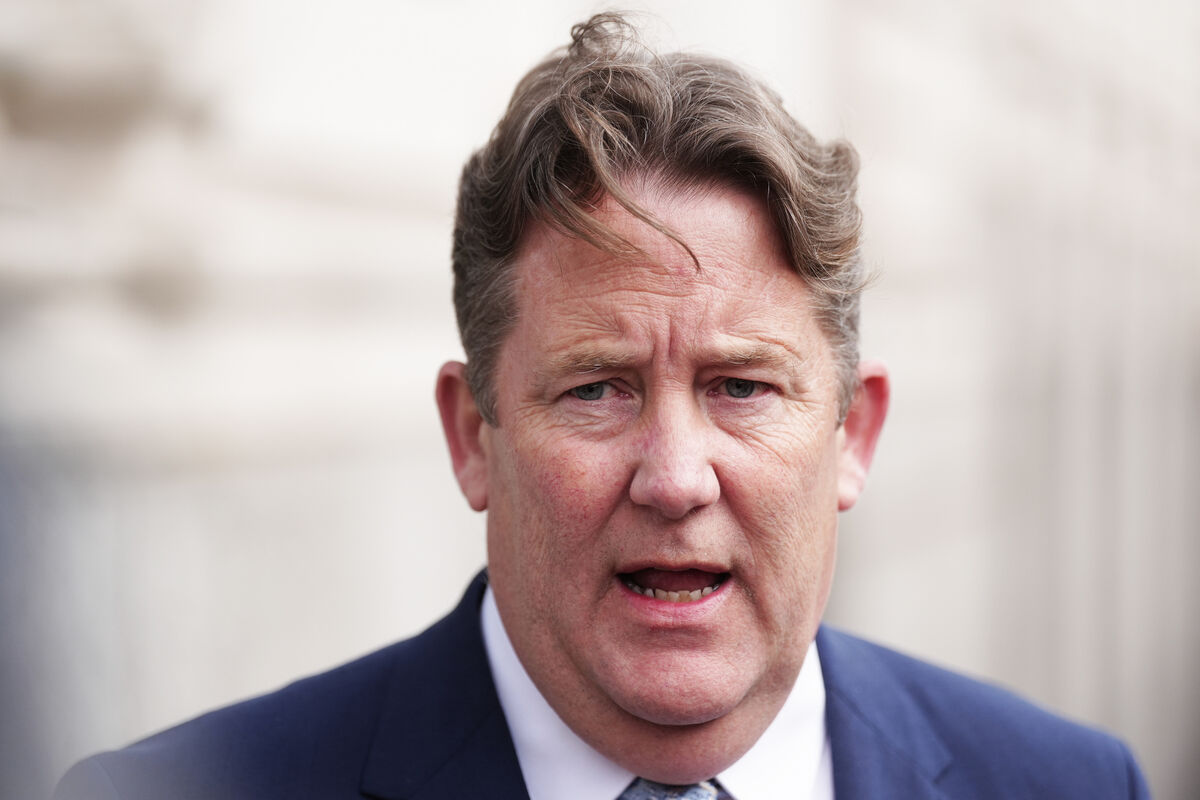
Minister for Transport and Energy, Darragh O’Brien and Minister of State for International and Road Transport, Logistics, Rail and Ports, Sean Canney, are actively progressing plans for a transport support scheme, with detailed work now underway, the statement said.
Representatives from the Irish Road Haulage Association, the Freight Transport Association of Ireland, and the Coach Tourism & Transport Council of Ireland attended the meeting "and expressed their full support for the proposed measures."
"Minister Heydon, along with Ministers Dooley, Grealish and Healy-Rae, met with all the representative farm and fisheries organisations in both plenary and bilateral meetings over the last two days.
"The agriculture ministers have taken onboard their concerns as well as suggestions and ideas to ameliorate hardship of all their members. All meetings proved to be very constructive.
"Minister Heydon along with his senior officials in the Department of Agriculture, Food & The Marine, are devising a temporary fuel support scheme to provide support for these critical sectors," the government statement said.
"The Government recognises the urgency of providing solutions for these very impacted sectors."
Ministers intend to conclude plans "as swiftly as possible" and will announce them shortly in addition to the €250m already allocated to alleviate the burden on impacted sectors, it said.
A garda presence continues at the Whitegate refinery in East Cork this evening after a number of arrests were made at the facility earlier on Saturday.
Cabinet will meet on Sunday to be updated on the protest situation and talks with representative groups.
A spokesperson for Taoiseach Micheal Martin said:
“The Taoiseach has convened a cabinet meeting tomorrow for a security update, to be provided by Ministers O’Callaghan and McEntee. There will also be an update on the talks that have been ongoing throughout the weekend.”
It is understood that work on a Fuel Support Scheme is ongoing.
Kevin McPartlan, CEO of Fuels for Ireland has told the that people will die unless the ongoing fuel protests end urgently.
Despite the partial reopening of Whitegate oil refinery, the fuel situation across the country continues to deteriorate, he said.
Mr McPartlan says that pproximately 1,000 of the country's 1,600 service stations may be empty tonight.
“If everything went back to normal tonight, we’re still 10 days away from having normal supply.
“We’ll still have 10 days of forecourts with no or limited supply. Tomorrow that will be worse again," he added.
“By Monday evening, we will not be able to guarantee fuel anywhere in the country."
Justice Minister Jim O'Callaghan said that the fuel blockades are "unacceptable" and that no one can hold the country "to ransom".
Garda operations to resecure fuel supply will continue, he said.
"Over the past four days An Garda Síochána has engaged extensively with protestors seeking to allow access to critical sites and ensure certain trucks containing fuel, medicine and animal feed were allowed pass through blockades," he said in a statement on Saturday evening.
"Despite the increasingly difficult situation facing people across the country and requests from Government to end the blocking of critical infrastructure, the blockades continued.
"This is unacceptable.
"While we all acknowledge the impact of higher fuel prices, and seek to minimise that impact, no groups are entitled in our Republic to hold our people to ransom in such a manner."
Gardaí have commenced operations to allow critical infrastructure to operate so people have access to fuel, he said.
"I will continue to engage with the Garda Commissioner and my colleagues in Government as these operations continue.
"I want to thank the Gardai and their colleagues from the Defence Forces for carrying out these difficult duties in such a professional manner."
A number of arrests have been made during the Garda operation in Whitegate Oil Refinery today, according to garda commissioner, Justin Kelly.
In a statement on Saturday evening, Commissioner Kelly said: “This morning, An Garda Síochána moved to restore fuel supplies from Whitegate Refinery. We made a number of arrests during this operation. In the coming hours and days we will have further such operations.”
He also raised concerns about threats of intimidation and harassment of lorry and fuel truck drivers, adding: “Offences such as threats to kill or cause serious harm carry sentences of up to 10 years.”
Commissioner Kelly said that “some people have decided to escalate an already difficult situation by blockading critical national infrastructure such as fuel depots and refineries”.
He said this has led to fuel shortages directly impacting emergency services, including hospitals, the ambulance service and the fire service, as well as businesses and the general public.
Describing them as blockades, he said they are “illegal activity that is endangering our State”.
He added: “These blockades are also putting at risk supplies that are critical for our country.”
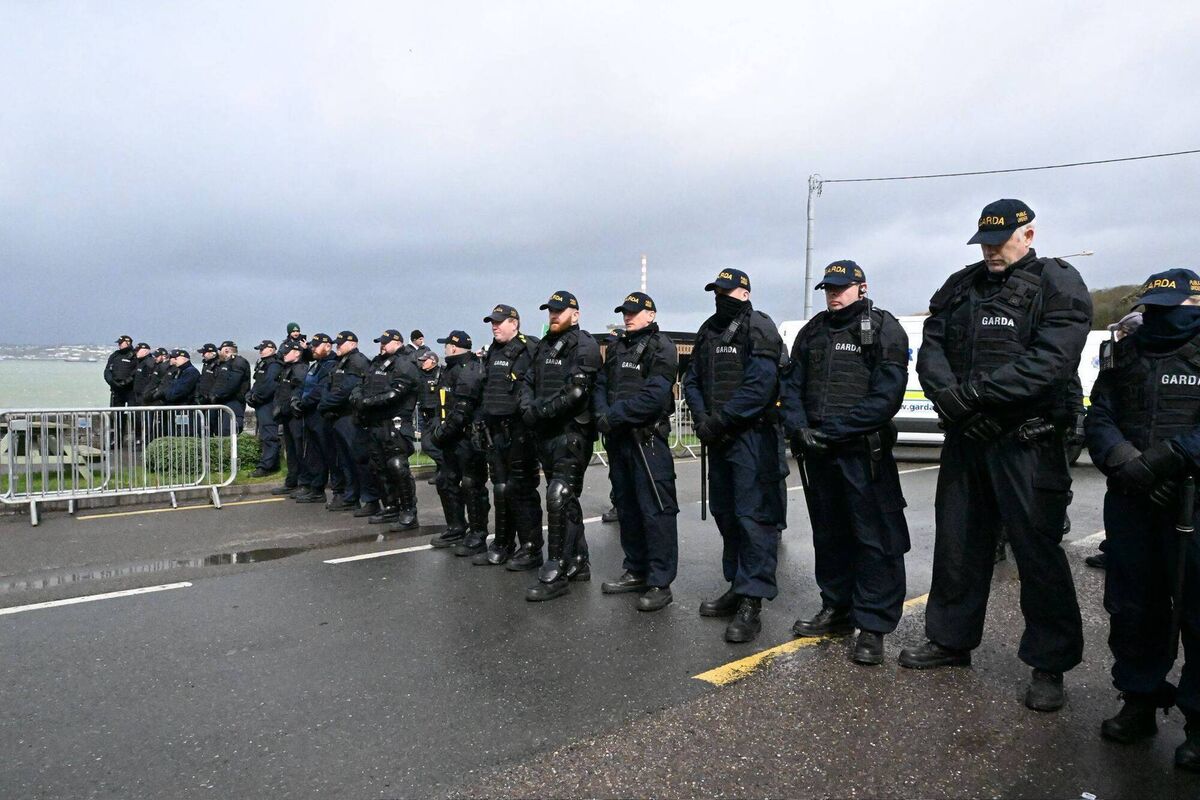
He said that Gardaí were in “an invidious position of having to deploy public order units in order to ensure that hospitals can function, fires can be responded to, and people can be brought to hospital”.
He continued: “We never want to do this, but the blockaders have left us with no choice.
We gave the blockaders fair warning that we were moving to enforcement and they chose to ignore it and continue to hold the country to ransom.”
Commending both the Gardaí and the Defence Forces, he said: “These operations have required the deployment of a large number of Gardaí. Gardaí who should have been engaged in patrolling cities and towns, community engagement, and investigating crimes such as domestic abuse.”
He added: “Instead, because of the illegal actions of a few, much of this valuable work to keep people safe is not taking place. We are aware that there has been intimidation of fuel tanker drivers. These are criminal offences. We will not tolerate this and we will investigate all such reports and prosecute suspects. Offences such as threats to kill or cause serious harm carry sentences of up to 10 years.”
He concluded: “My message is clear. Blockaders must immediately cease blockades of critical infrastructure and road networks or face the full rigours of the law.”
Talks between the minister for transport and groups representing the transport sector have ended without agreement, though all sides remain available for further discussions.
Ger Hyland, president of the Irish Road Haulage Association, said he was hopeful of progress in the coming hours following what he described as a “stressful evening”.
"It was hard going, the talks were robust," he said.
"Nothing's agreed, but we have the bones of an agreement, and it's been worked out over tonight and tomorrow.
"We're working on a package; it is a substantial package, and we hope to have this over the line either late tonight or tomorrow."
The meeting at the department of transport concluded within the past hour, with no final deal reached.
Transport minister Darragh O’Brien described the discussions as “constructive” as he left the meeting.
"We had a good, constructive session this afternoon with representatives from the hauliers, representatives from the coach and bus sector as well.
"We got a lot of work done," he added.
Mr O’Brien said he will now brief the Taoiseach on the outcome of the talks.
Whitegate protester Anthony Kelleher said that the group pulled back from the protest "for the safety of everyone" today, but the protests are not over.
“We’re down, but we’re not out,” he said.
A garda operation is ongoing in the east Cork village but tensions have eased there, sources said Applegreen petrol retailer, which also has operations in the North, has delivered some tanks of fuel to service stations in Cork city.
Slow-moving fuel protest convoys have reached Cork city centre.
Calls have gone out on social media for more people to join the protests.
But protests in the city have been peaceful so far, sources said.
Multiple tractors have joined the fuel protest in Cork city, with bikers and lorries on the way, a protester said.

Niall Linehan, who had been protesting in Whitegate until Saturday morning, said that the protests there remained peaceful throughout.
“We did the place proud," he said. “We have massive support from the public."
A number of sporting events, including underage games, were cancelled across Cork on Saturday due to the fuel protesters.
Gardai are warning that intimidation and harassment of drivers of trucks and fuel tankers is criminal activity.
In a post on Saturday afternoon on social media channels, An Garda Siochána said they were aware "of alleged intimidation and harassment of drivers of trucks and fuel tankers going about their lawful business".
The post continued: "This is unacceptable. This is not protest. This is criminal activity."
The post said that all complaints received would be investigated.
In a separate statement, the Garda Press Office said that Garda Commissioner Justin Kelly is "overseeing garda operations from garda headquarters."
It said that as well as a small number of trucks accessing Whitegate oil refinery, "following a Garda operation, trucks have been leaving Rosslare Port with critical supplies."
It added: "Also, following engagement with protestors, trucks with critical supplies including fuel have been leaving Foynes Port."
: Tractors and lorries in a slow-moving convoy are causing congestion in Cork city centre on Saturday afternoon.
Gardaí said that traffic was heavy in areas including Parnell Place and South Mall at around 4pm.
Cars have also joined the convoy, which entered the city centre via the Western Road and Washington Street.
Washington Street at 15:20 this afternoon as a convoy/protest approaches Cork City Centre. Delays in the area are likely. pic.twitter.com/Yg2Tb6GM5W
— Cork Safety Alerts (@CorkSafetyAlert) April 11, 2026
In a post on Facebook, the People of Ireland Against Fuel Prices Protest group said people will gather from 11am tomorrow in towns and counties across the country for “a peaceful nationwide protest.”
Meeting points have been organised in all 26 counties.
“We encourage people right across the country to join on foot, with family, friends, local communities, and working people standing together,” the post said.
“We also encourage local musicians and entertainers to come along and help make a day of it, bringing unity, community spirit and support to people in their own local areas.”
“This has always been a peaceful protest, and all we want is for our government to listen to the people. This movement is growing stronger every day, and we are not backing down.”
Feed lorries entering the Port of Cork in Ringaskiddy have not been obstructed by the ongoing blockades.
It is understood that feed lorries passing through the port have been permitted to "enter and leave freely" over the past couple of days.
It comes not long after gardaí broke the blockade of the Whitegate oil refinery in East Cork earlier today.
Reports indicate the lorries have been allowed to freely enter and exit the port.
: A number of fuel tankers have left Whitegate oil refinery having gained access under garda escort earlier in the afternoon.
The Government is working on the introduction of a temporary Fuel Support Scheme to assist farmers, hauliers, and contractors most impacted by the spike in fuel costs.
It is understood the scheme will be discussed at meetings with representative groups today, including those from the agriculture, transport and fisheries sectors.
Government sources say the Fuel Support Scheme will be targeted at those directly involved in Ireland’s food supply chains such as farmers, hauliers, fisheries and agri-businesses.
The Government is also engaging with the European Commission to ensure any additional supports can be delivered in line with State aid rules.
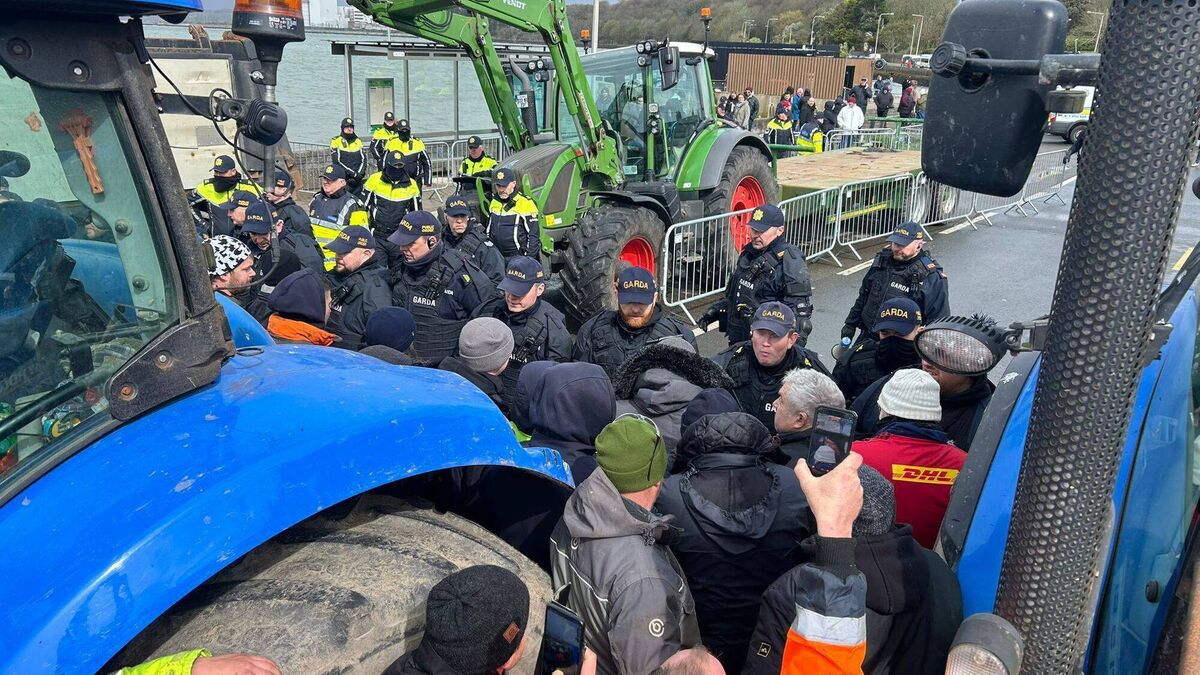
Access to the Whitegate Oil Refinery in East Cork has been restored, with several tankers escorted into the facility by Gardaí on motorcycles and members of the public order unit.
It follows a significant escalation of the Garda operation at Whitegate this morning, which saw the public order unit push protesters back in an effort to restore access to the refinery.
Earlier today, units of the Defence Forces arrived at Whitegate, bringing with them a medium-duty tilt recovery vehicle, which is used to transport heavy vehicles.
That vehicle has yet to be used, and two tractors were removed from the blockade by Gardaí after the keys were handed over by their owners.
The health minister Jennifer Carroll MacNeill has raised fears chemotherapy or other urgent care could be affected if “anarchic” fuel protests continue, although she said ambulances have now been refuelled.
Ms Carroll MacNeill was speaking during the Irish Medical Organisation annual conference in Killarney.
“I am pleased to be able to say the ambulances were refuelled overnight,” she told reporters.
She called on patients to keep calling for help, saying: “We want you to come. If you need an ambulance, call an ambulance.” However she said: “We’re concerned that were this to continue, we would have difficulties for example getting chemotherapy treatments delivered to hospitals.
“We’re concerned that we would have difficulties with laundry services, support for the running of hospitals.”
A junior minister has backed the terming of fuel protests by Taoiseach Micheál Martin as an act of national sabotage, saying he believes the Whitegate blockade is such an act.
Minister of State for European Affairs and Defence Thomas Byrne said: “In terms of the blockage on Whitegate oil refinery, I absolutely do (agree it is a national sabotage).
“We need to get this oil refinery open or the country will close.” Mr Byrne also said that he is “very glad” to hear that action was being taken by gardaí on Saturday against protesters at Whitegate, adding that the “blockade must end”.
He said the country cannot allow itself to be held to ransom.
He admitted however that people are hurting in the current fuel crisis.
He told RTÉ radio that what started as a protest “has been whipped up by certain people and then amplified on social media in the UK, in America and in Russia”.
He added: “We have seen an amplification all over the world supporting this.”
In relation to the failure of protester representatives to gain entry to the meeting between farmer and haulier representatives and government ministers on Friday afternoon, Mr Byrne said: “I agree it certainly wasn’t the best thing to see on the news. It’s what happened.”

But he said they should not have been allowed in and they would have been “better off if they had gone in with the representative organisations and be put on the list” of meeting attendees.
Sinn Féin MEP Lynn Boylan said the government has created a situation where the protests have increased in size and become more forceful, following the government’s early responses to the issue.
She said the government “poured fuel on the flames and has ramped up the rhetoric”.
There has been a significant escalation in the garda operation at Cork's Whitegate refinery in East Cork.
Units of the Defence Forces have now arrived in Whitegate in east Cork, along with a medium duty tilt recovery vehicle, used to transport heavy vehicles.
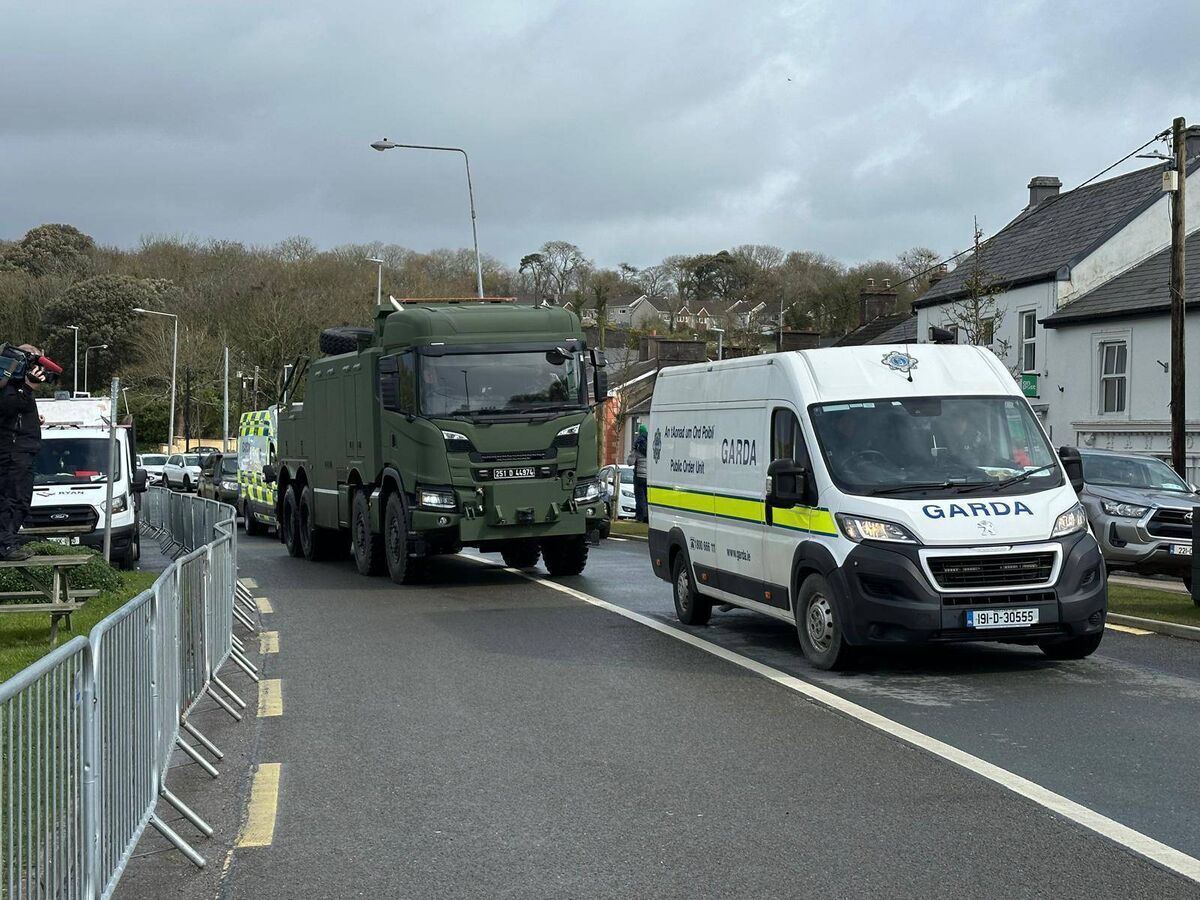
Members of the garda public order unit have reportedly deployed pepper spray against protesters as they pushed them back in an effort to gain access to the refinery.
Before the advance, a garda inspector announced to the people gathered that if they did not leave the area and heed instruction from gardaí they would be arrested.
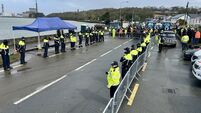
Around 100 gardaí were involved in the advance which pushed protesters around 100 feet back and established a new line of barriers.
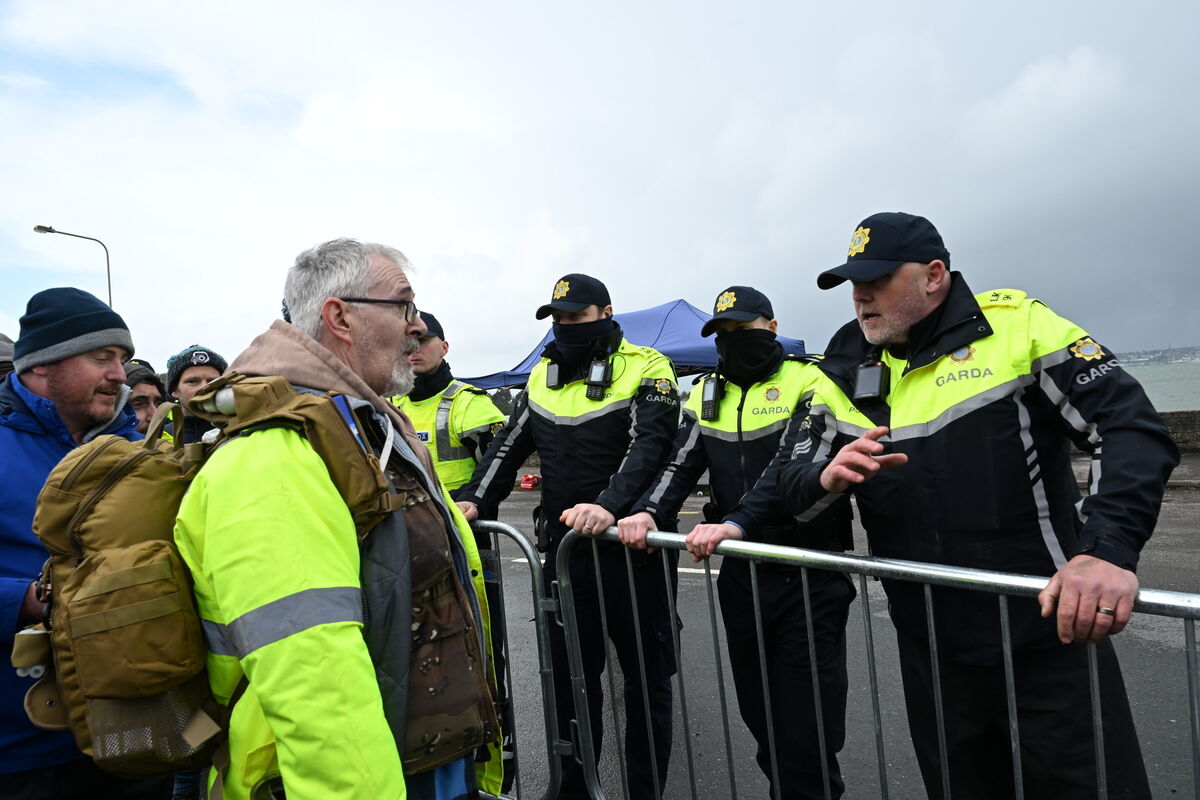
Gardaí were seen pulling protesters out of the crowd and removing them to a different area behind the barricades.
A number of garda vans have since arrived at the scene, bringing additional personnel.
Two tractors have been removed from the blockade. It is understood the keys were handed over freely by the owners and they were driven away by gardaí.
The army heavy lifter unit, which is believed to have been brought in for the removal of trucks, has yet to be used.
Scenes have calmed in the last few minutes however a large garda presence remains in place.
The Garda Public Order Unit has returned to Whitegate in east Cork.
Protesters there continued to block access to the country's only oil refinery overnight, preventing fuel tankers from reloading and then delivering supplies to forecourts that have now run dry of petrol and diesel.
On Friday, two fuel trucks were allowed into the refinery earlier with the permission of protesters, in an effort to ensure emergency services had fuel and homes were not deprived of heating oil.
However a standoff ensued when gardaí tried to get additional trucks through the lines.
One protester climbed on top of a fuel truck and waved a Tricolour but was later removed from the scene by gardaí.

Garda HQ has declared the current blockades at critical national infrastructure – primarily the fuel depots at Whitegate, Foynes and Galway – to be a “National Exceptional Event”.
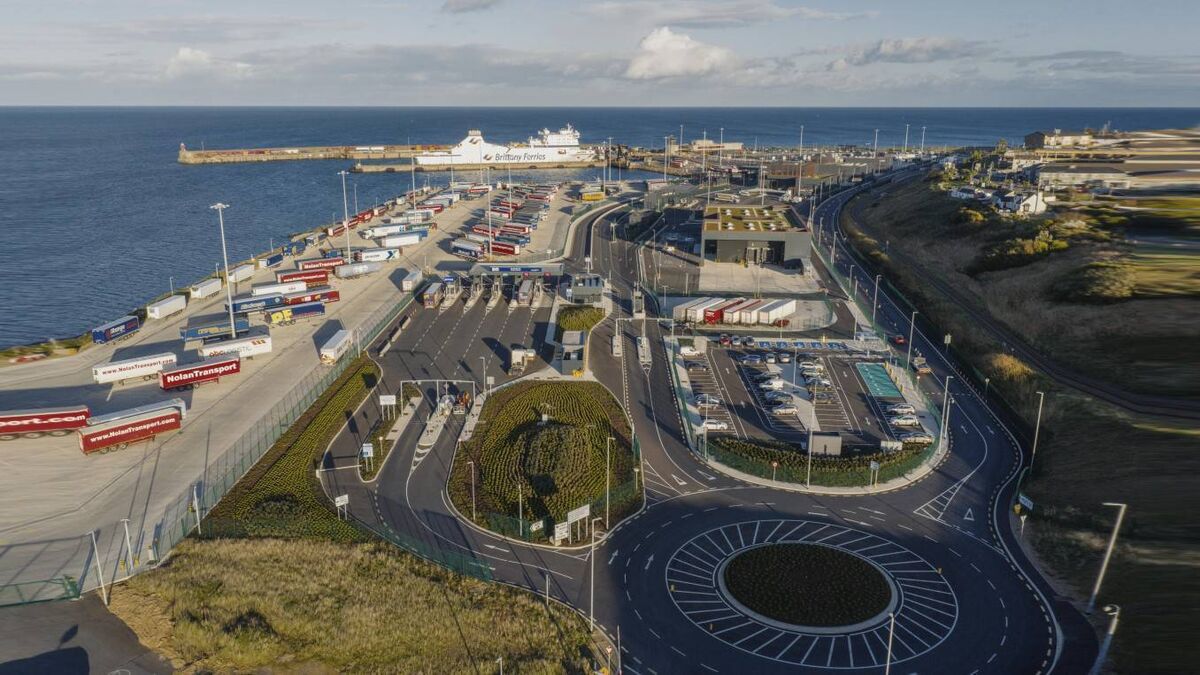
Rosslare Europort will be at capacity by Sunday evening or Monday morning, according to a spokesperson.
Operations at the port, run by Irish Rail, have been affected by a blockade of fuel protesters in the nearby town of Kilrane, Co Wexford.
A spokesperson for Irish Rail said the port will soon be at capacity and will not be able to take in any more freight – resulting in ships having to wait on anchor or be diverted to another port if possible.
Operations at the port are quiet today as sailings had been cancelled due to bad weather but It is unclear if diversions will be possible and Irish Rail said it was “looking at all opportunities”.
There will be a significant backlog when the port reopens.
The Catholic bishop of Waterford and Lismore has said the “visible deployment of military forces” against fuel protesters “may be perceived by many as disproportionate”.
In a statement issued by the diocese, Bishop Alphonsus Cullinan said the current protests “reflect a deep frustration felt by many individuals, families, and businesses across Ireland”.
He said that “public authorities have a responsibility to ensure that fiscal policies are just, proportionate, and attentive to the lived reality of the people”.
He continued: “The visible deployment of military forces in a domestic context is a serious step and may be perceived by many as disproportionate. In times of tension, restraint, dialogue, and measured leadership are essential. Escalation—whether through confrontation on the ground or rhetoric—serves only to harden positions and prolong conflict.”
However, he said the block of roads, ports and infrastructure “risks significant disruption to society, including access to emergency services, employment, and vital supplies,” adding that “protest must always be exercised in a manner that respects the rights and needs of others”.
He appealed to protesters and “public authorities” to enter dialogue.
He continued: “We must resist the temptation toward polarisation and instead become, each of us, builders of peace. Ireland has a long tradition of resolving even the most difficult issues through conversation and mutual respect. Now is the time to draw upon that tradition.”
Around 600 of the 1,500 filling stations around the Republic of Ireland have run dry, according to an industry representative.
Fuels for Ireland chief executive Kevin McPartlan said he expects the number “will grow quite dramatically” if ongoing blockades of fuel depots remain in place.
Asked on RTÉ Radio One’s how that number may grow, he said: “If everything remains as it is, that is to say that the three facilities remain blockaded, then I don’t think we could guarantee fuel at any forecourt by very early next week, Monday morning or Monday perhaps.”

Transport Infrastructure Ireland has issued an update on a number of road closures nationwide due to the ongoing fuel protests.
Blockades have resulted in full closures of parts of the M50 ring road around Dublin, as well as the M4, M6, M7, M8, M9 and M20.
Transport Infrastructure Ireland, which is responsible for motorways, said there is “significant disruption” to its network impacting counties Clare, Limerick, Tipperary, Laois, Offaly, Kildare, Galway, Cork, and Dublin.
It said it was working closely with gardaí in managing traffic distribution.
ROAD CLOSURE UPDATE!
— TII Traffic (@TIITraffic) April 11, 2026
Following are the locations with full road closures in place on the motorways currently
M50 :
M50 between J06 - BLANCHARDSTOWN Direction northbound
M50 between J05 - FINGLAS and J06 - BLANCHARDSTOWN Direction Both
M4 :
M4/N4 J01 - N4/M50 Direction eastbound… pic.twitter.com/9XwCJgCGgh
The protests have caused disruption to some bus routes across Ireland and within the capital, where Luas Green Line tram services are also affected.
Bus Éireann has also confirmed that disruptions to its services are continuing as a result of the protests.
In a statement on social media, the company said the latest service updates are available on the Bus Éireann website.
⚠️Service disruption continues today as a result of fuel protests.
— Bus Éireann (@Buseireann) April 11, 2026
📍Please refer to the Bus Éireann website for the latest regionally specific information before travelling: https://t.co/kZjvdulzCL pic.twitter.com/EmsNksMn2S
Meanwhile, Dublin's Luas has advised passengers that Green Line services are not operating between St Stephen’s Green and Dominick due to ongoing travel restrictions in the O’Connell Bridge area.
Services are currently operating between Broombridge and Dominick, and between St Stephen’s Green and Brides Glen.
All Red Line services are operating as normal.
Participants say the Government needs to take urgent action on fuel prices or they will go out of business.
There were fears that around a third of Ireland’s 1,500 filling stations would have run dry by morning as protesters engaged in a blockade of the country’s only oil refinery in Whitegate, Co Cork, as well as key depots in Galway and Foynes, Co Limerick.
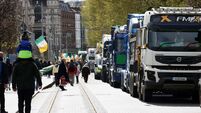
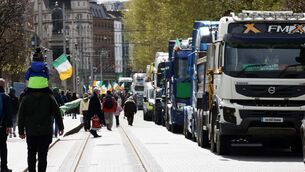
The protests, which have also seen slow-moving convoys and outright stoppages on major motorways as well as a blockade on Dublin city’s main thoroughfare, began on Tuesday over the cost of fuel.
Participants include professional drivers, farmers and hauliers as well as taxi and bus operators.
The Medical Council says healthcare workers across the country are facing serious difficulties getting to work, due to the fuel protests.
The council is urging protestors to stop disruption to road networks, which is leading to patients missing important appointments.
The National Ambulance Service has curtailed non-emergency transport services, while the fire service is also taking measures to conserve fuel.
Health minister Jennifer Carroll McNeill is due to hold another meeting with stakeholders today.
Dr Suzanne Crowe, president of the Medical Council, is appealing to protestors to let people through.
"It seems hard shoulders on the road, or very narrow roads, are blocked and patients can't get through and healthcare staff can't access the road to get to work.
"We would ask the protesters would just make sure that you know the emergency vehicles and everybody can get past."
Talks between Government departments and representative bodies are set to continue at lunchtime on Saturday, with a view to finalising what Tánaiste Simon Harris said would be “substantial and significant” measures for affected industries.
It follows a five-hour meeting yesterday between representatives and agriculture minister Martin Heydon, energy and transport minister Darragh O’Brien and junior ministers Michael Healy Rae, Noel Grealish and Timmy Dooley.
Many official representative groups recognised by Government have expressed sympathy with the cause but have said they have not been involved in organising the protests.
A commitment from the coalition on Friday night to deliver a “substantial” package of measures on fuel costs was not enough to dissuade protesters from continuing blockades.
Christopher Duffy, a spokesman for the grouping in Dublin city centre, said the protest would continue until there was a “serious reduction in our costs”.
Garda commissioner Justin Kelly has declared a "national exceptional event" over the fuel protests and is deploying gardaí to deal with the emergency.
As part of this, the Garda’s two water cannons have been scrambled with one dispatched to the Southern Region to cover events at Whitegate Oil Refinery in East Cork, Foynes Port in Co Limerick, and Rosslare Port in Co Wexford.
The understands the water cannon has arrived in Cork city. Its positioning means it can be deployed at short notice.
Garda HQ has declared the current blockades at critical national infrastructure – primarily the fuel depots at Whitegate, Foynes and Galway – to be a “National Exceptional Event”.
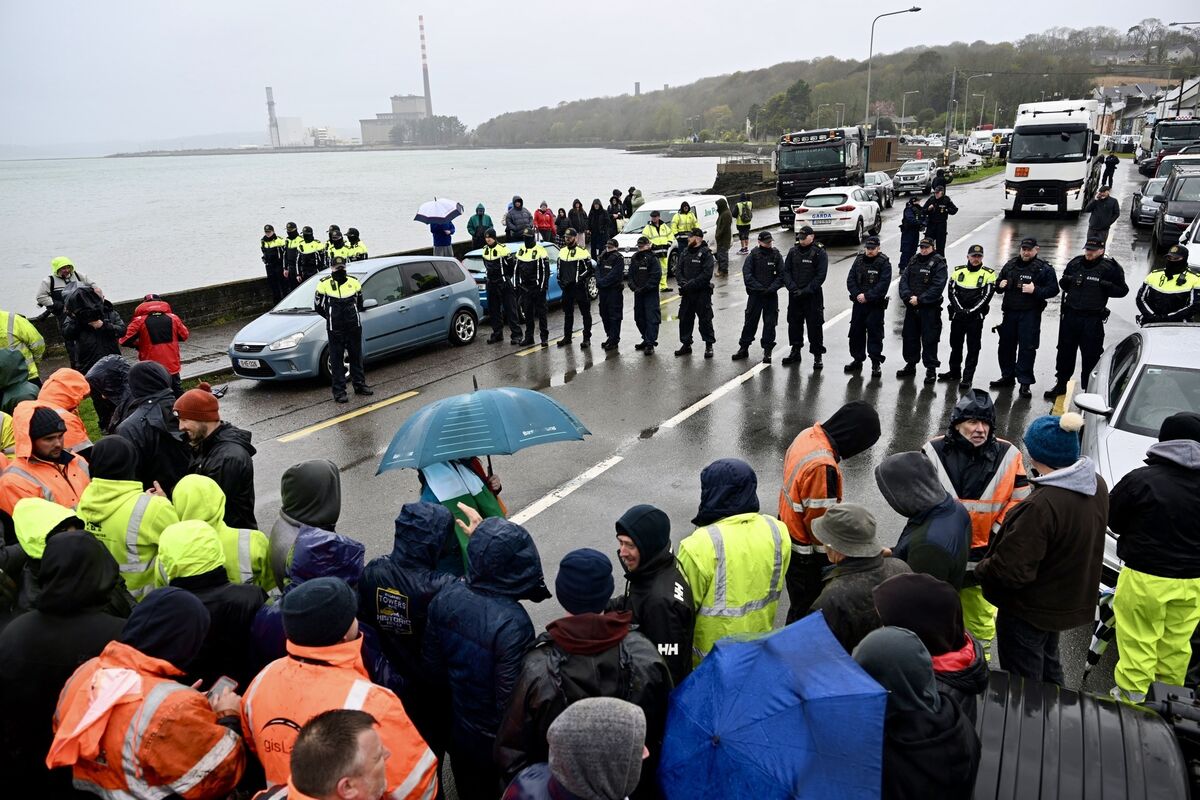
As part of this the Garda Working Time Directive can be set aside and the planned rosters changed in order to deal with a national emergency.
In this situation gardaí nationally can be deployed for a period up to 48-72 hours, anywhere in the country.
The second water cannon is remaining in Dublin.
The Government on Friday faced down fuel price protesters by telling representative bodies a package of supports is ready to be announced — but not until blockades end.
As the country faced a weekend of petrol forecourts drying up, there were tense scenes in Cork where a standoff developed between protesters and gardaí.
At the same time, the National Emergency Coordination Group (NECG) was warning in Dublin that fire brigades and ambulances will have to curtail their services while fuel supply is restricted. It also urged the public not to panic-buy fuel.
The Government told farming and haulage representatives it is preparing a suite of measures. However, nothing will be rolled out until the blockades across the country are lifted. Leading protesters were excluded from the meeting.
Tánaiste and finance minister Simon Harris said the Government is working on a package for businesses that will be “substantial and significant”.
“We're very clear, and we've always been clear as a Government that further specific supports for key sectors of the economy, particularly around agri-food and supply chains, would be required,” he said.
Read More
The NECG said the number of fuel stations out of supply could reach 500 across Friday — a third of the 1,500 stations across the whole country.
“The NECG also heard that there is growing concern from international shipping companies about the ability to offload stock at some Irish ports, and are monitoring the ongoing impact of these delays on their operations,” a readout of the meeting said.
Taoiseach Micheál Martin said an oil tanker waiting to dock in Galway could be rerouted elsewhere, meaning that Ireland is "turning away oil in a global oil crisis".
“It is unconscionable, it’s illogical”, he said.
Advice, seen by the for the emergency services says the strategic objectives are to “maintain life-saving emergency response capability” and “reduce avoidable fuel consumption quickly”. It also says fire departments should be “limiting non-essential travel”.
The National Ambulance Service will continue to respond to 999 calls, along with life-threatening and clinically urgent calls, but inter-hospital transfers and ambulance transport services for routine care and discharges are being curtailed.
The agri-food sector is also experiencing difficulties getting its produce out of the country for export, NECG heard. This was described as a “significant problem for a sector which exports almost 90% of its production”.
“The Department of Agriculture has also been informed that restricted diesel supply could begin to affect milk collection from farmers soon,” the group said.
Bus Éireann advised the meeting that its school transport service will resume on Monday following the Easter break, but parents are now being warned that, if blockades continue to disrupt fuel distribution and traffic, there are “likely to be delays and potential service disruption experienced to some services”.
CONNECT WITH US TODAY



Be the first to know the latest news and updates