Price of fuel ‘costing lives’, say protesters causing gridlock in Dublin
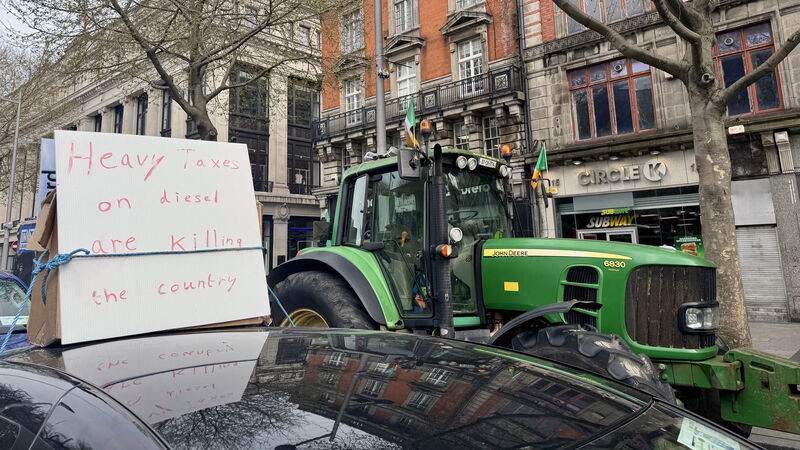
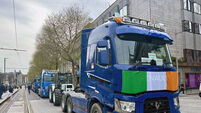
Farmers and other fuel-dependent workers blocked O’Connell Street for the second day in a row (Bairbre Holmes/PA)
Protesters with tractors have caused gridlock in Dublin city centre over rising fuel costs caused by the war in Iran.
Tractors were parked down O’Connell Street, and O’Connell Bridge was cordoned off, as farmers and other fuel-dependent workers blocked the capital’s main road for the second day in a row.
The protesters are calling for a cap on kerosene and for the increase in the carbon tax in May to be abandoned.
Read More

James Geoghegan, a spokesman for the protesters, said they would “not go home broke” and said “the price of fuel is costing lives”.
“We can’t go home without a result. We simply can’t afford to go home,” he told the Press Association.
“We came up broke and there’s no point going home broke.”
Mr Geoghegan said that he worked in construction and had heard of people having booked builders to build homes which then cost an extra €30,000-€40,000 euro to build, but that the bank would not approve a larger mortgage.
“I’ve been booked to dig out foundations on two one-off single houses in the countryside, and we’d get maybe €5,000-€10,000 to dig out of that job, which bankrolls us.
“But when we dig out the foundation, then in come the concrete lorries with concrete, that’s them making money. Then the blockers start laying blocks, that’s them making money.
“All this is putting tax into the system. Now these houses are being stopped. I’m losing work, the lads laying the blocks are going to be on the dole. It’s a domino effect.
“If the Government reduced the price of fuel and keep everybody building, keep everything working and keep the contractors in business, it’ll be far better for the economy.”

John Dallon, a farmer and agriculture contractor from Co Kildare, said the Government was “well able to dig money out of the ground when they need it”.
“The Government are giving away millions and millions to countries at war. Now, no disrespect to them, countries at war or any of the nationalities, but the buck stops here,” he said.
“You look after the people in your own country, the island of Ireland first, and when them people are looked after, and our own economy is sorted out, then help out the other countries that are in need.”


CONNECT WITH US TODAY



Be the first to know the latest news and updates