More than 11,000 patients spent night on hospital trolley in March - INMO
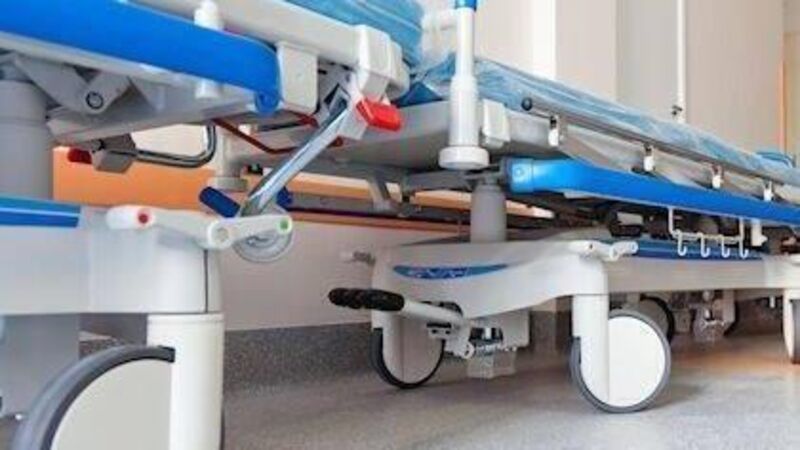
Despite pledges for reform and claims that patients are facing fewer delays, last month was 'the second highest March on record in terms of hospital overcrowding' at 11,130 patients, according to the INMO. File picture
More than 11,000 patients spent a night on a hospital trolley last month, up from 9,124 in March 2025, according to data from the Irish Nurses and Midwives Organisation.
Patients attending at Munster hospitals were the most likely to see delays, with overcrowding prevalent at University Hospital Limerick and Cork University Hospital.
Despite pledges for reform and claims that patients are facing fewer delays, last month was “the second highest March on record in terms of hospital overcrowding” at 11,130 patients, according to the INMO.
At UHL 1,701 patients were without a bed last month, followed by CUH with 939 and Sligo University Hospital, where 924 people waited on trolleys.
St Vincent’s University Hospital in Dublin had 870 patients waiting, while University Hospital Galway had 862 patients who could not get a bed.
University Hospital Waterford saw just 13 patients on trolleys all month, down from 20 in March last year.
UHL had 1,824 patients waiting on a trolley in March 2025, while CUH had 907.
At University Hospital Kerry, 443 people waited on trolleys last month, more than double the number of patients in March 2025 when the count stood at 205.
Bantry hospital does not have an emergency department but 162 people were without a bed compared to 88 in March 2025.
Tipperary University Hospital in Clonmel was extremely busy in March, with 477 on trolleys compared to 119 in the same month in 2025.
INMO general secretary Phil Ní Sheaghdha warned these high numbers are not unusual despite promises of supports for hospitals.
“This is the third consecutive month that we have seen over 10,000 people on trolleys in our hospitals, and our members are now concerned that this will become the new normal.,” she said on Wednesday.
“Current trolley trends predict how the system will cope come autumn and winter.”
Ms Ní Sheaghda said the rising figures mean “the bar for safety in our hospitals is being lowered. And our members are the ones who have to bridge the gap between the patients’ needs and the lack of resources.”
This is “deeply unfair” on patients, she said, adding that they are leading to “physical and psychological effects on these workers”.
She called for action from the HSE and health minister Jennifer Carroll MacNeill.
“These are not acceptable standards in healthcare or in working conditions,” she said.
“It is vital that any shortfalls in staffing and resources are addressed so that this situation does not continue or worsen over the coming months.”
On Wednesday, there were 578 people waiting for a trolley, including eight children at CHI sites, according to the INMO data.
The HSE gathers its own data on trolley overcrowding, using slightly different metrics. On Wednesday this also showed most hospitals were extremely busy.
The HSE counted 409 people on trolleys but another 555 placed on temporary surge beds because a hospital bed could not be found.
These surge beds are often in day-wards, meaning care might be cancelled or postponed to make way for the emergency patients.
On Wednesday 69 patients waited longer than 24 hours on a trolley, including three people aged over 75.
CONNECT WITH US TODAY



Be the first to know the latest news and updates