Five EU governments found to ‘consistently’ dismantle rule of law
Five EU governments found to ‘consistently’ dismantle rule of law

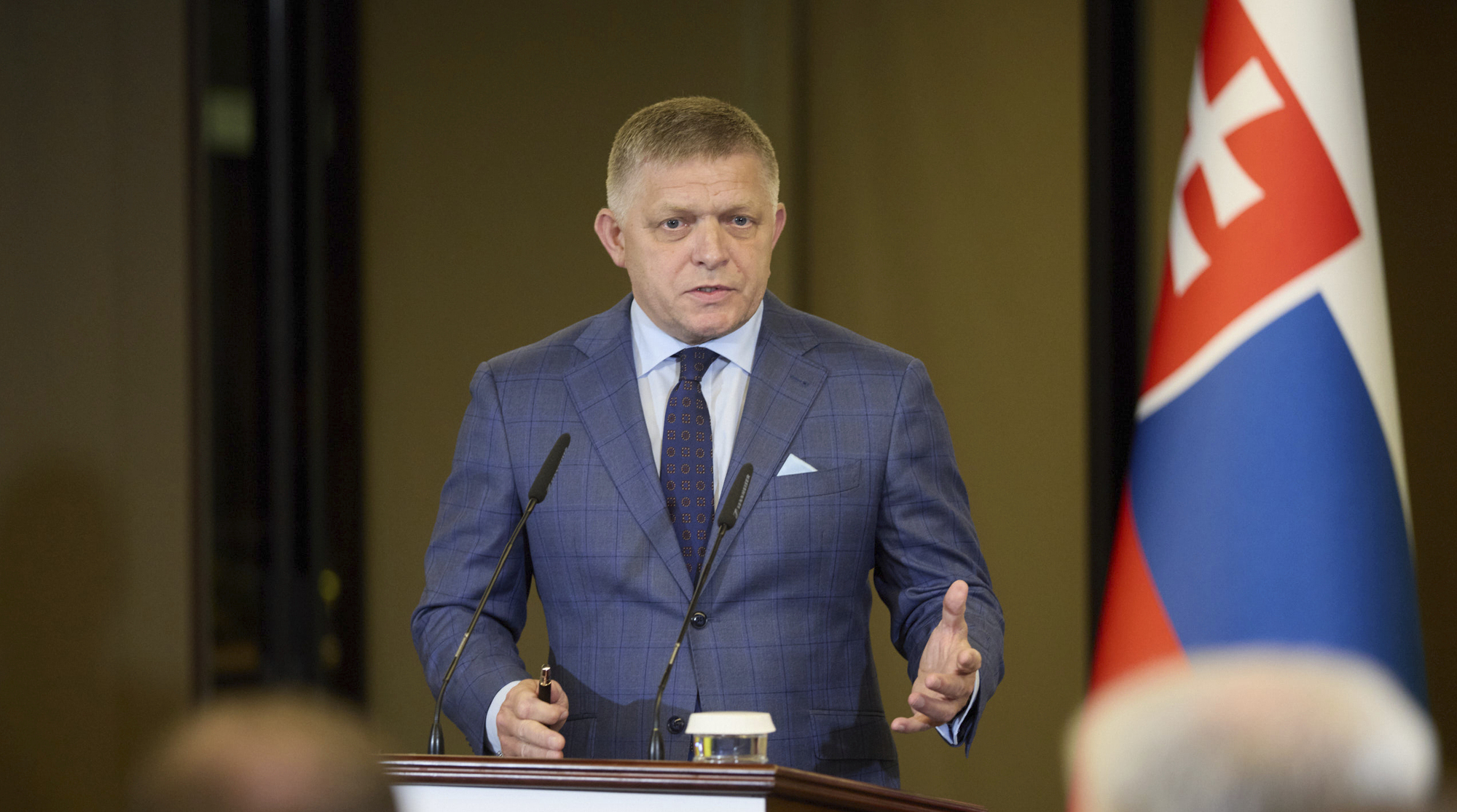
Bulgaria, Croatia, Hungary, Italy and Slovakia actively pursue regressive policies, watchdog finds. Photo: Ukrainian Presidential Press Office

Governments in five EU member states are “consistently and intentionally” eroding the rule of law, Europe’s leading civil liberties group has warned, while democratic standards are deteriorating in six more, including historically strong democracies.

Ireland was one of nine countries classified as “stagnators”.

Drawing on evidence from more than 40 NGOs in 22 countries, the Civil Liberties Union for Europe (Liberties) described the governments of Bulgaria, Croatia, Hungary, Italy and Slovakia as “dismantlers” that were actively weakening the rule of law.

The group’s 2026 report, released on Monday, said the rule of law had regressed in all areas — justice, anti-corruption, media freedom and civil society checks and balances — in Slovakia under the populist, authoritarian, pro-Moscow government of Robert Fico.

The picture was similarly bleak in Bulgaria, while Hungary, where Viktor Orbán’s 16 years in power could end after elections on April 12, “remains in a category of its own, continuing to pursue ever more regressive laws and policies with no sign of change”.

Elsewhere, Liberties identified Belgium, Denmark, France, Germany and Sweden, all countries with strong democratic traditions, as “sliders”: places where the rule of law is declining in some areas, without erosion being part of an overall political strategy.

The Czech Republic, Estonia, Greece, Ireland, Lithuania, the Netherlands, Romania and Spain were all classified as “stagnators”, defined as countries where rule-of-law conditions were neither improving nor deteriorating, the 800-page report said.

Poland also fell into that category, with the prime minister, Donald Tusk, trying to restore key elements of the rule of law — such as an independent judiciary — dismantled by the former Law and Justice (PiS) government, but being hampered by presidential veto.

Poland’s limited progress so far “shows just how challenging and fragile it can be to restore compromised institutional independence”, Liberties said. Only Latvia merited “hard worker” status, with a government actively improving rule-of-law standards.

The EU's rule of law

The report also said the EU’s mechanisms for addressing erosion or rule of law were largely ineffective, with most member states failing to turn guidance into tangible action despite several years of recommendations from the European Commission.

It found that 93% of all recommendations in the EU executive’s own 2025 rule of law report were repeats from previous years, many carried over with no change in the wording, while the number of new recommendations had fallen by half since 2024.

Out of 100 commission recommendations assessed by Liberties, 61 showed zero progress, while 13 more were deteriorating.

“The commission’s report was meant to prompt concrete action,” said Ilina Neshikj, Liberties’ executive director.

But after seven annual editions, Liberties’ findings highlight “not only backsliding, but also ongoing and deliberate efforts to undermine the rule of law. 

Viktor Orbán’s Hungary 'remains in a category of its own, continuing to pursue ever more regressive laws and policies with no sign of change'. Photo: AP/Alex Brandon

"Repeating recommendations without meaningful follow-up will not reverse this,” she said.

The report also criticised EU institutions in general, saying that in 2025 they had not only “mirrored many of the issues seen in member states”, but had also failed to consistently apply and defend fundamental rights.

“They normalised the use of exceptional, fast-track lawmaking, rolled back key fundamental rights protections, and led a concerted campaign against watchdog organisations,” said Kersty McCourt, Liberties’ senior advocacy adviser.

When that happens, McCourt added, the institutions “undermine the credibility of the EU and of its own rule of law reports”.

Deteriorating rule-of-law conditions

Liberties found rule-of-law conditions had deteriorated most in 2025 in the democratic “checks and balances” pillar: independent NGOs and civil society being able to organise, challenge decisions and hold governments to account.

Regressive legislation and strong penalties for attending banned protests were increasing, it found, including in Hungary, where Pride events were banned and their organisers, including the mayor of Budapest, placed under formal investigation.

In Italy, a highly restrictive security decree was adopted criminalising road blockades and other forms of dissent but strengthening guarantees for police. In several member states, climate and pro-Palestine protesters faced bans and criminalisation.

The justice pillar, too, showed a lack of progress, Liberties said, highlighting in particular what it called “an emerging trend of increasingly critical or hostile political discourse towards the judiciary and human rights institutions”.

It found little progress either on anti-corruption efforts. 

And on media freedom, only a small number of states had made measurable improvements. Attacks on journalists increased in Bulgaria, Croatia, Italy, the Netherlands and, especially, Slovakia.

The Guardian

More in this section

Lunchtime News

Newsletter

Keep up with stories of the day with our lunchtime news wrap and important breaking news alerts.

Cookie Policy Privacy Policy Brand Safety FAQ Help Contact Us Terms and Conditions

© Examiner Echo Group Limited