Fuel industry admits cuts won't be seen by consumers immediately at the pumps
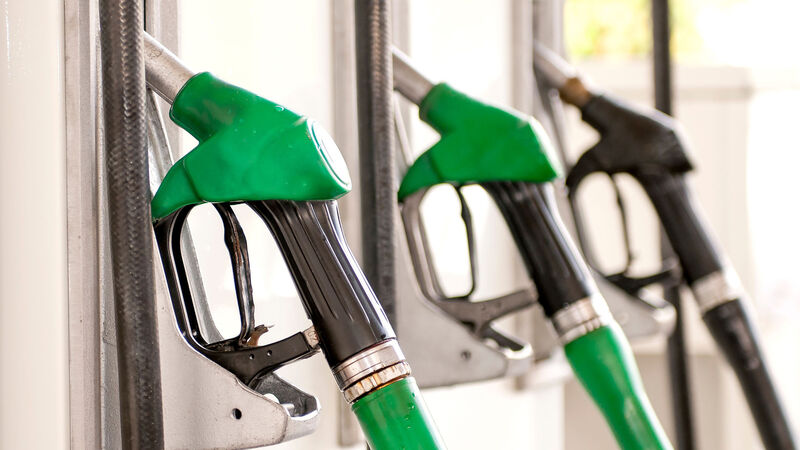
The fuel industry has warned that it could take consumers several days to feel the effects of excise cuts at the petrol pumps.
Meetings are continuing in Government Buildings throughout Monday afternoon to discuss a suite of measures that will be deployed to tackle the rising prices of fuel following the outbreak of war in Iran.
Taoiseach Micheál Martin, Tánaiste Simon Harris, and minister Sean Canney will meet from 7pm onwards to decide on measures in advance of Tuesday’s Cabinet meeting.
Read More
It is now widely expected that the package will include cuts to excise duty. However, the exact cuts remain unclear.
It is also expected that the Oireachtas will pass a financial resolution on either Tuesday or Wednesday to give immediate effect to the cuts.
Ahead of the Government announcement, representatives of the fuel industry have now warned that punters at the petrol pumps may not feel cuts immediately.
Kevin McPartlan of Fuels for Ireland said on Monday afternoon that fuel sold at forecourts has been purchased in advance and is held in on-site storage tanks.
“Depending on the size of the forecourt, this fuel may remain in storage for hours or days,” he said.
“As a result, any reduction in excise duty will only be reflected in pump prices once stations begin selling fuel that has been delivered after the duty change has come into effect."
Mr McPartlan said that those buying petrol or diesel at large or “high throughput” petrol stations may see the excise cuts resulting in price changes “within hours”.
Smaller petrol stations, which received deliveries less frequently, “may take several days before the reduced costs are passed through”.
“It is also important to note that excise duty is applied at the last taxation point before fuel enters the retail supply chain,” Mr McPartlan continued.
“In Ireland, this is typically seen at fuel terminals, for example Dublin Port, and smaller regional ports.
“Any fuel leaving these points up to midnight on the day of the change is charged at the current (higher) excise rate, as retailers cannot retrospectively adjust the tax paid on existing stock.
“In practical terms, while policy changes may be implemented overnight, it will take some time for the full effect of those reductions to work their way through the supply chain and be visible to consumers in every forecourt nationwide.
“We are urging motorists who are preparing to fill up on Wednesday morning to be conscious that these changes may not be reflected immediately. Prices will fall progressively, not simultaneously.”
Mr McPartlan also warned that wholesale market dynamics are “continuing to exert upward pressure on prices” as strikes on energy infrastructures continue and the Strait of Hormuz remains closed.
He noted that while retail prices for petrol have risen by 25.5c per litre and diesel has risen by 55c per litre, wholesale prices have risen by approximately 31c per litre for unleaded, and 63.5c per litre for diesel in the last three weeks.
He argued this “demonstrates that fuel retailers in Ireland have not passed on all cost increases”.
Petrol prices across the country have now surpassed the €2 per litre mark, while diesel prices are close to €2.30 per litre.
The Government is set to announce a time-bound reduction in excise duty to assist people at the pumps on Tuesday.
The Tánaiste is also expected to recommend a rebate scheme for hauliers, who are an essential part of Ireland's supply chain. It is understood he will recommend the measures remain initially for several weeks, followed by a review.
Sources said that the Government understands these measures may need to be extended, given the ongoing conflict and the damage to energy infrastructure.
They also stressed that it cannot shield people from the full impact of the war but added that Tuesday’s package will be a start and will help consumers at the petrol pumps.
A double fuel allowance payment is expected to assist pensioners, carers, and people with a disability.
Speaking on Monday afternoon, Mr Harris said the “most effective remedy to the concerning economic developments globally and their impact on families and businesses in Ireland would be a de-escalation and end to the conflict in the Gulf and Middle East Region”.
"With that in mind, it is welcome to see a temporary cessation of US military strikes for a number of days,” he said.
“I really hope this window can be used wisely. It is in the interests of humanity and our global economy for this war to end.
"In Ireland, we will, of course, prepare for a variety of economic scenarios, and I am continuing that work with colleagues in government and in the Department of Finance today.”


CONNECT WITH US TODAY



Be the first to know the latest news and updates