Q&A: What is meningitis B and why are young people at risk?
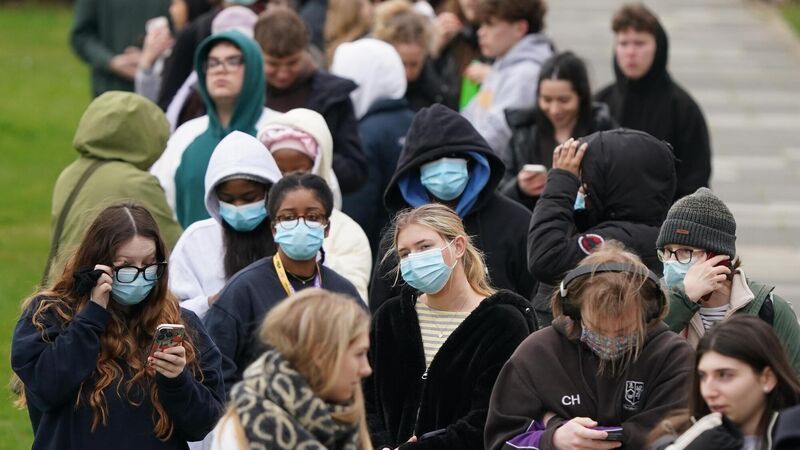
Students queuing for antibiotics outside a building at the University of Kent in Canterbury on Monday. The UK Health Security Agency is advising anyone who went to a nightclub called Club Chemistry between March 5 and March 7 to come forward for preventative antibiotic treatment.
On Tuesday, the UK Health Security Agency (UKHSA) said the strain of meningococcal disease linked to two deaths amid 15 seriously ill young people in Kent is meningitis B.
By Monday evening, UKHSA had been notified of 15 cases of invasive meningococcal disease.
The UKHSA is now tracing anyone connected with this group. Its efforts centre on a nightclub called Club Chemistry.
Anyone who attended between March 5 and March 7 has been advised to come forward for preventative antibiotic treatment as a precautionary measure.
Meningitis is an infection of the protective membranes surrounding the brain and spinal cord. It is usually caused by a bacterial or viral infection. Bacterial meningitis is rarer but more serious.
It can affect anyone but is more common in babies, children, teenagers and young adults. Meningitis can lead to life-threatening sepsis and permanent damage to the brain or nerves.
One of the bacteria which causes meningitis is called meningococcus. This can live harmlessly in people's throats but can cause serious illness if it gets into the blood or spinal fluid.
There are different types of this bacteria including type B, often referred to as meningitis B, or MenB.
On Tuesday, UKHSA deputy director of immunisation and vaccine preventable diseases, Gayatri Amirthalingam, said testing has shown the strain involved in these cases is meningitis B.
She said this strain is one anyone born before 2015 in the UK is not vaccinated against.
Similarly in Ireland the HSE introduced this vaccine to the childhood schedule in 2016.
The Meningitis B vaccine was introduced then for all babies born on or after 1 October 2016.
It offers protection from meningococcal group B bacteria. Babies receive three doses as part of the regular childhood vaccine schedule.
The HSE says this infection is usually spread by people who carry these viruses or bacteria in their nose or throat, but are not ill themselves. It is possible to get meningitis more than once.
These viruses and bacteria can be spread through sneezing, coughing, kissing but also through sharing utensils, cutlery or toothbrushes. People can catch it by touching something with the virus on it, such as a surface, object or a person's hand.
So young people likely sharing accommodation or out socialising, as seems to have happened in this outbreak, face an increased risk.
The symptoms can also be easily confused with other illnesses or even a hangover, according to another UKHSA expert.
Trish Mannes, UKHSA regional deputy director for the South East urged students in the affected region to check on each other.
“Students are particularly at risk of missing the early warning signs of meningitis because they can be easily confused with other illnesses such as a bad cold, flu or even a hangover,” she warned on Monday.
“That’s why it’s vital that, if a friend goes to bed unwell, you check on them regularly and don’t hesitate to seek medical help. This could save their life.”
The HSE warn the symptoms develop suddenly and patients may not have all the symptoms together. This is the case for meningitis and sepsis, it cautioned.
These can include a high temperature of 38 degrees Celsius or above, cold hands and feet, vomiting, confusion, muscle and joint pain, spots or a rash, a headache, a stiff neck, aversion to bright lights, being very sleepy or having seizures.
It also warned of pale, mottled or blotchy skin, saying this can be harder to detect in brown or black skin.


CONNECT WITH US TODAY



Be the first to know the latest news and updates