Q&A: Should we expect Government support as oil prices continue to increase?
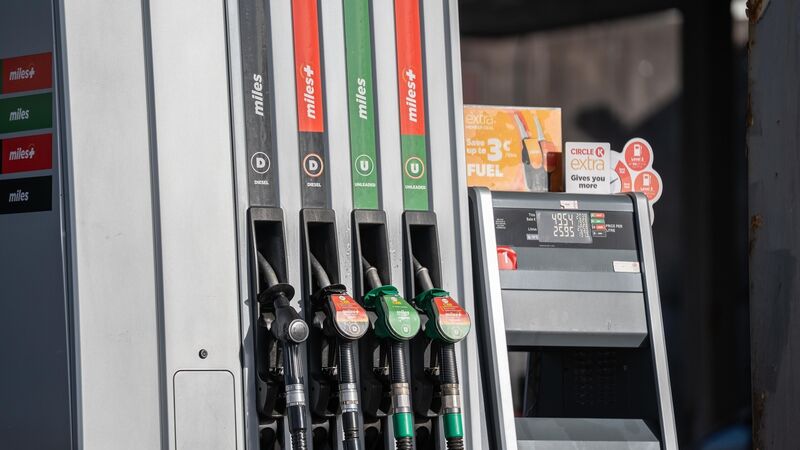
In a Dáil debate last week, TDs outlined cases in which households were hit with hundreds of euro of price increases in the days following their orders of home heating oil. Over the weekend, attention shifted to the petrol pumps where drivers noticed sharp jumps in prices. File picture
The outbreak of war between the United States and Iran has seen a wild volatility in the price of crude oil hit Irish consumers in recent days.
In a Dáil debate last week, TDs outlined cases in which households were hit with hundreds of euro of price increases in the days following their orders of home heating oil. Over the weekend, attention shifted to the petrol pumps where drivers noticed sharp jumps in prices.
Calls for government intervention have come from across the political spectrum and from business and lobby groups.
But what can the Government actually do, how much would it cost and how likely is it all?
It's important to state at the outset of any discussion that the Government does not have, or will not create, sweeping powers to cap prices of many things. There are limits to exactly what the Government could or would be willing to do.
Unfortunately, a massive response to an economy-altering war is not a new thing for Fianna Fáil and Fine Gael to have to contend with, though it does make comparison somewhat easier.
Excise duty was cut in March 2022 in response to a jump in prices on forecourts as a result of Russia's invasion of Ukraine, among other factors and ahead of Budget 2023, after months of that war, a €4.1bn cost of living package was unveiled. That included an energy rebate of €600 to be paid in three installments of €200 each over 2022 and 2023, and the extension of the fuel allowance scheme to an additional 80,000 people, bringing to 450,000 the amount of people eligible to avail of this relief. Those in receipt were also given a €400 pre-Christmas lump sum.
In addition, the government of the day sought to ease the cost of living with a number of social welfare lump sums like a double payment of child benefit and social welfare payments, a one-off cost-of-living payment for those on social welfare supports, a one-off €200 payment to those on Living Alone Allowance, a one-off €500 payment to people on Disability Allowance, Invalidity Pension and Blind Pension and a one-off payment of €500 to those in receipt of the Working Family Payment.
Across the board, not very. It's unlikely that in the short-term the Government will roll out a multi-billion euro package on something that has only been an issue for a week and a half.
Sources have continually pointed to Ukraine as the closest facsimile for the Iran war and, even then, much of the focus is on the price of oil as opposed to any impact on food prices or other things.
The one thing that could happen in a shorter-term is a cut to excise on petrol and diesel. The Government did this in early 2022 and the cuts were not fully unwound until 2024. This cost hundreds of millions.
In theory, yes. In practice, it's unlikely.
Carbon tax increases have been baked into both legislation and financial planning since 2020. They bring in around €1bn a year and are ringfenced to pay for climate initiatives. While the opposition has called for the May 1 increase to be postponed or abandoned, government figures have resisted such calls.
When the Government eschewed the chance to re-introduce energy credits in the Budget last year, Taoiseach Micheál Martin said that the Government could not “keep bailing out” the energy companies and “underpinning the gouging” of energy companies.
Particular focus was paid to the fact that the credits were untargeted and had cost over €1.2bn. The Government has argued that any future supports should be targeted.
Speaking on Monday, Tánaiste and Minister for Finance Simon Harris said that the government would have its "eyes open" on what happens, particularly if the war runs on, meaning any supports would likely be some time away.
- Paul Hosford is Acting Political Editor.


CONNECT WITH US TODAY



Be the first to know the latest news and updates