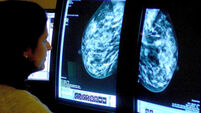
'I experienced pain for 13 years before I was diagnosed': The fight to improve endometriosis care
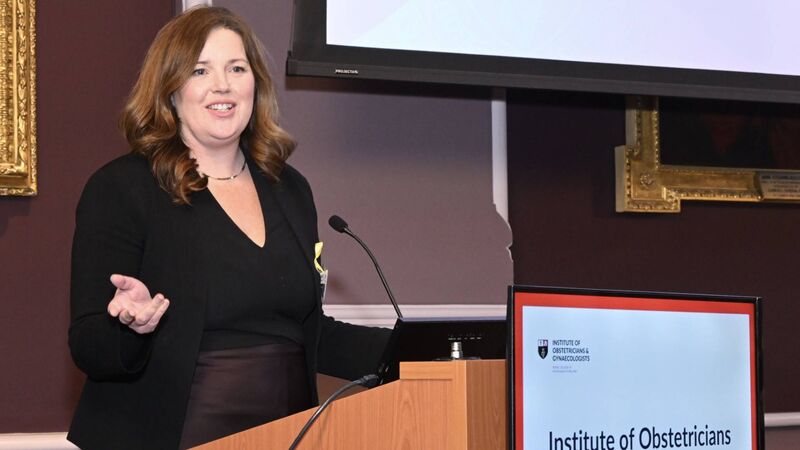
Dr Aoife McSweeney, consultant gynaecologist at Cork University Maternity Hospital speaks at the conference on endometriosis.
A woman for whom endometriosis caused a 31-day period is well-placed to say case for the condition is improving — and she is well-placed to comment as she is also studying to be a doctor.
New data shows Cork University Maternity Hospital did more endometriosis surgeries in the last two years than during the decade before that.
Doctors and other healthcare workers gathered in Dublin in recent days to discuss what more is needed under a new framework for the condition launched in October.
Sarah Bissett first experienced symptoms aged around 13. She recalled a doctor telling her heavy periods were normal in her family.
"So I experienced pain for 13 years before I was diagnosed," she said.
Her working life started as a women's health physiotherapist.
While working in a maternity hospital, she said: “A consultant told me I looked very pale, and I said ‘I actually feel horrendous, I’ve bled for 31 days’ and she couldn’t believe it.’”
Ms Bissett later received a diagnosis of endometriosis with support from this “amazing” consultant. She said it was such a relief to be believed.
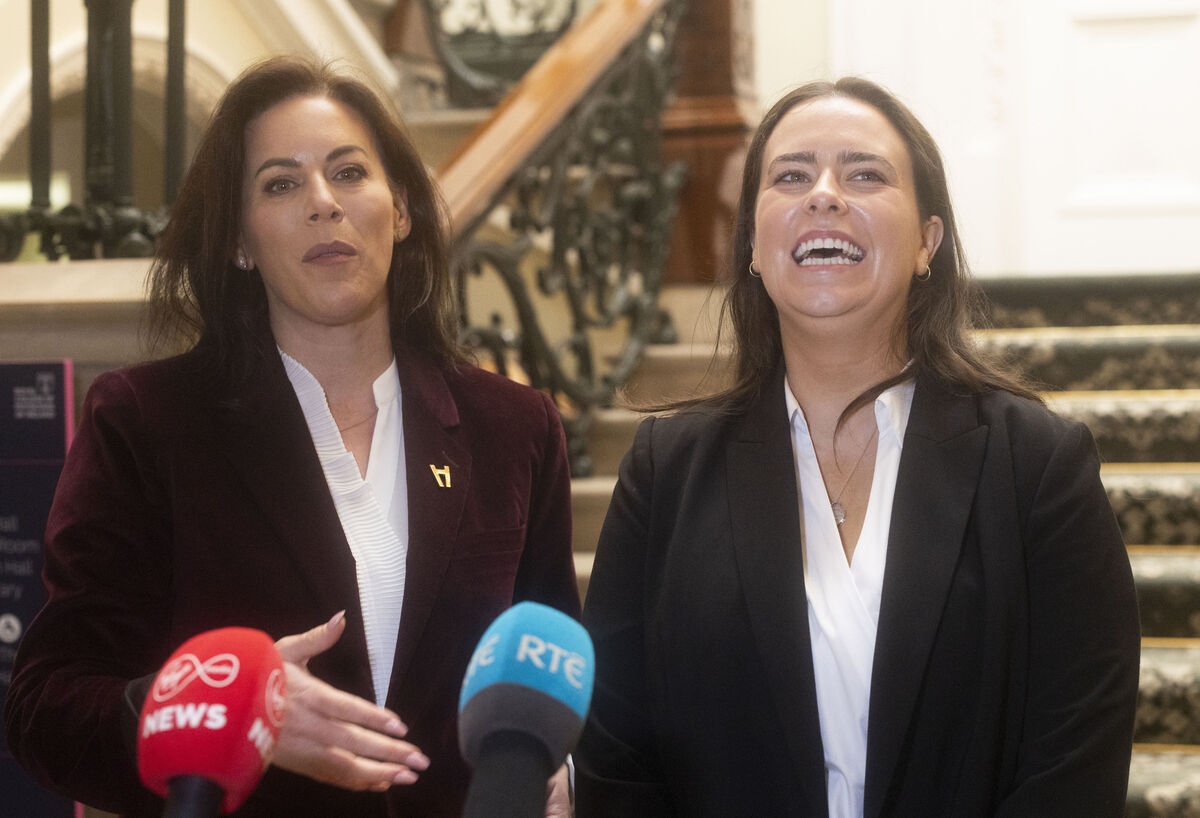
Now training to be a doctor, she spoke to the Royal College of Physicians Ireland event about issues including delays in diagnosis.
She later told the : “I believe that we are getting there. Women like myself and all of the women in medicine are really, really fighting to make endometriosis care better in Ireland.”
Dr Cliona Murphy, clinical director with the National Women and Infants Health Programme, echoed that, while acknowledging more needed to happen.
“What we’ve seen in the last six months has probably been more progress than there was in even the previous 10 years,” she said.
Dr Aoife McSweeney, obstetrician, gynaecologist and endometriosis surgeon at CUMH, and with the supra-regional endometriosis centre, agreed.
“Basically in Cork in the last two years, we’ve done more surgery than we did in the 10 years beforehand,” she said. “There are multiple factors for that, they started off with a clinic once per eight weeks, the demand and awareness of the condition wasn’t there.”
The pair spoke to the together during the conference.
Dr McSweeney welcomed “huge awareness” now of symptoms and endometriosis, saying this was reflected in growth in services. “It’s fantastic and hopefully validating for women who’ve been suffering,” she said.
Dr Murphy acknowledged frustration for women that improvement was not coming faster. She also described how increased funding was now starting to result in better access to surgeries, specialist nurses and physiotherapists.
A key issue is finding out how many women are in need of treatment.
“We’re working on getting better data-capture within waiting lists, within the hospitals,” she said.
“We have pretty good data now with regard to the specialised centres. We’re working on [finding out] what proportion of the general gynaecology throughput across the 19 maternity units is related to endometriosis.”
Between 2021 and 2025, more than €5m was invested in endometriosis services.
However, Dr Murphy said: “While there’s been funds allocated, we want to make sure those funds translate into posts on the ground, and that those posts get filled. That can sometimes be the barrier in the health service — getting the right people with the right skill-set. And the right mindset, that’s very important.”
Both touched on communication as an issue, saying this must be sensitive as well as informative.
Dr McSweeney said: “There are different types of endometriosis. There’s a superficial type, a deep type and a type that affects the ovaries, that’s how it's categorised.”
She said women could have disease that is very superficial but very active and she added it was “absolutely” very painful for women.
“And there are some patients with clinically very severe disease who have little to no symptoms,” she said.
She explained the stage and type of disease can be unrelated to the severity of symptoms.
Ablation surgery is widely used internationally and in Ireland for superficial or mild endometriosis.
Excision is seen as the gold-standard treatment for deep disease and also used with superficial type lesions.
Dr McSweeney added: “I think where there maybe has been an issue is historically identifying which you’re dealing with when you look at it at laparoscopy [surgery stage].
“And obviously ablating something that has a deep root you are not going to get the full treatment. The literature would suggest that 80% of people have superficial disease.”
A new Department of Health travel abroad for surgery scheme has seen only 10 completed applications since October, according to health minister Jennifer Carroll MacNeill.
Endo Ireland and Her Voice Project have campaigned for changes in this scheme.
Dr Murphy said she could not comment on individual clinics or doctors.
“The criteria we look at for clinics abroad [are] obviously the surgeons and their skillset is important,” she said.
“But so is the back-up, the ability to communicate back to clinicians in Ireland, that’s there’s data-capture and that there’s follow-up with patients. And that there’s appropriate pre-op consent of patients and that patients have enough information. And also that they do have a cooling-off period, so the whole situation isn’t too rushed.”
She added: “There are some centres which are very popular with patients, but they don’t meet all our criteria from a clinical and risk-management perspective.”
She described “a very positive relationship” the HSE is now developing with a centre in Bordeaux, France.
The move towards using private healthcare to plug gaps in public endometriosis care is also happening elsewhere.
During the conference, one doctor spoke from the audience about working in Australia. A flood of state funding for private-sector care has raised concerns about inappropriate over-reliance on surgeries there, she cautioned.
Indeed in February, Australian TV ABC’s reported on this.
It reported a surgeon working in a private hospital group in Victoria “repeatedly removed tissue and organs from young women for 'severe' endometriosis when pathology showed they had little or no trace of the disease”.
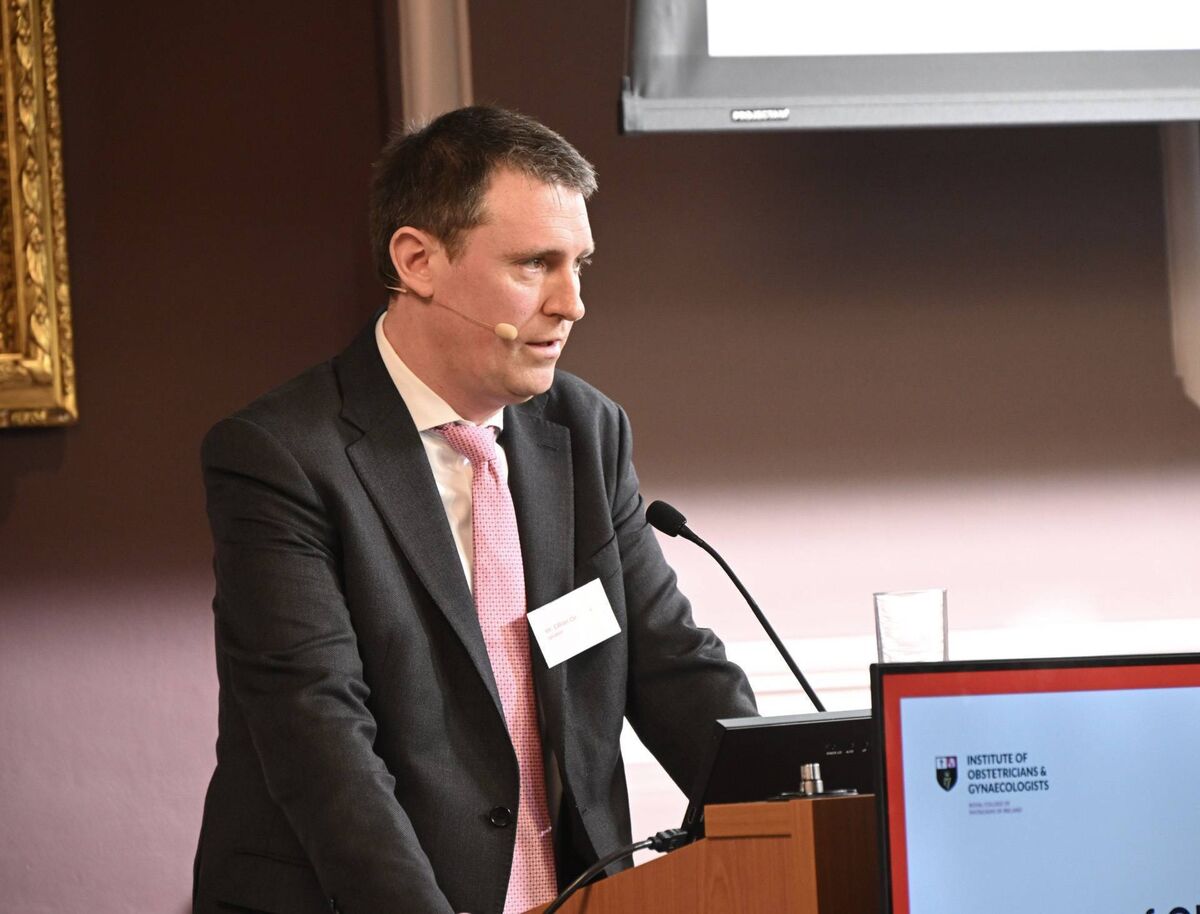
The conference also heard from colorectal surgeon Cillian Clancy. He works at Tallaght University Hospital, including with the supra-regional endometriosis centre based there.
He shared anonymised slides showing how invasively endometriosis can spread.
One operation lasted five hours and 45 minutes, leading to a six-day hospital stay. Care also involved a stoma nurse, pain team and physiotherapy.
“This is pretty much 50% of the operations we’re involved with on our combined operating list now,” he said.
The decision to have these major surgeries takes time. He cautioned also this “may not actually increase the patient’s ability to become pregnant if that’s their desire”.
The women are given counselling and advice about risks, he added.
The conference also heard of changing interaction between GPs and hospitals.
Dr Ciara McCarthy, clinical lead in women's health at the Irish College of GPs and a GP working in Cork, welcomed this.
She welcomed improved access to scans for GP patients, but noted some types of MRI were not included in this.
However, she said there was still “need for expansion of community services”, including access to specialist physiotherapists for women with endometriosis.
“We have almost no access,” she said, adding this was key for pain management. “It would be transformative,” she said.


CONNECT WITH US TODAY



Be the first to know the latest news and updates