British High Court trial against Gerry Adams set to begin
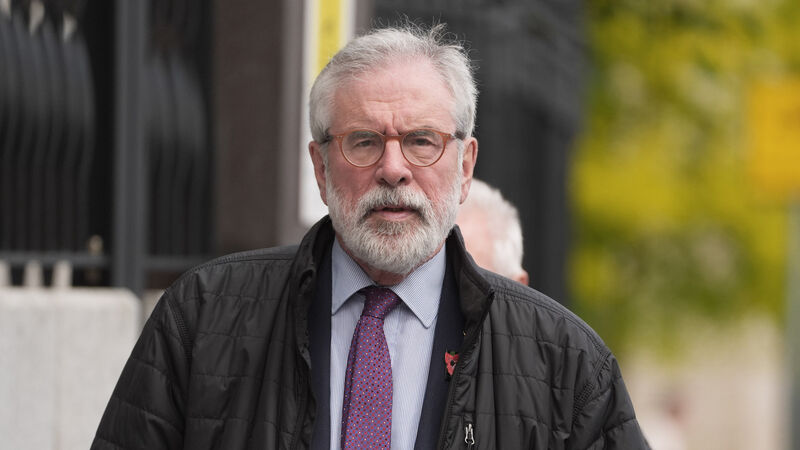
Gerry Adams is a former Sinn Féin president Picture:PA
A civil trial between three men injured in Provisional IRA bombings and Gerry Adams is set to begin at the High Court in London on Monday.
John Clark, a victim of the 1973 Old Bailey bombing in London, Jonathan Ganesh, a 1996 London Docklands bombing victim, and Barry Laycock, a victim of the 1996 Arndale shopping centre bombing in Manchester, all allege that Mr Adams was a leading member of the Provisional IRA on those dates, including of its Army Council.
The trio are bringing legal action against the former Sinn Féin president and is seeking just £1 in damages.
They claim Mr Adams “acted together with others in furtherance of a common design to bomb the British mainland” and was “directly responsible” in various roles within the Provisional IRA for decisions made to place devices in 1973 and 1996.
Mr Adams denies that he had any role in the Provisional IRA and is opposing the claim.
The trial before Mr Justice Swift, due to begin at 10.30am on Monday at the Royal Courts of Justice in London, is expected to last seven days.

Lawyers for the three bombing victims told a previous hearing that Mr Adams should be considered a representative of a class of people who “were members of the Provisional IRA/its Army Council between 1973 and 1996”.
The men also wanted to sue the Provisional IRA, but Mr Justice Soole said that the claim must be struck out because it is “not a legal entity”.
Two of the witnesses due to give evidence against Mr Adams will be anonymous and will speak at the trial from behind a screen.
Anne Studd KC, for the three men, told a hearing last month that one of the witnesses believes “the Provisional IRA or people associated with it still exist” and will be in danger as a result.
She said: “This case is very likely to increase interest again in these issues, and this witness, with his past experience, is concerned about that.”
She also applied to include more witnesses being able to give evidence, which Mr Justice Swift allowed.


CONNECT WITH US TODAY



Be the first to know the latest news and updates